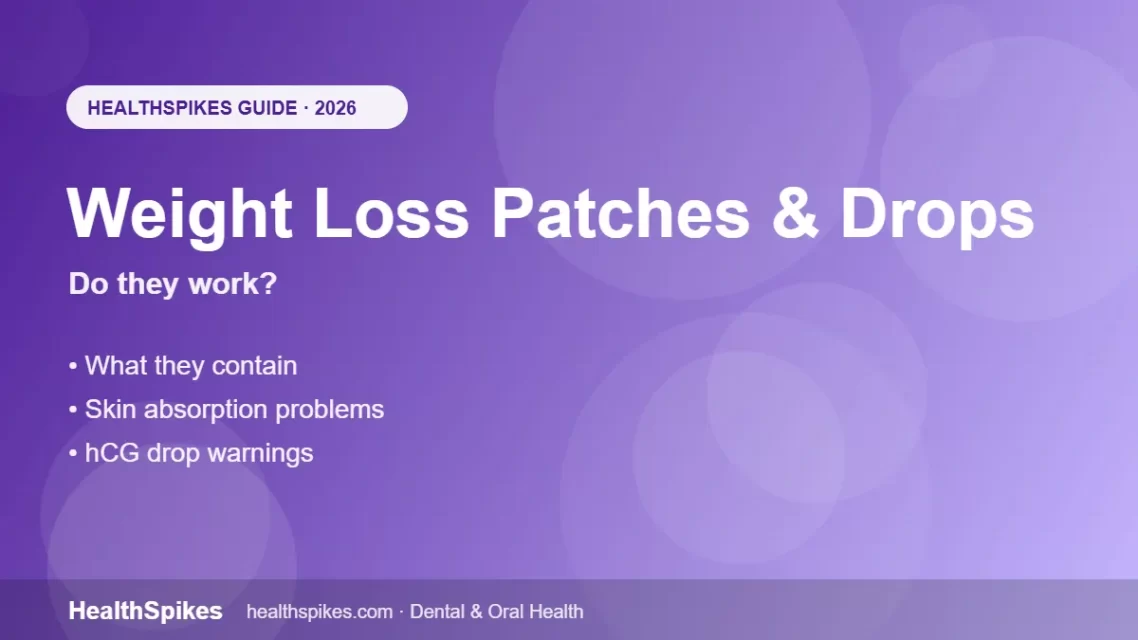
Weight loss patches and drops are sold as an easy way to slim down: stick on a patch or put a few drops under your tongue and let the ingredients do the work. This guide explains what weight loss patches and drops usually contain, why they are unlikely to work, and the safety warnings you should know.
Key takeaways
- There is no good evidence that over-the-counter weight loss patches cause meaningful weight loss.
- Most plant extracts in patches are not designed to pass through skin in useful amounts.
- The FDA has warned that over-the-counter hCG weight loss drops are illegal and unproven.
- Prescription weight loss medicines are a separate, medically supervised option.
What are weight loss patches?
Weight loss patches are adhesive pads worn on the skin, often for 8–12 hours a day. Labels list ingredients such as green tea, garcinia cambogia, guarana, acai, hoodia, bladderwrack, L-carnitine or chromium.
The idea is that ingredients pass through the skin into the blood. Medicine patches such as nicotine or hormone patches use carefully designed molecules and delivery systems. Most supplement patches do not.
Why weight loss patches are unlikely to work
- Skin is a strong barrier; most plant extracts are too large or the wrong type to absorb well
- Doses in patches are usually tiny or not disclosed
- The same ingredients have weak evidence even when swallowed
- There are almost no independent trials of these patches
In short, weight loss patches rarely have a realistic way to deliver an effect. Any weight lost while using them usually comes from diet changes made at the same time.
What about weight loss drops?
Drops are liquids taken under the tongue or added to water. Many contain the same plant extracts as patches, plus vitamins or amino acids. Some have been sold as “hCG drops”.
The U.S. FDA has warned that over-the-counter hCG products for weight loss are not approved and that the very low-calorie diets that come with them can be risky.
Possible side effects
| Product | Possible problems |
|---|---|
| Patches | Skin irritation, rashes, allergic reactions to adhesive or extracts |
| Stimulant drops | Jitters, raised heart rate, poor sleep |
| hCG-style programmes | Fatigue, gallstones and nutrient gaps from very low-calorie diets |
| All | Interactions with medication if ingredients are absorbed |
How to spot misleading weight loss patches
- Promises of fast weight loss “without diet or exercise”
- No ingredient amounts or vague “proprietary blend”
- Celebrity or “doctor” endorsements you cannot verify
- Subscription traps with hard-to-cancel billing
- Reviews that sound copied or repeated
What works instead
Calorie control, more protein and fibre, regular movement and good sleep remain the foundation, explained in our guide on how to lose weight safely. For people with obesity or related health problems, doctors can prescribe proven medicines.
- Swap sugary drinks for water
- Walk daily and add strength training
- Use a food diary or app for a few weeks
- Ask your doctor about medical weight loss options
How skin patches work and why weight loss is different
Nicotine, hormone and pain patches work because they deliver small, carefully measured drug doses that can pass through skin. Most ingredients in slimming patches, such as plant extracts and fibres, are large molecules that do not cross the skin in useful amounts. Even if they did, the same ingredients taken by mouth show little effect on weight.
What to check before you buy
- Is there any published study on the actual patch, not just the ingredients?
- Does the seller have a real address and clear refund policy?
- Is the price a subscription that renews automatically?
- Are reviews on the seller site only, with no independent ratings?
- Does the product claim to work “without diet or exercise”?
If you have tried diet and exercise without success, a doctor can discuss prescription treatments with proven results. See our guides on losing weight safely and fat burners.
Related guides
Frequently asked questions
Do weight loss patches really work?
There is no good evidence that over-the-counter weight loss patches cause meaningful weight loss.
Are weight loss patches safe?
Most are low risk beyond skin irritation, but they waste money and may contain undeclared ingredients.
Are hCG drops legal?
The FDA says over-the-counter hCG weight loss products are not approved and should not be sold.
Can drops under the tongue burn fat?
No reliable evidence shows they do.
What is a better option than patches?
Diet changes, activity, sleep and medically supervised treatment if needed.
This guide is for general information and is not medical advice. Talk to your doctor before starting a supplement or changing treatment.