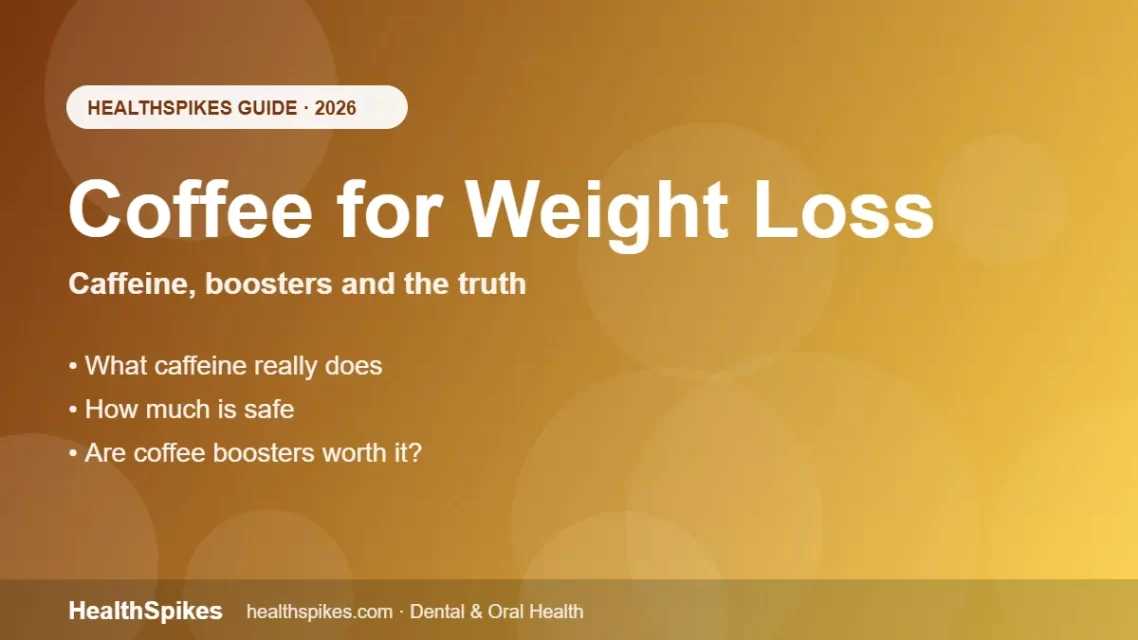
Coffee for weight loss is a popular idea, and a whole category of “coffee booster” powders and drops now promises to turn your morning cup into a fat burner. This guide explains what coffee really does for metabolism and appetite, how much is safe, and what to expect from booster products.
Key takeaways
- Caffeine slightly raises calorie burn and may reduce appetite for a short time.
- Black coffee has almost no calories; sugary coffee drinks can derail weight loss.
- Up to about 400 mg of caffeine a day is considered safe for most adults.
- Coffee booster supplements mostly add caffeine, green tea or fibre, with little extra benefit.
How coffee affects weight
Caffeine stimulates the nervous system, which can slightly increase how many calories you burn at rest and boost energy for exercise. Some people also feel less hungry after coffee, at least for a few hours.
Over time, the body adapts to caffeine and the effect becomes smaller. Large studies link coffee drinking with slightly lower weight gain over the years, but coffee alone does not cause meaningful weight loss.
Coffee for weight loss: dos and don’ts
| Do | Don’t |
|---|---|
| Drink it black or with a splash of milk | Add syrups, whipped cream or lots of sugar |
| Have it before a workout for energy | Drink it late in the day and lose sleep |
| Count it toward a caffeine limit | Combine it with high-stimulant pills |
| Pair it with a protein breakfast | Replace meals with coffee |
How much caffeine is safe?
Most healthy adults can have up to about 400 mg of caffeine a day, roughly three to four cups of brewed coffee. Pregnant women are usually advised to keep under about 200 mg. People with heart rhythm problems, anxiety or high blood pressure may need less.
- Brewed coffee (240 ml): about 80–100 mg
- Espresso shot: about 60–70 mg
- Energy drink: 80–300 mg
- Many fat burners and boosters: 100–300 mg per serving
What are “coffee booster” weight loss products?
Coffee boosters are powders, sachets or drops you stir into coffee. They usually contain extra caffeine, green tea or green coffee extract, chromium, L-carnitine, MCT oil or fibre. Some are sold as “slim coffee” blends.
Ingredients like green coffee extract and chromium have weak, inconsistent evidence. Fibre may add a little fullness. The biggest risk is extra caffeine on top of your normal coffee.
Are coffee boosters worth it?
For most people, no. They cost much more than plain coffee and add little proven benefit. If you try one, check the caffeine per serving, avoid proprietary blends, and stop if you notice a racing heart, anxiety or poor sleep. Our guide on fat burners explains common ingredients in more detail.
Better ways to use coffee for weight loss
- Swap sugary coffee drinks for black coffee or a small latte
- Use coffee as a pre-workout boost
- Stop caffeine by early afternoon to protect sleep
- Pair coffee with a high-protein breakfast
- Focus on overall calories; see how to lose weight safely
How to use coffee for weight loss the right way
If you want to try coffee for weight loss, keep it simple. Black coffee or coffee with a splash of milk has almost no calories. A large flavoured latte or frappé can contain 300–500 calories, which can cancel out any metabolic effect.
- Drink it black or with a little milk
- Skip syrups, whipped cream and sugar
- Have a cup before exercise for a small performance boost
- Stop by early afternoon so it does not disturb sleep
- Keep total caffeine under 400 mg a day (about four cups)
Coffee for weight loss: myths vs facts
| Claim | Reality |
|---|---|
| Coffee melts fat | It slightly increases fat burning but does not melt fat |
| Coffee with lemon burns belly fat | No evidence; lemon adds nothing special |
| Bulletproof coffee helps weight loss | Butter and oil add 200+ calories |
| Green coffee bean extract works | Studies are small and of low quality |
| Coffee suppresses appetite | A short-term effect for some people only |
The bottom line: coffee for weight loss works only as a small helper alongside diet and exercise. It is not a weight loss plan by itself, and people with anxiety, heart rhythm problems or pregnancy should limit caffeine.
Related guides
Frequently asked questions
Does coffee burn belly fat?
No food targets belly fat specifically; caffeine has only a small effect on calorie burn.
Is black coffee good for weight loss?
It is nearly calorie-free and can help energy and appetite, but it is not a fat burner on its own.
Does coffee with lemon help weight loss?
There is no evidence that adding lemon does anything special.
Are coffee boosters safe?
They are mostly safe in moderation, but extra caffeine can cause side effects.
When is the best time to drink coffee for weight loss?
Morning or before exercise, not late in the day.
This guide is for general information and is not medical advice. Talk to your doctor before starting a supplement or changing treatment.