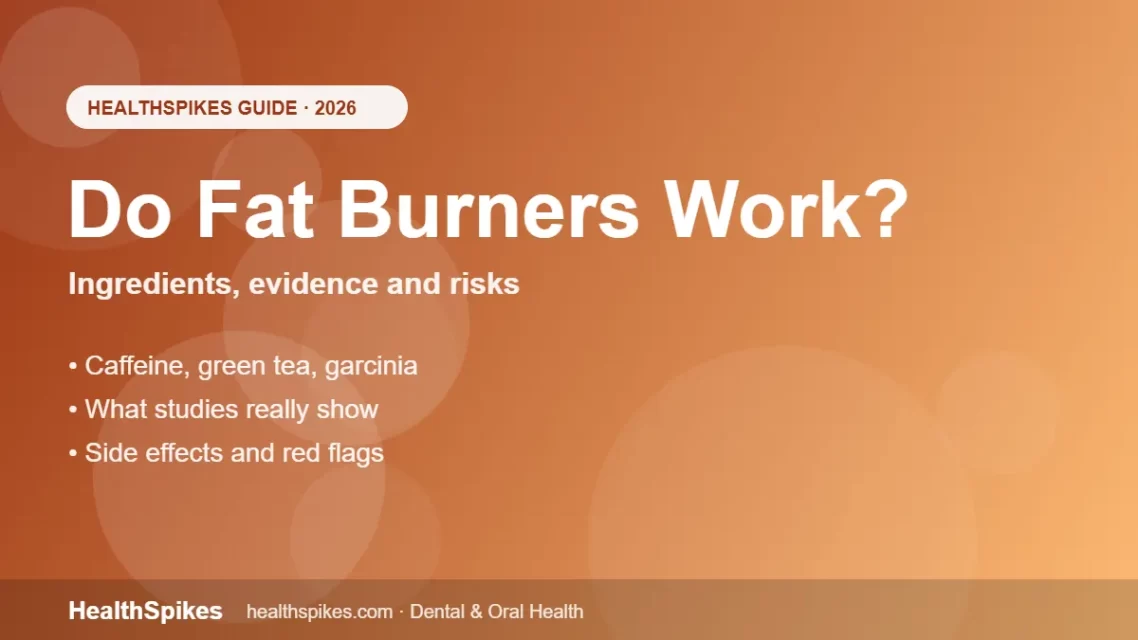
Fat burners and diet pills are among the best-selling supplements online. Labels promise to melt fat, curb cravings and boost metabolism. This guide looks at what fat burners usually contain, what the research shows, the side effects, and how to tell a reasonable product from a risky one.
Key takeaways
- Most fat burners rely on caffeine and plant extracts with small effects at best.
- Typical studies show a few extra kilograms lost over months, if any, compared with placebo.
- Stimulant-heavy fat burners can raise heart rate and blood pressure.
- Products with hidden drugs have been found repeatedly; buy carefully.
What are fat burners?
Fat burners are dietary supplements that claim to increase calorie burning, reduce appetite or block fat absorption. They come as capsules, powders, drinks, gummies and drops. Unlike prescription weight loss medicines, they do not need approval for effectiveness before they are sold.
Common fat burner ingredients and the evidence
| Ingredient | Claimed effect | What research shows |
|---|---|---|
| Caffeine | Boosts metabolism and energy | Small increase in calorie burn; tolerance builds quickly |
| Green tea extract (EGCG) | Fat oxidation | Very small effect; rare liver injury at high doses |
| Garcinia cambogia (HCA) | Blocks fat production | Little or no meaningful weight loss in trials |
| Glucomannan (konjac fibre) | Fullness | Small effect; must be taken with water |
| Capsaicin (chilli) | Thermogenesis | Tiny calorie effect |
| Green coffee bean | Blocks carbohydrate absorption | Low-quality studies |
| L-carnitine | Fat transport | Little benefit in healthy people |
| Raspberry ketones | Fat breakdown | No good human evidence |
So, do fat burners work?
For most people, fat burners add little on top of diet and exercise. Reviews of supplement trials generally find small or no differences compared with placebo, and many studies are short, small or funded by manufacturers.
If a product helps you feel less hungry or more energetic, that can make dieting easier, but it does not replace a calorie deficit. Our guide on how to lose weight safely covers what works.
Side effects of fat burners
- Jitters, anxiety and insomnia from stimulants
- Raised heart rate and blood pressure
- Headaches and stomach upset
- Liver injury (rare, linked to some green tea extracts and multi-ingredient products)
- Interactions with heart, thyroid, blood pressure and mental health medicines
Red flags when buying fat burners
- Claims like “lose 10 kg in 2 weeks” or “no diet needed”
- A proprietary blend that hides amounts
- “Pharmaceutical strength” or “prescription alternative” wording
- Before-and-after photos with no proof
- Sold mainly through countdown timers and pressure tactics
- Imported products with labels in another language
Regulators have repeatedly found weight loss supplements that contain undeclared drugs such as sibutramine. If something seems too strong, stop taking it.
Who should avoid fat burners
- People with heart disease, high blood pressure or arrhythmias
- Anyone with anxiety, insomnia or a history of eating disorders
- Pregnant or breastfeeding women
- People taking prescription medication without checking with a doctor
- Teenagers
Safer alternatives
- Higher-protein meals and more fibre
- Regular walking and strength training
- Better sleep and stress control
- Medical weight loss support for obesity
- Fibre supplements such as psyllium, with doctor approval
How to read a supplement label
Before buying any weight loss product, check the label carefully. Look for the full ingredient list with doses, not just a “proprietary blend” that hides amounts. Add up the total caffeine from all sources, including green tea extract and guarana.
- Third-party testing seals (USP, NSF, Informed Choice) show the product contains what it says
- Avoid products listing banned stimulants such as DMAA, DMHA, ephedra or sibutramine
- Be wary of promises like “lose 10 kg in 2 weeks” or “no diet needed”
- Check for a clear refund policy and a real company address
Safer alternatives that actually work
| Approach | Typical result |
|---|---|
| Calorie deficit with high-protein diet | 0.5–1 kg a week |
| Strength training plus walking | Better body composition, protects muscle |
| Better sleep | Fewer cravings and less snacking |
| Prescription weight loss medicines (GLP-1) | Average 10–15% body weight loss in trials |
Compared with these options, any effect from thermogenic pills is small. Our guide to losing weight safely explains how to put a plan together.
Related guides
Frequently asked questions
Do fat burners actually burn fat?
They may slightly increase calorie burn, but the effect is small compared with diet and exercise.
Are fat burners safe?
Many are tolerated, but stimulant products can affect the heart, and some have contained hidden drugs.
What is the strongest legal fat burner?
There is no proven “strong” over-the-counter option; prescription medicines are the evidence-based route.
Can I take fat burners with coffee?
Combining stimulants increases side effects; count total caffeine.
Do fat burners work without exercise?
Any benefit is minimal without a calorie deficit.
This guide is for general information and is not medical advice. Talk to your doctor before starting a supplement or changing treatment.