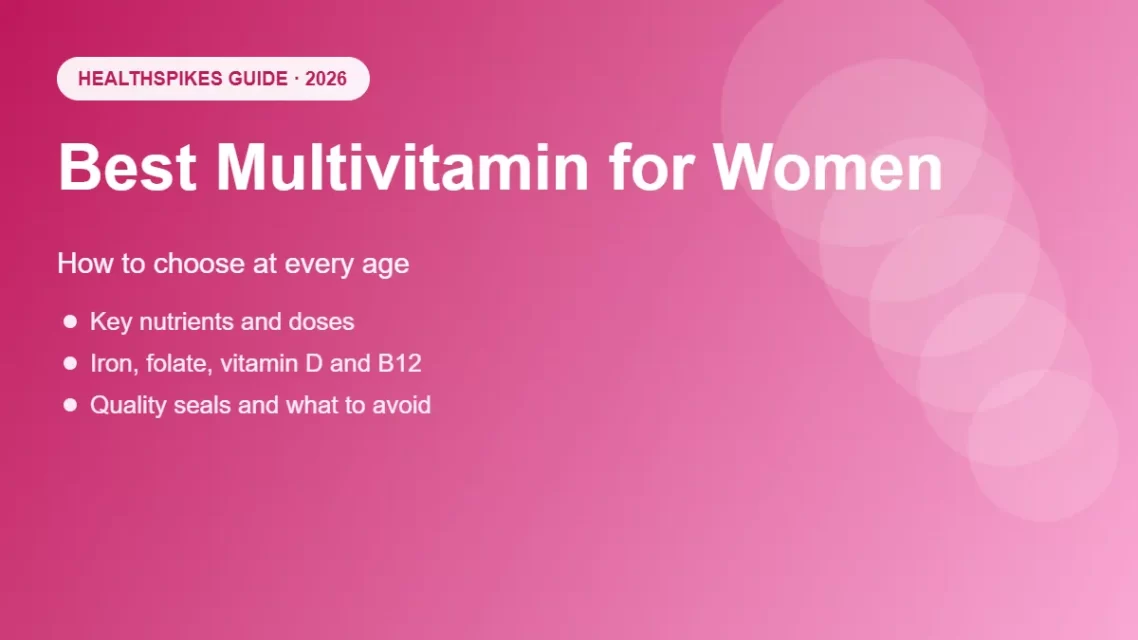
The best multivitamin for women is not the one with the longest ingredient list. It is the one that fills the gaps in your diet at your life stage, with sensible doses and proof of quality. A woman of 28 who wants to get pregnant needs something different from a woman of 62 after menopause.
A multivitamin cannot replace a healthy diet, and many women do not need one at all. But it can be useful if you eat a restricted diet, are planning pregnancy, have heavy periods or are over 50. This guide explains what to look for so you can choose the best multivitamin for women for your own needs.
Key takeaways
- Choose by life stage: iron and folic acid matter most before menopause, vitamin D, B12 and calcium after.
- Look for about 100% of the Daily Value for most nutrients, not megadoses.
- A USP Verified, NSF Certified or similar seal shows the label matches what is in the bottle.
- Women who could become pregnant need 400 mcg of folic acid daily; pregnant women need a prenatal.
- Check with your doctor if you take medicines or have a health condition.
Who needs a multivitamin?
- Women planning a pregnancy, pregnant or breastfeeding
- Vegans and vegetarians (B12, iron, zinc, iodine)
- Women with heavy periods (iron)
- Women over 50 (B12, vitamin D)
- People with conditions or surgery that affect absorption
- Anyone with a very restricted or low-calorie diet
If you eat a varied diet with plenty of fruit, vegetables, whole grains and protein, a multivitamin may add little. A blood test can show whether you are actually low in iron, vitamin D or B12.
Key nutrients in the best multivitamin for women
| Nutrient | Women 19–50 | Women 51+ | Why it matters |
|---|---|---|---|
| Folic acid (folate) | 400 mcg DFE (600 in pregnancy) | 400 mcg DFE | Prevents neural tube defects |
| Iron | 18 mg | 8 mg | Replaces losses from periods |
| Vitamin D | 600 IU (15 mcg) | 600–800 IU | Bones and muscles |
| Vitamin B12 | 2.4 mcg | 2.4 mcg (absorption falls with age) | Nerves and red blood cells |
| Calcium | 1,000 mg | 1,200 mg | Bone strength; mostly from food |
| Iodine | 150 mcg | 150 mcg | Thyroid; more in pregnancy |
| Zinc | 8 mg | 8 mg | Immunity and healing |
Calcium is bulky, so multivitamins usually contain only part of what you need. Dairy, fortified plant milks, tofu and leafy greens make up the rest.
Best multivitamin for women by age
| Life stage | What to look for |
|---|---|
| 20s and 30s | Iron (18 mg), folic acid (400 mcg), vitamin D, iodine |
| Trying to conceive or pregnant | A prenatal vitamin with folic acid, iodine and iron; ask about DHA |
| 40s (perimenopause) | Iron if periods are heavy; vitamin D, B vitamins, magnesium |
| 50+ (after menopause) | Low or no iron, vitamin B12, vitamin D, calcium support |
| Vegan or vegetarian | B12, iron, zinc, iodine, vitamin D; consider omega-3 from algae |
How to spot the best multivitamin for women: quality checks
- Third-party testing: USP Verified, NSF Certified for Sport or ConsumerLab seals mean an independent lab checked the contents
- Sensible doses: around 100% of the Daily Value; be cautious with anything over 100% for vitamin A (as retinol), iron or zinc
- Clear labels: full amounts listed, no vague proprietary blends
- Forms that work: methylfolate or folic acid, vitamin D3, and iron as ferrous bisglycinate or ferrous sulfate
- Honest claims: avoid products promising weight loss, detox or “hormone balance” miracles
What to avoid
- Megadoses of fat-soluble vitamins (A, D, E, K) that can build up in the body
- Iron after menopause unless your doctor recommends it
- High-dose vitamin A (retinol) in pregnancy, which can harm the baby
- Biotin megadoses, which can distort lab tests such as thyroid and heart tests
- “Women’s” products with added herbs that interact with medicines
When to take your multivitamin
Even the best multivitamin for women works only if you take it well. Take it with a meal to improve absorption and reduce nausea. If it contains iron, avoid taking it at the same time as calcium supplements, tea, coffee or thyroid medicine, which reduce absorption. Gummies are easier to take but often contain sugar and fewer minerals, including little or no iron.
Multivitamin vs targeted supplements
If a blood test shows one clear deficiency, a single targeted supplement often works better than a multivitamin. For example, a woman with low ferritin may need an iron supplement at a higher dose than any multi provides. For hair and nail concerns, see our guide to vitamins for hair, skin and nails; for menopause symptoms, see menopause symptoms relief.
Related guides
Frequently asked questions
What is the best multivitamin for women over 50?
One with little or no iron, plus vitamin B12, vitamin D and some calcium, ideally with a third-party quality seal.
Should women take a multivitamin every day?
Only if it fills a real gap in your diet or your doctor recommends it.
Are gummy multivitamins as good?
They often lack iron and have fewer minerals and added sugar, so they may not be the best multivitamin for women who need iron.
Can a multivitamin help with tiredness?
Only if the tiredness is caused by a deficiency such as iron or B12; otherwise look for other causes.
Is a prenatal vitamin better for all women?
No. Prenatals are designed for pregnancy and contain more iron and folic acid than most other women need.
Medical disclaimer: This article is for general information and is not a substitute for advice from your doctor or another qualified health professional. See our medical disclaimer and editorial policy.