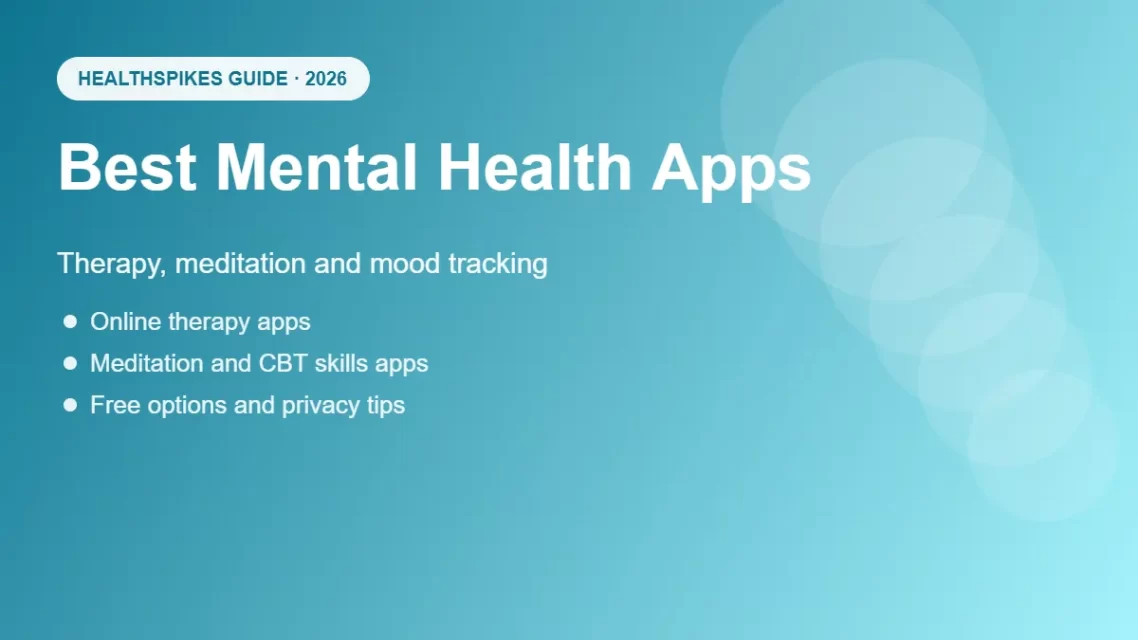
Mental health apps can make support easier to reach, whether you want to learn calming skills, track your mood or talk to a licensed therapist from home. The best mental health apps are those with a clear purpose, evidence-based methods such as cognitive behavioural therapy (CBT) or mindfulness, and good privacy practices. This guide groups the leading mental health apps by what they do and explains how to choose one safely.
Apps work best for mild to moderate stress, anxiety and low mood, or alongside professional care. They are not a substitute for urgent help or treatment of severe conditions.
Key takeaways
- Choose mental health apps by goal: therapy, skills, meditation, tracking or crisis support.
- Look for evidence-based approaches such as CBT, DBT and mindfulness.
- Online therapy apps connect you with licensed professionals; others are self-guided.
- Check privacy policies: some apps share data with advertisers.
- In a crisis, call or text 988 in the US instead of relying on an app.
10 popular mental health apps by type
| App | Type | Best for |
|---|---|---|
| Talkspace | Online therapy and psychiatry | Text, audio or video therapy; some insurance plans accepted |
| BetterHelp | Online therapy | Messaging and live sessions with licensed therapists |
| Headspace | Meditation and mindfulness | Beginners, stress and sleep |
| Calm | Meditation and sleep | Sleep stories, relaxation |
| Insight Timer | Meditation (large free library) | Free guided meditations |
| Sanvello | CBT skills and mood tracking | Anxiety and stress skills |
| MindShift CBT | CBT for anxiety (free) | Anxiety coping tools |
| PTSD Coach | Self-help (free, US VA) | Trauma symptoms and coping |
| Bearable | Mood and symptom tracker | Spotting patterns in mood, sleep and habits |
| Finch | Self-care habit app | Gentle daily routines and motivation |
Features, prices and insurance coverage change, so check each app’s official site before signing up.
How to choose mental health apps
- Your goal: therapy, learning skills, sleep, or tracking moods
- Evidence: CBT, DBT, ACT or mindfulness-based content, ideally with published research
- Credentials: licensed therapists for therapy apps
- Privacy: clear data policy; no selling of health data
- Cost: free tiers, trials, insurance or employer coverage
- Ease of use: short, daily exercises you will actually do
Do mental health apps work?
Research suggests that well-designed apps based on CBT or mindfulness can reduce symptoms of stress, anxiety and depression, especially for mild to moderate symptoms. Results are better when people use them regularly and when apps include human support. Many apps lose users within weeks, so pick one you enjoy and set reminders.
Free mental health apps
- Insight Timer: thousands of free meditations
- MindShift CBT: free anxiety tools from Anxiety Canada
- PTSD Coach: free from the US Department of Veterans Affairs
- Medito: free, non-profit meditation app
- Many paid apps also offer free trials or free basic features
Privacy tips
- Read what data is collected and who it is shared with
- Avoid logging in through social media accounts
- Turn off unnecessary permissions such as location
- Use a strong password and lock your phone
- Remember that most wellness apps are not covered by HIPAA in the US unless provided through a healthcare provider
When an app is not enough
See a doctor or mental health professional if symptoms last more than two weeks, affect work or relationships, or include thoughts of self-harm. Apps can still be useful between sessions. If you or someone you know is in crisis, call or text 988 in the US, or contact local emergency services. Our article on men’s mental health lists more support options.
Healthy habits that support your mental health
- Regular exercise and time outdoors
- Consistent sleep (see how to sleep better)
- Limiting alcohol and caffeine
- Staying connected with friends and family
- Short daily breathing or mindfulness practice
What research says about mental health apps
Reviews of randomized trials suggest that apps based on cognitive behavioral therapy (CBT) can produce small to moderate improvements in symptoms of depression and anxiety, especially when people use them regularly. However, many apps have never been tested, engagement often drops after a few weeks, and benefits are larger when apps include some human support, such as a coach or therapist. Apps are best viewed as one tool among several.
Questions to check before downloading
- Is the app based on a recognized therapy approach such as CBT, ACT or mindfulness?
- Has it been tested in published studies?
- Who created it, and are mental health professionals involved?
- What happens to your data, and is it shared with advertisers?
- Does it offer crisis resources?
- What does it cost after the free trial?
Using apps alongside therapy
Many therapists suggest apps for practicing skills between sessions, such as breathing exercises, thought records or sleep routines. Sharing mood-tracking data with your therapist can help you both spot patterns. If you are on a waiting list for therapy, a well-designed app can be a useful bridge.
Mental health apps for specific needs
| Need | Type of app to look for |
|---|---|
| Anxiety and worry | CBT-based programs, breathing tools |
| Sleep problems | CBT-I programs, sleep diaries |
| Stress | Meditation and mindfulness apps |
| Mood tracking | Journaling and mood log apps |
| Substance use | Apps with recovery tracking and peer support |
Related guides
Frequently asked questions
What is the best mental health app?
It depends on your goal: online therapy apps for professional help, Headspace or Calm for meditation, and CBT apps for anxiety skills.
Are mental health apps free?
Many offer free tiers; online therapy apps usually charge or use insurance.
Do mental health apps really work?
Evidence-based apps can reduce mild to moderate symptoms, especially with regular use.
Are mental health apps private?
Not always; check each app’s privacy policy.
Can an app replace therapy?
Not for moderate to severe conditions, but it can support therapy.
Are mental health apps safe?
Most are low risk, but they are not a substitute for professional care in a crisis.
Can mental health apps replace therapy?
For mild symptoms they may help, but for moderate or severe problems, therapy and medical care are recommended.
Medical disclaimer: This article is for general information and is not a substitute for advice from your doctor or another qualified health professional. See our medical disclaimer and editorial policy.