Blackheads are small dark bumps that appear when pores become clogged with oil (sebum) and dead skin cells. They are a mild form of acne called open comedones. The dark color is not dirt; it comes from oil and skin pigment oxidizing when exposed to air. Because they sit in the pore, scrubbing harder or washing more often rarely fixes them. Learning how to get rid of blackheads is really about keeping pores clear from the inside, using ingredients that loosen the plug and prevent new ones from forming.
This guide covers the treatments dermatologists recommend, how to use them without irritation, what to avoid, how to remove blackheads safely, and when professional help makes sense.
Key takeaways
- Blackheads are clogged pores, not dirt, so harsh scrubbing does not fix them.
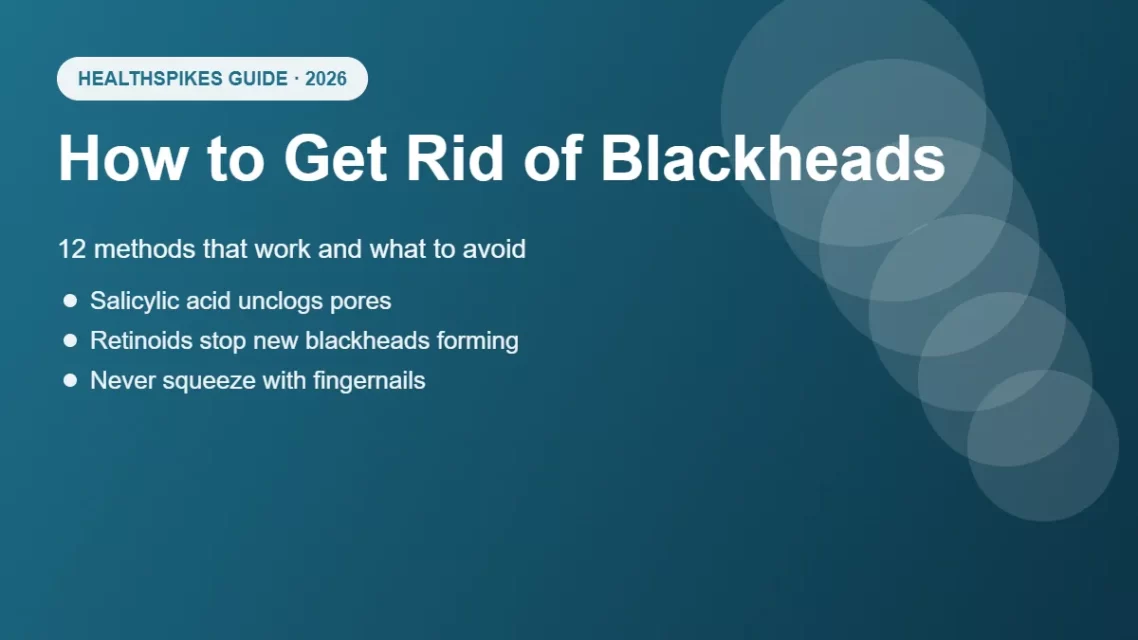
- Salicylic acid and retinoids such as adapalene are the most effective over-the-counter treatments.
- Results take 6 to 12 weeks of consistent use.
- Squeezing with fingers can push debris deeper and cause scarring.
- Pore strips remove the top of blackheads but they refill within weeks.
What causes blackheads (and why it matters for how to get rid of blackheads)
Every pore contains a hair follicle and an oil gland. When the gland makes extra oil and dead skin cells do not shed properly, they mix into a plug. If the pore stays open at the surface, the plug darkens on contact with air and becomes a blackhead. If the pore closes over, it becomes a whitehead.
- Excess oil production, often driven by hormones during puberty, periods, pregnancy or with PCOS.
- Sticky skin cells that clog the follicle opening.
- Heavy, pore-clogging skin care, makeup or hair products.
- Humidity and sweat.
- Some medicines, such as corticosteroids and some hormonal contraceptives.
- Genetics, which influence pore size and oil production.
How to get rid of blackheads: 12 proven methods
1. Use salicylic acid
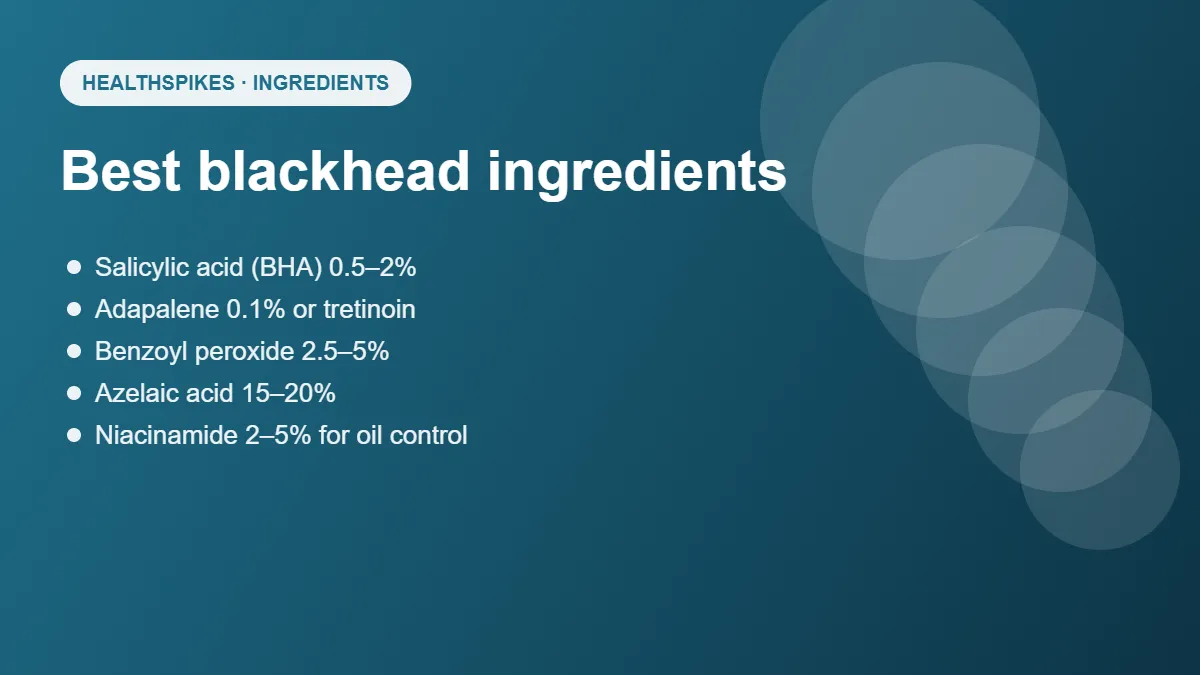
Salicylic acid is a beta hydroxy acid (BHA) that is oil-soluble, so it can travel into the pore and dissolve the mix of oil and dead cells. Look for cleansers, toners or leave-on products with 0.5 to 2 percent. Leave-on products work better than cleansers because they stay on the skin longer. Start every other night if you have sensitive skin.
2. Add a retinoid
Retinoids normalize how skin cells shed, which stops new plugs forming. Adapalene 0.1 percent gel is available without a prescription in many countries and is one of the best long-term answers for how to get rid of blackheads. Prescription tretinoin and tazarotene are stronger. Apply a pea-sized amount at night to dry skin, start two or three nights a week, and use sunscreen daily. Retinoids are not used in pregnancy.
3. Try benzoyl peroxide for mixed acne
If you also have red pimples, benzoyl peroxide (2.5 to 5 percent) kills acne bacteria and has mild peeling effects. It bleaches fabrics, so use white towels and pillowcases.
4. Use azelaic acid
Azelaic acid unclogs pores, calms redness and fades dark marks. It is gentle and generally considered safe in pregnancy.
5. Use a clay or charcoal mask
Clay masks absorb surface oil and can make pores look clearer for a day or two. They do not clear blackheads on their own but are a useful weekly add-on for oily skin.
6. Choose non-comedogenic products
Look for “non-comedogenic” or “won’t clog pores” on moisturizers, sunscreens and makeup. Heavy oils, butters and thick balms on the nose and chin can make blackheads worse.
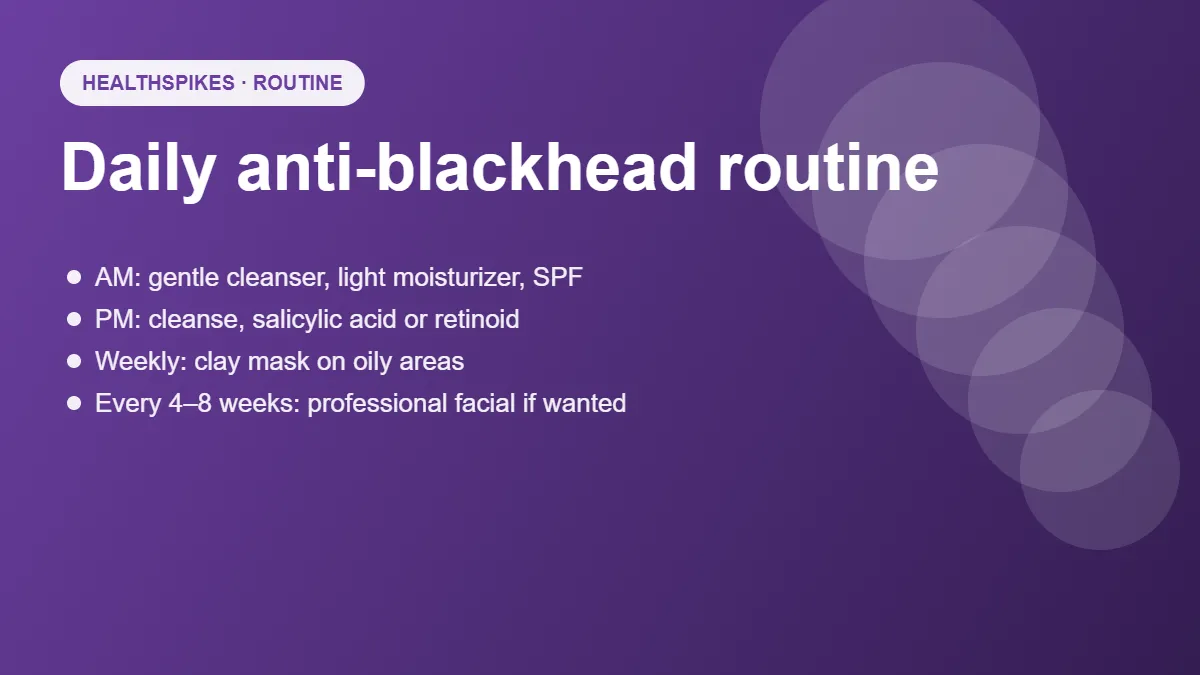
7. Cleanse gently twice a day
Use a mild cleanser morning and night and after sweating. Over-washing and harsh soaps can strip the skin and trigger more oil.
8. Remove makeup every night
Sleeping in makeup and sunscreen can clog pores. Double cleansing with an oil-based cleanser followed by a gentle face wash helps.
9. Use niacinamide
Niacinamide (vitamin B3) at 2 to 5 percent may help regulate oil and make pores look smaller. It pairs well with other treatments.
10. Consider chemical peels
Professional salicylic or glycolic acid peels can speed results. At-home peels should be used carefully and not combined with retinoids on the same night.
11. Get professional extraction
A dermatologist or licensed esthetician can remove stubborn blackheads with sterile tools and proper technique, reducing the risk of scarring.
12. See a dermatologist for prescription treatment
If over-the-counter options fail after three months, prescription retinoids, combination gels or, for severe acne, oral treatments may help.
How to remove blackheads safely at home
Most dermatologists recommend leaving extraction to professionals. If you choose to do it yourself, follow these steps to reduce damage.
- Wash your hands and face.
- Soften the skin with a warm shower or warm compress for 5 to 10 minutes.
- Use a clean comedone extractor or wrap your fingertips in tissue; never use nails.
- Press gently around the blackhead, not on it.
- If it does not come out easily, stop and try another day.
- Apply a gentle, non-comedogenic moisturizer afterward.
Never pick at inflamed, red or painful spots. These are deeper and squeezing can cause infection and scarring.
What not to do
- Do not scrub hard with gritty scrubs or brushes; they irritate skin and do not reach inside pores.
- Do not use toothpaste, lemon juice, baking soda or glue masks.
- Do not rely on pore strips; they remove only the top of the plug and the pore refills within weeks.
- Do not mix many strong actives at once.
- Do not expect instant results; pores take weeks to clear.
How long does it take to get rid of blackheads?
Skin renews itself about every four weeks, and blackheads form over weeks. Expect to see improvement after 6 to 8 weeks of daily treatment, with best results at about 12 weeks. Keep using your treatment after blackheads clear, because they tend to return when you stop. Many people stay on a retinoid or salicylic acid a few nights a week for maintenance.
Blackheads vs sebaceous filaments
Many “blackheads” on the nose are actually sebaceous filaments: normal, gray or tan dots of oil that line pores. They are flat, evenly spread and refill within days after squeezing. They cannot be removed permanently, but salicylic acid, retinoids and niacinamide can make them less noticeable. True blackheads are darker, slightly raised and fewer in number.
How to get rid of blackheads by skin type
| Skin type | Best approach |
|---|---|
| Oily | Salicylic acid daily, adapalene at night, oil-free gel moisturizer, weekly clay mask |
| Combination | Treat the T-zone with BHA; keep cheeks hydrated with a light cream |
| Dry | Gentle cleanser, adapalene 2–3 nights a week, ceramide moisturizer, avoid strong cleansers |
| Sensitive | Azelaic acid or low-strength BHA every other night; fragrance-free products |
| Darker skin tones | Gentle actives to avoid dark marks; azelaic acid helps both blackheads and pigmentation |
Matching your routine to your skin type is one of the simplest ways to learn how to get rid of blackheads without irritation.
How to get rid of blackheads for good: a 12-week plan
- Weeks 1–2: start a gentle cleanser twice daily and a salicylic acid product every other night.
- Weeks 3–4: if your skin tolerates it, use salicylic acid nightly or add adapalene on alternate nights.
- Weeks 5–8: continue; expect fewer new blackheads and smoother texture.
- Weeks 9–12: assess with photos; add a weekly clay mask or a professional facial if needed.
- After 12 weeks: keep a maintenance routine, as blackheads return when treatment stops.
If you are still asking how to get rid of blackheads after following a plan like this, a dermatologist can prescribe stronger treatments.
Blackheads on the back, chest and ears
Blackheads can also appear on the back, chest, shoulders and in the ears, where oil glands are active. Body washes with salicylic acid or benzoyl peroxide, showering soon after exercise, and loose, breathable clothing help. For the ears, avoid poking with cotton swabs; gentle cleansing of the outer ear and, if needed, a dermatologist visit are safer.
Related guides
- Hormonal Acne: Causes and Treatments
- Skin Care Routine Steps in Order
- Anti-Aging Skin Care Routine
- Coconut Oil for Skin
Frequently asked questions
How to get rid of blackheads on the nose?
Use a leave-on salicylic acid product or adapalene at night, a weekly clay mask, and avoid heavy products on the nose.
Do pore vacuums work?
They can remove some surface debris but may cause bruising and broken blood vessels. Dermatologists generally do not recommend them.
Can blackheads go away on their own?
Some do as skin sheds, but most need treatment to clear and stop new ones.
Is it bad to squeeze blackheads?
Squeezing with fingers can cause scarring and infection. Professional extraction is safer.
Does diet affect blackheads?
High-glycemic foods and dairy may worsen acne in some people, but diet is not the main cause of blackheads.
What is the fastest way for how to get rid of blackheads?
Professional extraction gives the quickest visible result, but salicylic acid and retinoids are needed to stop them returning.
Medical disclaimer: This article is for general information and is not a substitute for advice from your doctor or another qualified health professional. See our medical disclaimer and editorial policy.