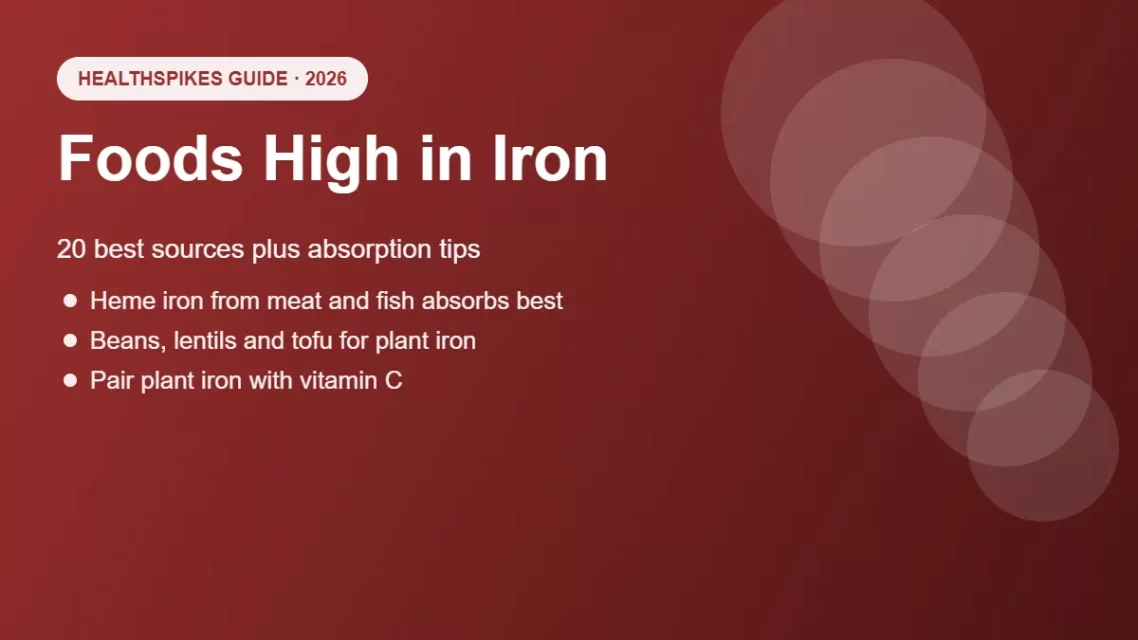
Iron is essential for making hemoglobin, the protein in red blood cells that carries oxygen around your body. Without enough, you can feel tired, short of breath and cold, and eventually develop iron-deficiency anemia, the most common nutritional deficiency in the world. The good news is that many everyday foods are rich in iron. The key is knowing which foods high in iron your body absorbs best and how to combine them so you get the most from every meal.
This guide lists the top animal and plant sources with milligrams per serving, explains the difference between heme and non-heme iron, and shares practical tips for meat-eaters, vegetarians, pregnant women and anyone with low iron.
Key takeaways
- Heme iron from meat, poultry and seafood is absorbed two to three times better than non-heme iron from plants.
- Oysters, beef liver, fortified cereals, white beans and lentils are among the richest foods high in iron.
- Vitamin C can multiply absorption of plant iron; tea, coffee and calcium reduce it.
- Women aged 19 to 50 need 18 mg a day, more than double the 8 mg men need.
- Vegetarians may need about 1.8 times more iron because plant iron is less well absorbed.
Chart: 20 foods high in iron
Values are approximate from the NIH Office of Dietary Supplements and USDA FoodData Central. The Daily Value (DV) for iron is 18 mg.
| Food | Serving | Iron (mg) | % DV |
|---|---|---|---|
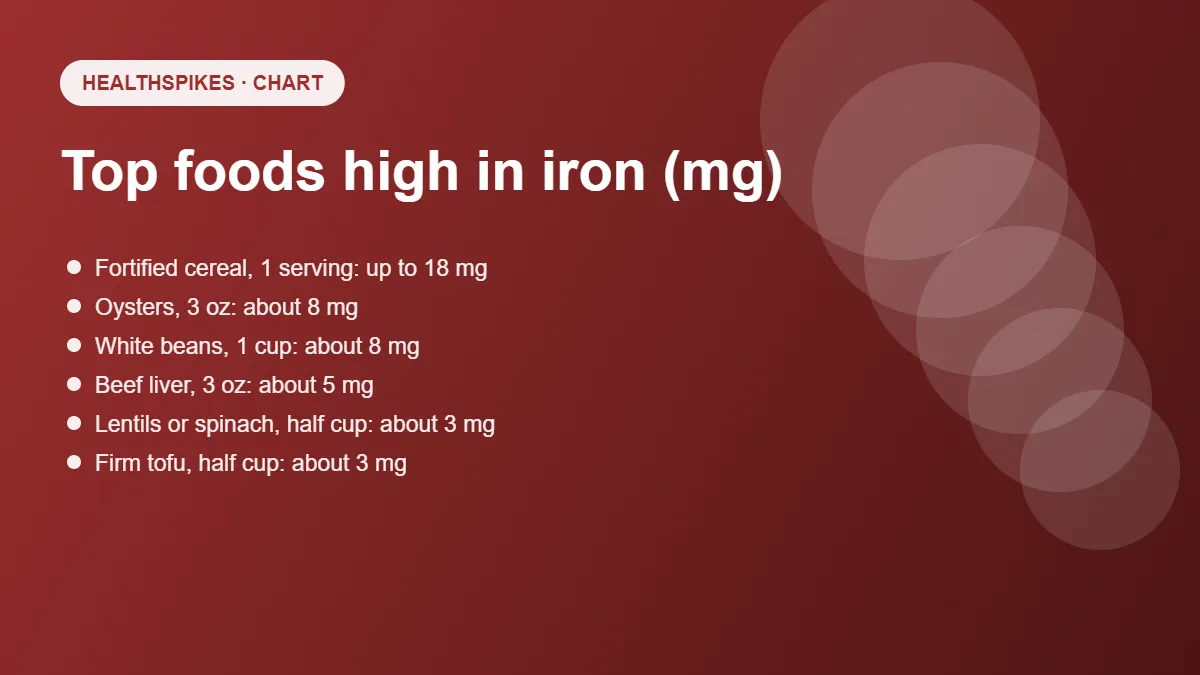
| Fortified breakfast cereal | 1 serving | Up to 18 | Up to 100% |
| Oysters, cooked | 3 oz (85 g) | About 8 | 44% |
| White beans, canned | 1 cup | About 8 | 44% |
| Dark chocolate (45–69% cacao) | 3 oz | About 7 | 39% |
| Beef liver, pan-fried | 3 oz | About 5 | 28% |
| Lentils, boiled | Half cup | About 3 | 17% |
| Spinach, boiled | Half cup | About 3 | 17% |
| Tofu, firm | Half cup | About 3 | 17% |
| Kidney beans, canned | Half cup | About 2 | 11% |
| Sardines, canned in oil | 3 oz | About 2 | 11% |
| Chickpeas, boiled | Half cup | About 2 | 11% |
| Tomatoes, stewed, canned | Half cup | About 2 | 11% |
| Beef, braised bottom round | 3 oz | About 2 | 11% |
| Potato, baked with skin | 1 medium | About 2 | 11% |
| Cashews, roasted | 1 oz | About 2 | 11% |
| Pumpkin seeds | 1 oz | About 2.5 | 14% |
| Quinoa, cooked | 1 cup | About 2.8 | 16% |
| Green peas, boiled | Half cup | About 1 | 6% |
| Chicken, roasted dark meat | 3 oz | About 1 | 6% |
| Egg, large | 1 | About 0.9 | 5% |
Heme vs non-heme iron: why it matters
There are two forms of iron in food. Heme iron is found in meat, poultry and seafood and is absorbed relatively well, roughly 15 to 35 percent. Non-heme iron is found in plants, fortified foods and also in meat, and its absorption is much lower and more variable, often around 2 to 20 percent, depending on what else you eat with it.
That is why a serving of beef with 2 mg of iron can deliver as much absorbed iron as a larger serving of spinach. It also means that vegetarians and vegans can absolutely get enough iron, but they benefit most from combining foods high in iron with absorption boosters.
Best animal-based foods high in iron
- Shellfish: oysters, clams and mussels are exceptionally rich and also provide zinc and vitamin B12.
- Organ meats: liver is high in iron but also very high in vitamin A, so pregnant women are usually advised to avoid it.
- Red meat: beef, lamb and venison provide easily absorbed heme iron.
- Poultry: dark meat contains more iron than white meat.
- Fish: sardines, tuna and mackerel provide moderate amounts plus omega-3 fats.
Meat, fish and poultry also contain a “meat factor” that increases absorption of plant iron eaten in the same meal.
Best plant-based foods high in iron
If you eat little or no meat, focus on legumes, soy, seeds, whole grains and leafy greens, and use the absorption tips below.
- Beans and lentils: white beans, kidney beans, chickpeas and lentils are inexpensive, high-fiber sources.
- Soy foods: tofu (especially calcium-set firm tofu), tempeh and edamame.
- Seeds and nuts: pumpkin seeds, sesame seeds (tahini), cashews and hemp seeds.
- Whole grains: quinoa, oats, amaranth and fortified breads and cereals.
- Leafy greens: spinach, Swiss chard and kale; spinach contains oxalates that reduce absorption, so pair it with vitamin C.
- Dried fruit: apricots, raisins and prunes provide smaller amounts.
How to absorb more iron from food
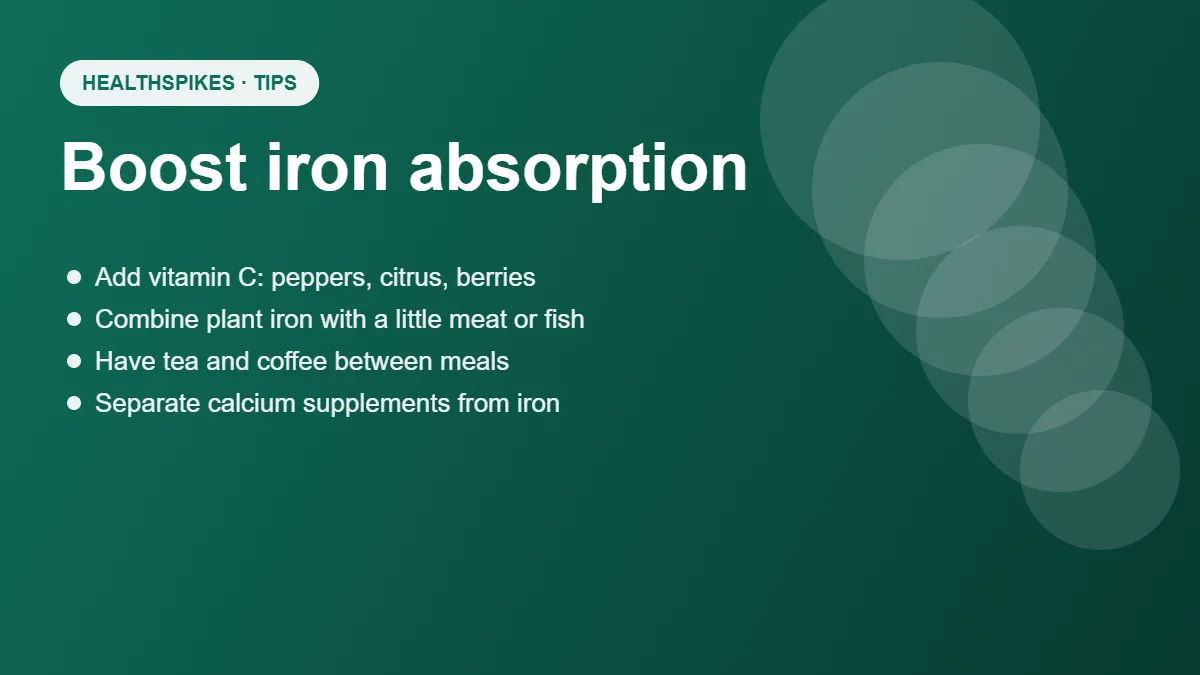
- Add vitamin C: eating 75 mg or more of vitamin C with a meal can significantly increase non-heme iron absorption. Try bell peppers, broccoli, tomatoes, citrus, kiwi or strawberries.
- Mix plant and animal sources: a little meat or fish in a bean chili or lentil soup boosts absorption of the plant iron.
- Time your tea and coffee: polyphenols in tea and coffee can cut iron absorption by more than half. Drink them an hour or two apart from iron-rich meals.
- Watch calcium timing: calcium supplements and large amounts of dairy at the same meal reduce iron absorption.
- Soak, sprout and ferment: soaking beans and grains, sprouting and sourdough fermentation reduce phytates, which bind iron.
- Cook in cast iron: cooking acidic foods like tomato sauce in a cast-iron pan can add iron to the food.
How much iron do you need?
| Group | Recommended daily amount |
|---|---|
| Men 19+ | 8 mg |
| Women 19–50 | 18 mg |
| Women 51+ | 8 mg |
| Pregnancy | 27 mg |
| Breastfeeding | 9–10 mg |
| Teens 14–18 (girls / boys) | 15 mg / 11 mg |
| Vegetarians | About 1.8 times the above |
These values come from the U.S. National Academy of Medicine. Women of childbearing age need more because of blood lost during periods.
Signs you may not be getting enough iron
- Tiredness and weakness.
- Pale skin, gums or inner eyelids.
- Shortness of breath or a fast heartbeat with exercise.
- Cold hands and feet.
- Brittle or spoon-shaped nails.
- Hair shedding.
- Cravings for ice or non-food items (pica).
- Restless legs.
If you have these symptoms, ask your doctor for a blood count and ferritin test before starting supplements. Our guide to iron supplements for anemia explains treatment options, and low MCHC explains a common blood test clue.
Easy meal ideas with foods high in iron
- Breakfast: fortified cereal or oatmeal with pumpkin seeds and strawberries.
- Lunch: lentil soup with tomatoes and a side of bell pepper strips.
- Snack: hummus with red pepper or a handful of cashews and dried apricots.
- Dinner: beef and broccoli stir-fry, or tofu and chickpea curry with spinach and a squeeze of lemon.
Can you have too much iron?
Getting too much iron from food alone is rare in healthy people. The upper limit for adults is 45 mg a day from all sources, mostly a concern with supplements. People with hereditary hemochromatosis absorb too much iron and should avoid iron supplements and limit iron-fortified foods and vitamin C supplements with meals. Iron supplements are also a leading cause of poisoning in young children, so keep them locked away.
Foods high in iron during pregnancy
Iron needs rise to 27 mg a day in pregnancy because blood volume increases by about 50 percent and the baby builds its own iron stores. Many women struggle to reach this from food alone, so prenatal vitamins usually contain iron. Good choices include lean red meat, poultry, fish low in mercury (such as salmon and sardines), beans, lentils, tofu and fortified cereals. Liver and liver products are usually avoided in pregnancy because of their very high vitamin A content.
Your midwife or doctor will check your hemoglobin during pregnancy and may recommend an extra iron supplement if levels are low.
Foods high in iron for children
Babies are born with iron stores that start to run low at around 6 months, which is why iron-rich first foods matter. Options include iron-fortified infant cereals, pureed meats, mashed beans and lentils. Toddlers who drink a lot of cow’s milk (more than about 2 cups or 500 ml a day) are at risk of iron deficiency, because milk is low in iron, can irritate the gut lining and fills them up. Offer foods high in iron at each meal and limit milk to recommended amounts.
Related guides
- Best Iron Supplements for Anemia
- Low MCHC Blood Test
- High-Fiber Foods List
- Foods High in Vitamin D
- Vitamin C Deficiency Signs
Frequently asked questions
Which fruit is highest in iron?
Dried fruits like apricots, prunes and raisins have the most, but amounts are modest. Fruit is more useful as a vitamin C source to boost iron absorption.
Is spinach one of the best foods high in iron?
Spinach contains iron, but oxalates limit absorption. It helps most when paired with vitamin C.
How quickly can foods high in iron raise my levels?
Food changes work slowly. If you are deficient, a doctor may recommend supplements, and levels typically improve over weeks to months.
Do eggs have a lot of iron?
Eggs provide a small amount, mostly in the yolk, and also contain a compound that reduces absorption.
What drink is high in iron?
Few drinks are naturally high in iron. Some fortified plant milks and juices contain added iron.
What foods high in iron are good for vegetarians?
Lentils, beans, tofu, tempeh, pumpkin seeds, quinoa and fortified cereals, ideally eaten with vitamin C-rich foods.
Medical disclaimer: This article is for general information and is not a substitute for advice from your doctor or another qualified health professional. See our medical disclaimer and editorial policy.