Rosemary oil for hair has become one of the most searched natural hair loss remedies, helped by viral videos claiming dramatic regrowth. Behind the hype there is a small amount of real research, most notably a 2015 study that compared rosemary oil with minoxidil, the standard over-the-counter treatment. But the evidence is far thinner than social media suggests, and how you use rosemary oil for hair makes a big difference to both safety and results.
This guide explains what the studies actually found, who may benefit, how to make and apply a properly diluted blend, how long it takes, and how rosemary oil compares with proven treatments.
Key takeaways
- A single 2015 trial found rosemary oil for hair was about as effective as 2% minoxidil for pattern hair loss after 6 months.
- The evidence is limited: one small, short study with no independent repeat trials.
- Rosemary essential oil must be diluted in a carrier oil to avoid irritation.
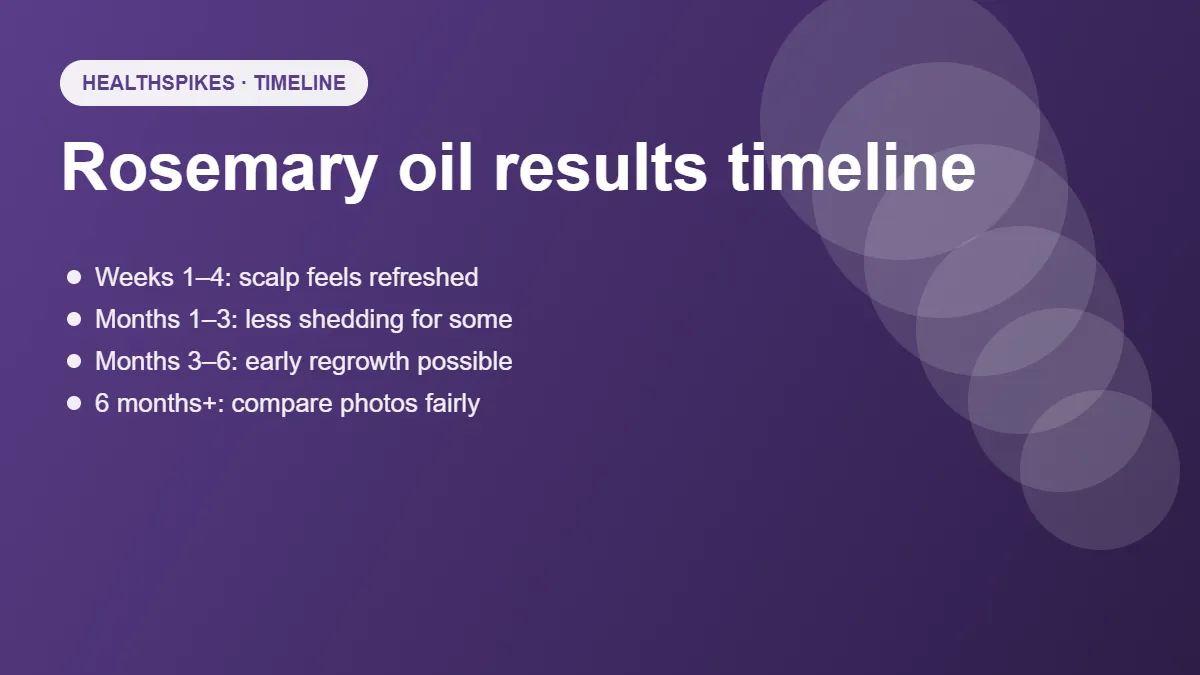
- Results, if any, take 3 to 6 months of consistent use.
- For significant hair loss, see a dermatologist; minoxidil and other treatments have stronger evidence.
What does rosemary oil do for hair?
Rosemary (Salvia rosmarinus, formerly Rosmarinus officinalis) essential oil contains compounds such as carnosic acid, 1,8-cineole and camphor. Lab and animal studies suggest these may improve blood flow to the scalp, reduce inflammation and oxidative stress, and possibly block 5-alpha-reductase, the enzyme that converts testosterone to DHT, the hormone that shrinks hair follicles in pattern baldness.
In a 2013 study in mice, rosemary leaf extract applied to the skin improved hair regrowth that had been blocked by testosterone. Results in animals do not always translate to people, which is why the human trial below matters so much.
The study behind rosemary oil for hair growth
The key human study was published in SKINmed in 2015. Researchers randomly assigned 100 adults with androgenetic alopecia (male or female pattern hair loss) to apply either rosemary oil or 2% minoxidil to the scalp daily for six months.
- At three months, neither group showed a significant increase in hair count.
- At six months, both groups had a significant increase in hair count, with no meaningful difference between rosemary oil and minoxidil.
- Scalp itching was more common in the minoxidil group.
These results are encouraging, but the study had important limits. It was small, lasted only six months, used 2% minoxidil (weaker than the 5% strength many people use), and has not been repeated by an independent team. So rosemary oil for hair is best described as promising, not proven.
How to use rosemary oil for hair safely
Pure essential oils are highly concentrated and can burn or irritate the skin. Always dilute rosemary essential oil in a carrier oil before applying it to your scalp.
| Ingredient | Amount | Notes |
|---|---|---|
| Rosemary essential oil | 3–5 drops | About a 1–2% dilution |
| Carrier oil (jojoba, argan, sweet almond or coconut) | 1 tablespoon (15 ml) | Jojoba is light and close to natural scalp oil |
| Optional: peppermint oil | 1–2 drops | Cooling tingle; little human evidence for growth |
Application routine
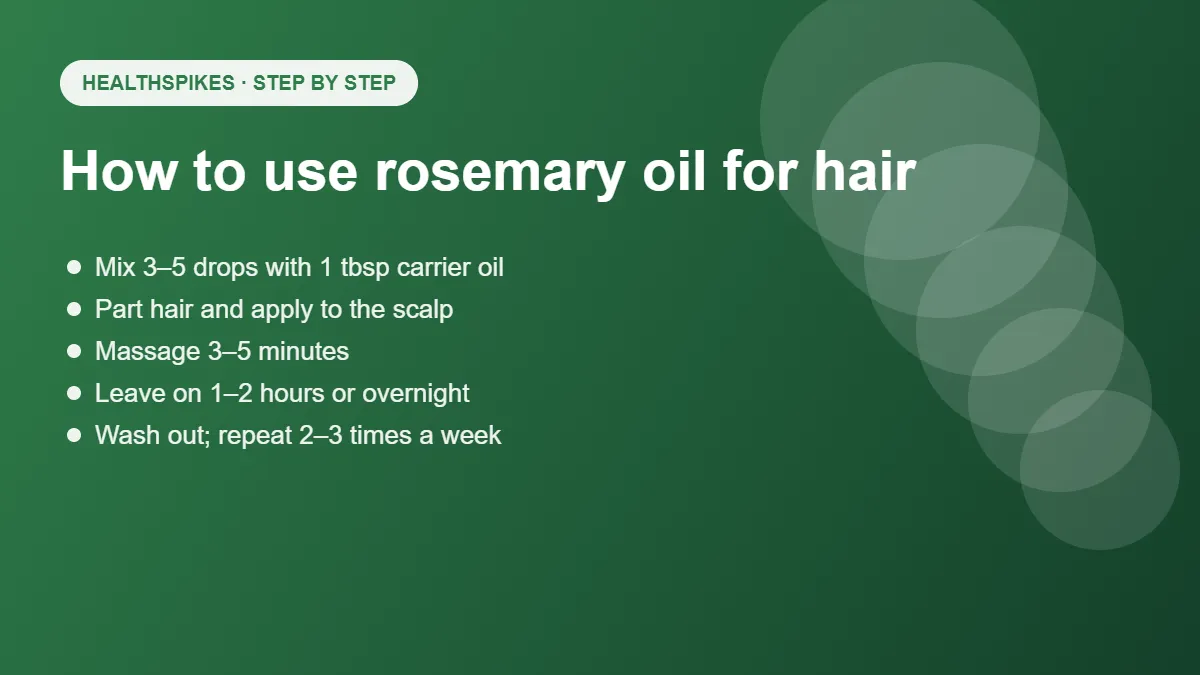
- Apply to a dry or damp scalp, focusing on thinning areas.
- Massage gently with fingertips for 3 to 5 minutes; scalp massage may help on its own.
- Leave on for at least one to two hours, or overnight with a shower cap.
- Wash out with a gentle shampoo.
- Repeat two to three times a week.
Rosemary water and shampoos
Rosemary water, made by simmering fresh rosemary sprigs in water and cooling it, is a gentler option sprayed on the scalp. Shampoos with rosemary oil are convenient, but they are rinsed off quickly, so contact time is short. Neither has been studied as thoroughly as the diluted oil used in the 2015 trial.
Who may benefit most
- People with early androgenetic alopecia (thinning at the crown or a widening part).
- People who cannot tolerate minoxidil because of scalp irritation.
- Those wanting a gentle add-on to a proven treatment plan.
Rosemary oil for hair is unlikely to help hair loss caused by thyroid problems, iron deficiency, alopecia areata, scarring alopecias or medicines. These causes need medical diagnosis and treatment.
How long does rosemary oil take to work?
Hair grows about 1 cm (0.4 in) a month, and follicles that have shrunk need time to recover. In the 2015 study, improvement appeared only at six months, not at three. Take clear photos of your part and hairline in the same lighting before starting and every month after, so you can judge real change instead of relying on memory. If you see no difference after six months of regular use, it may not work for you.
Rosemary oil vs minoxidil vs other options
| Option | Evidence | Notes |
|---|---|---|
| Rosemary oil (diluted) | One small trial | Low cost; patch test first |
| Minoxidil 5% foam or 2% solution | Strong; FDA-approved | Shedding at first; must continue |
| Oral finasteride (men) | Strong | Prescription; discuss side effects |
| Low-dose oral minoxidil | Growing evidence | Prescription; monitor side effects |
| Platelet-rich plasma | Moderate | In-clinic; cost varies |
| Pumpkin seed oil (oral) | One small trial in men | Limited evidence |
Some people use both rosemary oil for hair and minoxidil. If you do, apply them at different times of day to reduce irritation, and ask your dermatologist first.
Side effects and who should avoid it
- Scalp irritation, redness or itching, especially if not diluted.
- Allergic contact dermatitis; do a 24-hour patch test on the inner arm.
- Eye irritation if it runs into the eyes.
- Avoid ingesting essential oils.
- Pregnant or breastfeeding women, people with epilepsy (camphor content), and children should ask a doctor before using essential oils.
- Keep essential oils away from pets; some are toxic to cats and dogs.
Tips to get the best results
- Be consistent; two to three applications a week for at least six months.
- Combine with gentle scalp massage.
- Eat enough protein, iron, zinc and vitamin D.
- Treat dandruff or scalp inflammation, which can worsen shedding.
- Avoid tight hairstyles and excessive heat.
- See a dermatologist if hair loss is sudden, patchy or rapid.
Choosing a quality rosemary oil for hair
- Buy 100 percent pure rosemary essential oil with the Latin name on the label (Rosmarinus officinalis or Salvia rosmarinus).
- Choose dark glass bottles, which protect the oil from light.
- Check for a batch number and, ideally, a GC-MS test report from the seller.
- Be cautious with very cheap oils, which may be diluted or synthetic.
- Pre-mixed “hair growth oils” are convenient, but check that rosemary is listed near the top and that the essential oil is diluted to a safe level.
Common mistakes when using rosemary oil for hair
The most common mistake is applying undiluted essential oil straight to the scalp, which can cause burning, redness and flaking. Another is giving up after a few weeks: in the only human trial, improvements were not seen until six months. Some people also apply rosemary oil for hair only to the ends of their hair, but the follicles are in the scalp, so that is where it needs to go. Finally, relying on rosemary oil while ignoring a medical cause of hair loss, such as low iron or thyroid disease, can delay effective treatment.
Rosemary oil for hair and dandruff
Rosemary has some antimicrobial activity in lab studies, and some people find a diluted blend helps a flaky, itchy scalp. However, if you have true dandruff or seborrheic dermatitis, medicated shampoos containing ketoconazole, zinc pyrithione or selenium sulfide have far stronger evidence. Heavy oils may even feed the yeast linked to dandruff in some people, so watch how your scalp responds.
Related guides
- Best Oils for Hair Growth Ranked
- Castor Oil for Hair Growth
- Best Hair Loss Treatments for Women
- Derma Roller for Hair Growth
- Batana Oil for Hair
Frequently asked questions
Can I leave rosemary oil in my hair overnight?
Yes, if it is diluted. Use a shower cap and wash it out in the morning.
Does rosemary oil for hair work for women?
The 2015 trial included both men and women with pattern hair loss, but most participants were men. Women may also benefit, but evidence is limited.
Can rosemary oil regrow a receding hairline?
It may help early thinning, but there is no good evidence it restores a fully bald hairline.
Is rosemary water as good as rosemary oil?
Rosemary water has not been studied for hair growth. It is gentle but may be less concentrated.
Can rosemary oil cause hair loss?
It is not known to cause hair loss, but irritation and scratching can lead to breakage. Stop if your scalp becomes inflamed.
How often should I use rosemary oil for hair?
Two to three times a week is a common routine. Daily use is possible if your scalp tolerates it.
Medical disclaimer: This article is for general information and is not a substitute for advice from your doctor or another qualified health professional. See our medical disclaimer and editorial policy.