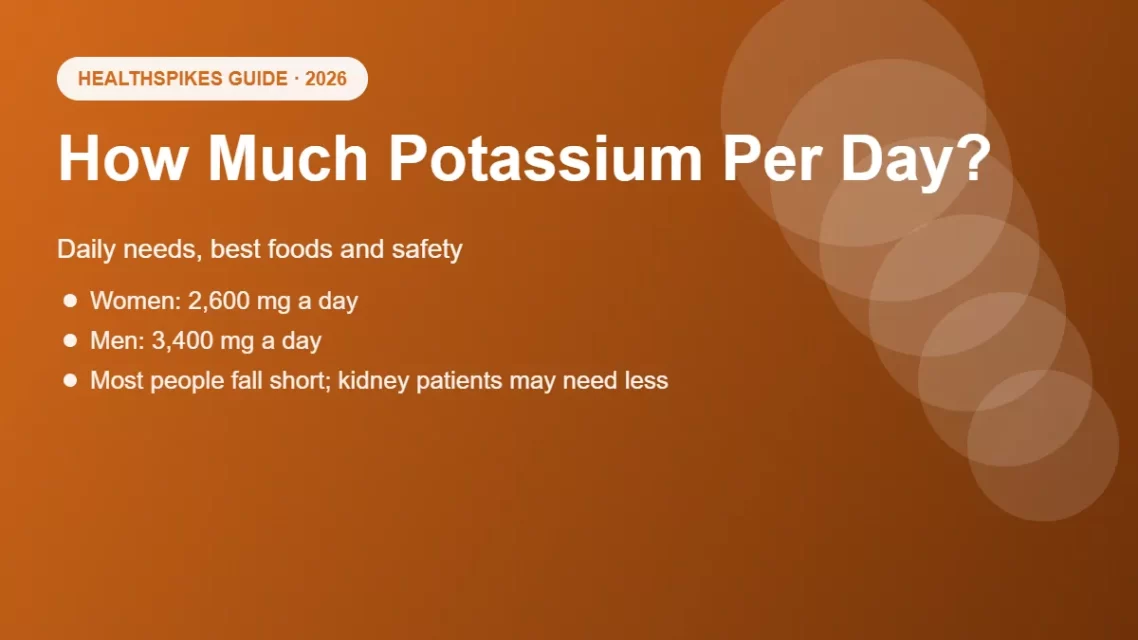
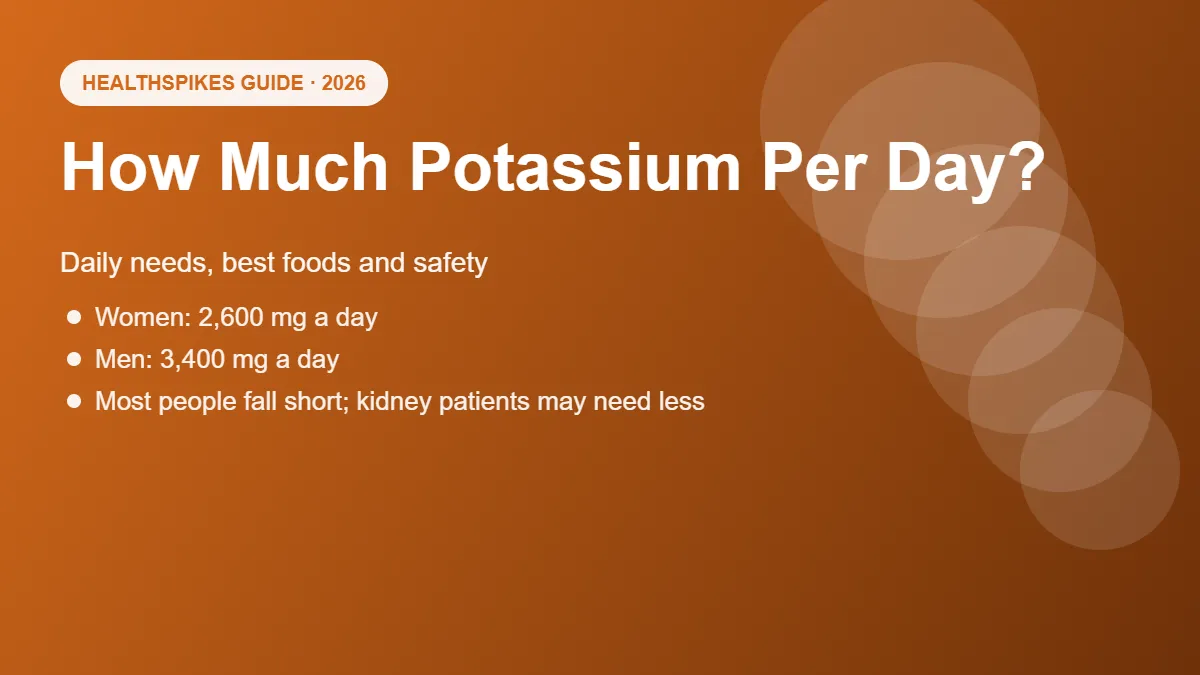
Potassium is a mineral and electrolyte that keeps your heart beating steadily, helps muscles contract, balances fluids and offsets some of the blood pressure-raising effects of salt. Yet surveys show most adults eat less than recommended. If you have wondered how much potassium per day you actually need, the answer depends on your age, sex, health and medicines. For most healthy adults the target is 2,600 to 3,400 mg, while people with kidney disease may need much less.
Below you will find official daily amounts, a food chart, signs of low and high potassium, and practical ways to reach your target safely through food.
Key takeaways
- The U.S. adequate intake is 3,400 mg a day for men and 2,600 mg for women.
- The World Health Organization advises at least 3,510 mg a day for adults to help control blood pressure.
- Fruits, vegetables, beans, potatoes, dairy and fish are the best sources.
- Food is the preferred way to get potassium; supplements are limited to small doses.
- People with kidney disease or on certain blood pressure medicines may need to limit potassium.
How much potassium per day by age and sex
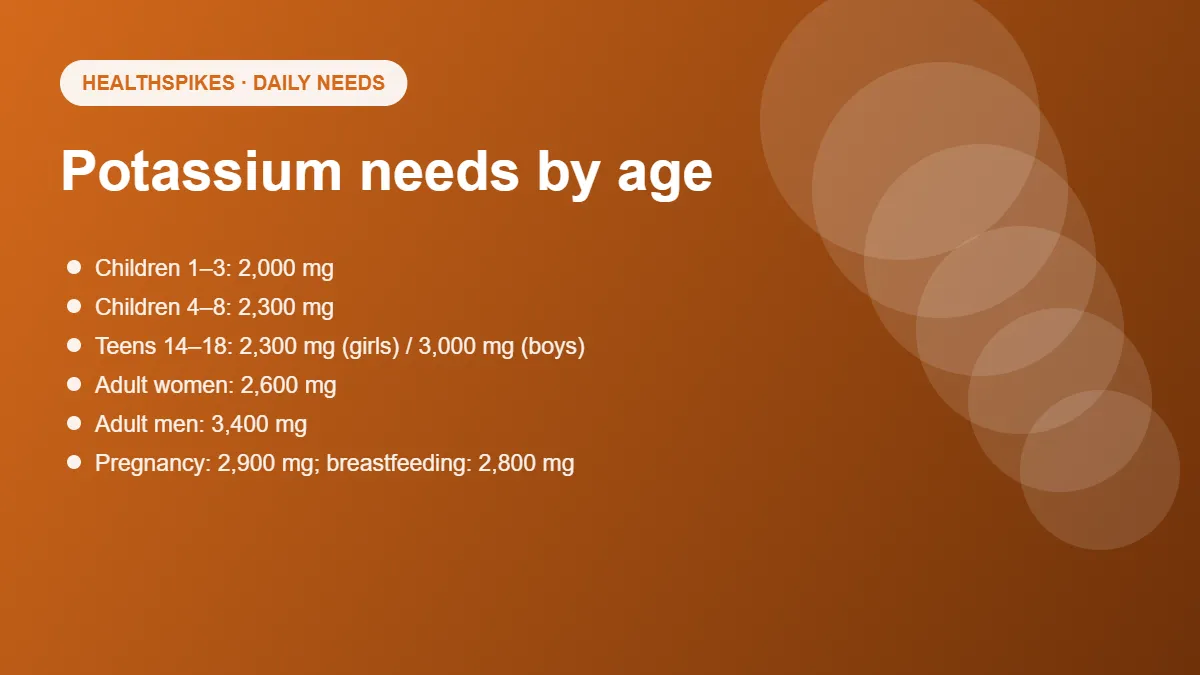
In 2019, the U.S. National Academies of Sciences, Engineering, and Medicine updated potassium recommendations, setting Adequate Intakes (AIs) rather than strict requirements because there was not enough data to set exact needs.
| Age group | Males (mg/day) | Females (mg/day) |
|---|---|---|
| 0–6 months | 400 | 400 |
| 7–12 months | 860 | 860 |
| 1–3 years | 2,000 | 2,000 |
| 4–8 years | 2,300 | 2,300 |
| 9–13 years | 2,500 | 2,300 |
| 14–18 years | 3,000 | 2,300 |
| 19+ years | 3,400 | 2,600 |
| Pregnancy (19+) | — | 2,900 |
| Breastfeeding (19+) | — | 2,800 |
The Daily Value on U.S. food labels is 4,700 mg. Other countries set slightly different targets; the WHO recommends at least 90 mmol (3,510 mg) a day for adults.
Why potassium matters
- Blood pressure: higher potassium intake helps the kidneys excrete sodium and relaxes blood vessel walls. Studies show increasing potassium lowers blood pressure, especially in people who eat a lot of salt.
- Stroke risk: large observational studies link higher potassium intake to a lower risk of stroke.
- Heart rhythm: potassium is essential for normal electrical signals in the heart.
- Muscles and nerves: it helps muscles contract and nerves send signals.
- Bones and kidney stones: potassium-rich fruit and vegetables may help bone health and reduce calcium kidney stone risk.
Best foods to reach how much potassium per day you need
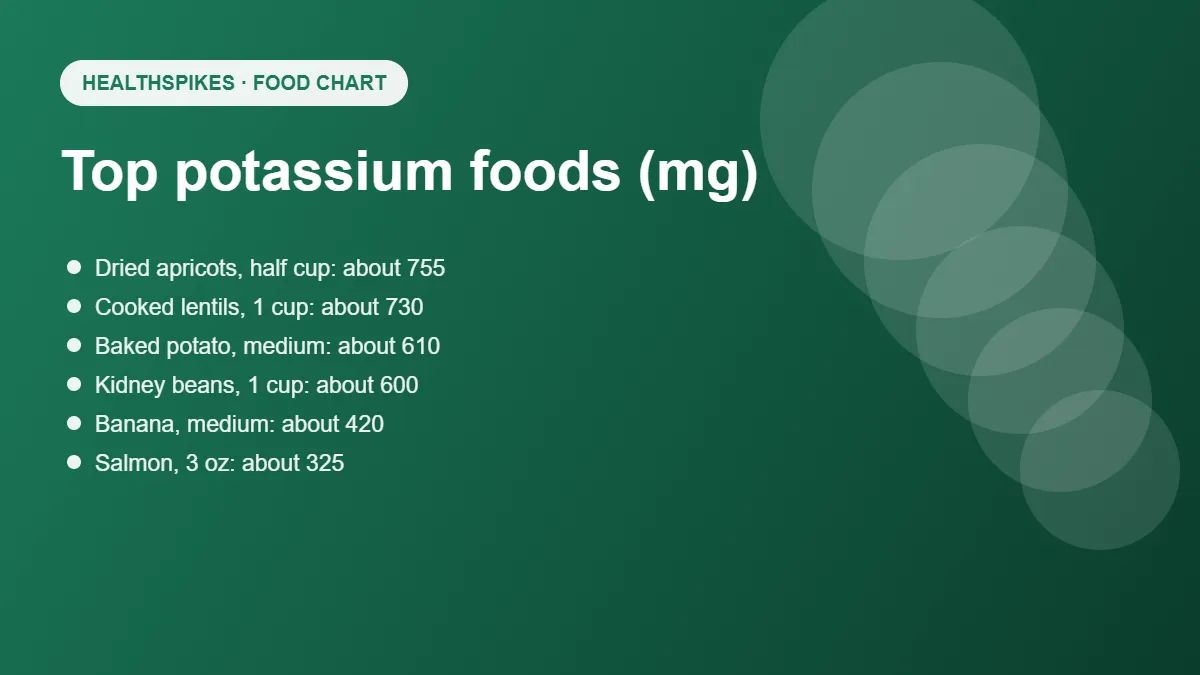
Values below are approximate, from the NIH Office of Dietary Supplements and USDA data.
| Food | Serving | Potassium (mg) |
|---|---|---|
| Dried apricots | Half cup | 755 |
| Lentils, cooked | 1 cup | 731 |
| Acorn squash, cooked | 1 cup | 644 |
| Prunes | Half cup | 635 |
| Raisins | Half cup | 618 |
| Potato, baked, flesh only | 1 medium | 610 |
| Kidney beans, canned | 1 cup | 607 |
| Orange juice | 1 cup | 496 |
| Soybeans, cooked | Half cup | 443 |
| Banana | 1 medium | 422 |
| Milk, 1% | 1 cup | 366 |
| Spinach, raw | 2 cups | 334 |
| Chicken breast, cooked | 3 oz | 332 |
| Plain yogurt, nonfat | 1 cup (6 oz) | 330 |
| Salmon, cooked | 3 oz | 326 |
| Avocado | Half | 345 |
| Tomato, raw | 1 medium | 292 |
A sample day that meets your target
- Breakfast: oatmeal with a sliced banana and a glass of milk (about 900 mg).
- Lunch: lentil soup with spinach salad (about 1,100 mg).
- Snack: yogurt with dried apricots (about 700 mg).
- Dinner: baked salmon, a baked potato with skin and steamed broccoli (about 1,300 mg).
That adds up to around 4,000 mg, more than enough for most adults who want to know how much potassium per day to aim for.
Signs of low potassium (hypokalemia)
Low blood potassium is usually caused by losses rather than low intake: vomiting, diarrhea, heavy sweating, and especially diuretics (“water pills”) and laxative overuse.
- Muscle weakness, cramps or twitching.
- Fatigue.
- Constipation.
- Heart palpitations or irregular heartbeat.
- Tingling or numbness.
Severe hypokalemia can cause dangerous heart rhythms and needs medical treatment. A simple blood test measures your potassium level; the normal range is about 3.5 to 5.0 mmol/L.
Signs of high potassium (hyperkalemia)
High potassium is rare in healthy people because the kidneys remove extra. It is more likely with kidney disease, uncontrolled diabetes, Addison disease, or medicines that raise potassium.
- Often no symptoms until levels are high.
- Muscle weakness or paralysis.
- Nausea.
- Slow or irregular heartbeat, which can be life-threatening.
Who should be careful with potassium
- People with chronic kidney disease, who often need a low-potassium diet set by their care team.
- People taking ACE inhibitors (e.g. lisinopril), ARBs (e.g. losartan), spironolactone, eplerenone, amiloride or triamterene.
- People taking trimethoprim or some NSAIDs long term.
- Anyone considering salt substitutes made with potassium chloride.
If any of these apply, ask your doctor how much potassium per day is right for you before increasing intake or using supplements.
Potassium supplements: what to know
In the United States, over-the-counter potassium supplements are limited to 99 mg per pill because high-dose potassium tablets were linked to gut injury. Prescription potassium is used to treat low levels under medical supervision. For most people, food is the safer and more effective route, because potassium-rich foods also provide fiber, magnesium and other nutrients linked to better heart health.
Potassium and sodium: the balance that matters
Researchers increasingly look at the ratio of sodium to potassium rather than either mineral alone. Diets high in processed foods tend to be high in sodium and low in potassium, a pattern linked to higher blood pressure and heart disease. The DASH eating plan, which emphasizes fruit, vegetables, beans, nuts and low-fat dairy, naturally raises potassium while cutting sodium, and it lowered blood pressure in clinical trials within a few weeks.
So when you think about how much potassium per day you need, also think about cutting back on packaged snacks, cured meats, fast food and canned soups high in salt. Swapping a bag of chips for a banana and a handful of nuts improves both sides of the balance at once.
Cooking tips to keep potassium in food
- Steam or microwave vegetables instead of boiling them; potassium leaches into cooking water.
- If you boil potatoes or beans, use the cooking liquid in soups or sauces.
- Eat potatoes and sweet potatoes with the skin.
- Choose canned beans and vegetables labeled “no salt added”.
- Add dried fruit, seeds and nuts to oatmeal and salads.
How much potassium per day with kidney disease?
People with chronic kidney disease cannot always remove extra potassium, so their needs are very individual. Some are told to limit intake to around 2,000 mg a day, while others in earlier stages do not need to restrict at all. Blood tests guide these decisions. A renal dietitian can show you lower-potassium choices, such as apples, berries, rice, pasta, cauliflower and green beans, and techniques like leaching potatoes by soaking and boiling them to reduce their potassium content. Never start or stop potassium restriction without advice from your kidney team.
Potassium for athletes and hot weather
Sweat contains some potassium, though much less than sodium. Endurance athletes and people working in heat lose more, but they usually replace it easily through meals. Sports drinks contain modest amounts of potassium; whole foods like bananas, potatoes, yogurt and coconut water are useful recovery options. Muscle cramps in athletes are more often linked to fatigue and dehydration than to low potassium.
Related guides
- Blood Pressure Chart by Age
- Supplements to Lower Blood Pressure
- How to Lower Blood Pressure Naturally
- Pickle Juice for Cramps
- How to Lose Water Weight
Frequently asked questions
How much potassium per day is too much?
There is no set upper limit from food for healthy people. Problems usually arise with kidney disease, certain medicines or high-dose supplements.
Is a banana a day enough potassium?
No. One banana provides about 420 mg, roughly 12 to 16 percent of daily needs.
Can low potassium cause leg cramps?
Yes, low potassium can contribute to cramps, though most cramps have other causes.
Does coffee affect potassium?
Coffee contains a little potassium. Very high caffeine intake can lower blood potassium slightly in some people.
How much potassium per day for high blood pressure?
Many experts suggest aiming for 3,500 to 4,700 mg from food if your kidneys are healthy, but check with your doctor first.
Does drinking coconut water help reach how much potassium per day I need?
Yes. One cup of coconut water has about 400 to 600 mg of potassium, but check labels for added sugar.
Medical disclaimer: This article is for general information and is not a substitute for advice from your doctor or another qualified health professional. See our medical disclaimer and editorial policy.