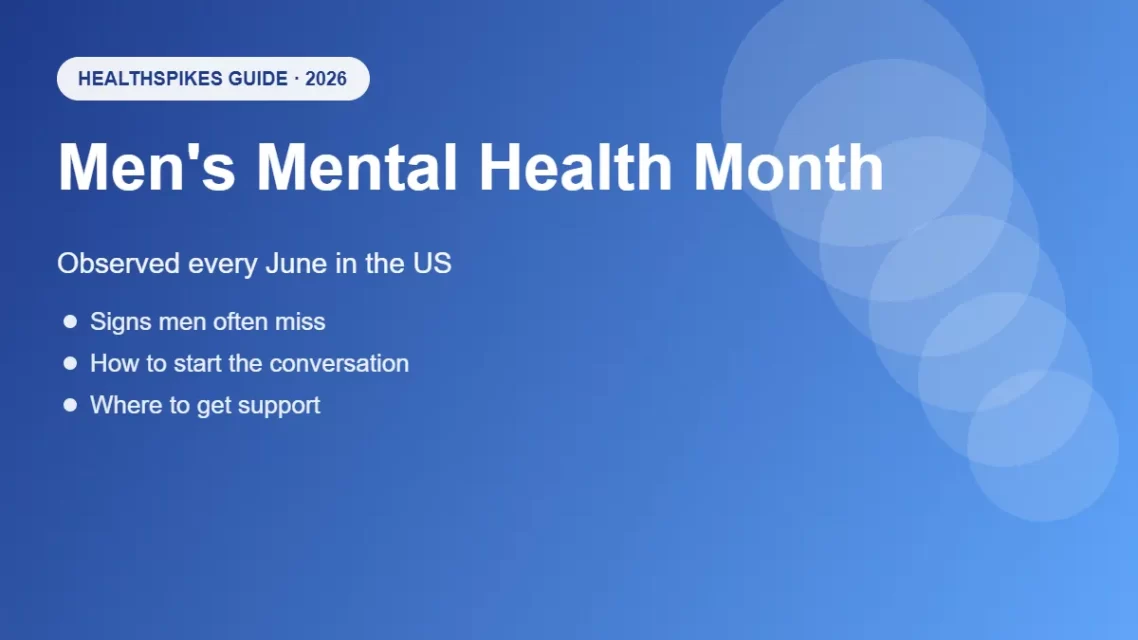
Men’s Mental Health Month is observed every June in the United States, alongside Men’s Health Month. It aims to break the silence around men’s mental health, encourage men to talk about how they feel and make it easier to get help. Internationally, November (Movember) is another major awareness month for men’s mental health and suicide prevention.
Men experience depression, anxiety and stress as often as anyone, but they are less likely to recognise it, talk about it or seek treatment. That gap matters: in the US, men die by suicide at nearly four times the rate of women.
Key takeaways
- Men’s Mental Health Month takes place in June in the US; Movember runs in November.
- Men are less likely than women to seek help for mental health problems.
- Depression in men often shows up as anger, irritability, risk-taking or heavy drinking.
- Talking, exercise, sleep, social connection and professional treatment all help.
- If you or someone you know is in crisis in the US, call or text 988.
Why men’s mental health needs attention
- Men account for about 4 in 5 suicide deaths in the US
- Men are less likely to receive mental health treatment than women
- Many men are taught to “tough it out” and hide emotions
- Men are more likely to use alcohol or drugs to cope
- Loneliness and social isolation often rise in midlife and older age
Signs men often miss
Men’s mental health problems do not always look like sadness. Watch for these changes in yourself or someone you care about:
- Anger, irritability or a short temper
- Working all the time or withdrawing from family and friends
- Drinking more, using drugs or gambling
- Reckless behaviour such as dangerous driving
- Physical complaints: headaches, stomach problems, chest tightness, poor sleep
- Low energy, losing interest in hobbies, trouble concentrating
- Talking about being a burden or about death
How to start a conversation about men’s mental health
- Pick a relaxed setting: a walk, a drive or doing an activity side by side
- Ask open questions: “How are you really doing?”
- Listen without rushing to fix things or judge
- Share your own experience if you can
- Encourage practical next steps, like booking a GP or therapy appointment
- Follow up a few days later
Daily habits that protect men’s mental health
- Regular exercise, which reduces symptoms of depression and anxiety
- 7–9 hours of sleep (see how to sleep better)
- Staying connected: friends, teams, clubs or volunteering
- Limiting alcohol
- Time outdoors and breaks from screens
- Looking after physical health: low testosterone, thyroid problems and chronic illness can affect mood (see our men’s health guide)
Treatment options that work
| Option | What it involves |
|---|---|
| Talking therapy | CBT and other therapies, in person or online |
| Medication | Antidepressants or other medicines prescribed by a doctor |
| Support groups | Peer groups for men, veterans, fathers or people in recovery |
| Primary care | A GP can screen for depression and rule out physical causes |
| Crisis services | 24/7 phone, text and chat lines |
How to take part in Men’s Mental Health Month
- Check in with the men in your life
- Share reliable information on social media
- Join or donate to awareness events and fundraisers
- Encourage workplaces to promote mental health resources
- Book your own health check
Where to get help now
If you or someone you know is thinking about suicide or is in crisis, get help immediately. In the US, call or text 988 (Suicide & Crisis Lifeline) or chat at 988lifeline.org. In the UK, call Samaritans on 116 123. In an emergency, call your local emergency number. Help is available, and reaching out is a sign of strength.
Key statistics
According to the World Health Organization, men die by suicide at higher rates than women in most countries. In the United States, CDC data show men account for nearly 80 percent of suicide deaths. Men are also less likely than women to seek help for mental health problems and more likely to have alcohol or drug use disorders. These numbers show why men’s mental health deserves focused attention.
How depression can look different in men
| Commonly recognized sign | How it may show up in men |
|---|---|
| Sadness | Irritability, anger or frustration |
| Crying | Withdrawing, going quiet |
| Low mood | Working excessively, risk-taking |
| Seeking comfort | Drinking more or using drugs |
| Talking about feelings | Physical complaints like headaches, back pain or stomach problems |
Supporting a friend, partner or family member
- Choose a relaxed setting, such as during a walk or drive.
- Ask open questions like “How have things been for you lately?”
- Listen without rushing to fix things.
- Ask directly about suicide if you are worried; asking does not put the idea in someone’s head.
- Offer practical help to find support, such as booking a doctor’s appointment.
- Check in again over the following days and weeks.
Workplace and men’s mental health
Many men spend much of their week at work, which makes workplaces an important setting. Employee assistance programs (EAPs) often offer free, confidential counseling. Managers who check in regularly and model healthy behaviors, such as taking leave and setting boundaries, help reduce stigma. Peer support programs in male-dominated industries, such as construction, have shown promise.
Related guides
Frequently asked questions
When is Men’s Mental Health Month?
June in the United States. November (Movember) also focuses on men’s mental health internationally.
Why do men avoid getting help?
Stigma, the expectation to be self-reliant and not recognising symptoms are common reasons.
What are signs of depression in men?
Irritability, anger, withdrawal, heavy drinking, risk-taking and physical symptoms, as well as low mood.
What color represents men’s mental health?
Blue is widely used for Men’s Health Month; green is used for mental health awareness generally.
Where can men get support?
A GP, a therapist, support groups, employee assistance programs and crisis lines such as 988 in the US.
Why do men avoid seeking help?
Stigma, beliefs about self-reliance and not recognizing symptoms are common reasons.
Is therapy effective for men?
Yes. Therapy works for men as well as women, and many men prefer practical, goal-focused approaches such as CBT.
Medical disclaimer: This article is for general information and is not a substitute for advice from your doctor or another qualified health professional. See our medical disclaimer and editorial policy.