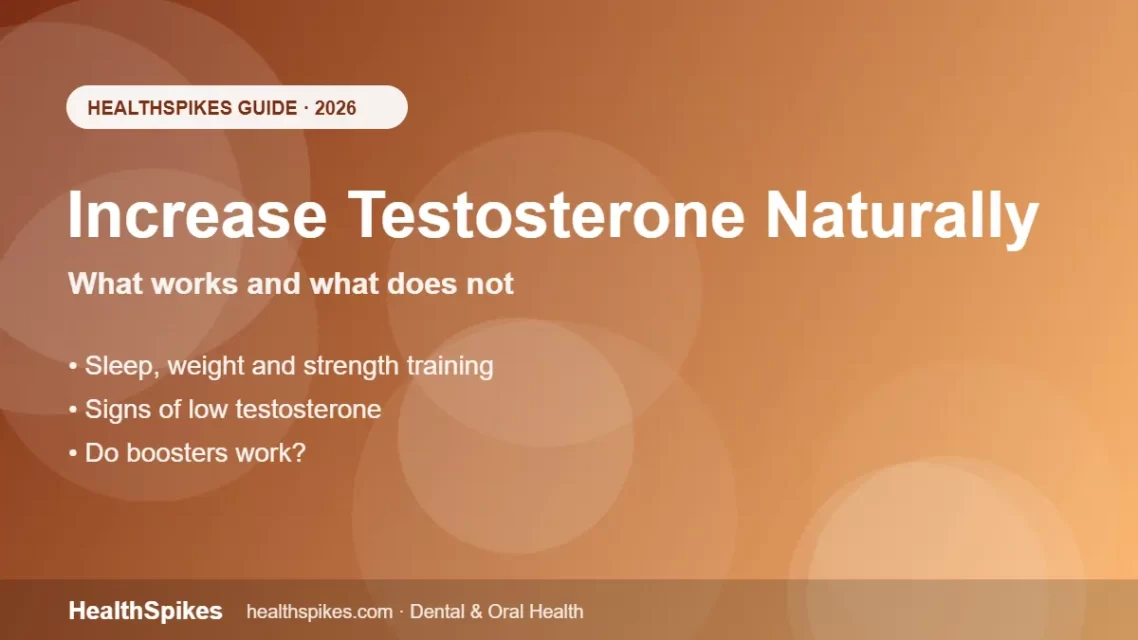
If you want to increase testosterone naturally, start by understanding what it does. Testosterone helps maintain muscle, bone, energy, mood and sex drive in men. Levels fall slowly with age, and lifestyle factors such as weight and sleep can push them lower. This guide explains how to support testosterone naturally, the signs of low levels, when to get tested, and what “testosterone booster” supplements really do.
Key takeaways
- Testosterone falls by roughly 1% a year from around age 30–40.
- Losing excess weight, sleeping well and strength training are the most reliable natural ways to support testosterone.
- Low testosterone should be confirmed with morning blood tests.
- Most testosterone booster supplements have little evidence.
Signs of low testosterone
- Low sex drive
- Erection problems (see our erectile dysfunction guide)
- Tiredness and low energy
- Loss of muscle and strength
- Increased body fat
- Low mood or irritability
- Reduced body hair or bone density
These symptoms have many causes, so testing is important before treatment.
How to increase testosterone naturally
- Lose excess weight: fat tissue converts testosterone to oestrogen; weight loss often raises levels.
- Lift weights: resistance training supports muscle and hormone health.
- Sleep 7–9 hours: testosterone is produced mainly during sleep; short sleep lowers it.
- Manage stress: high cortisol can suppress testosterone.
- Limit alcohol.
- Eat enough protein, healthy fats and zinc-rich foods.
- Get enough vitamin D or ask your doctor to check your level.
- Avoid anabolic steroids: they shut down your own production.
When and how to test
Testosterone is highest in the morning, so blood tests are usually taken before 10 a.m. and repeated to confirm a low result. Doctors may also check LH, FSH, prolactin, thyroid function and blood sugar to find the cause.
Do testosterone boosters work?
| Ingredient | What research shows |
|---|---|
| Zinc | Helps only if you are deficient |
| Vitamin D | May help if you are deficient |
| Ashwagandha | Small studies show modest increases |
| Fenugreek | Mixed results; may help libido |
| Tribulus terrestris | No meaningful testosterone increase in trials |
| D-aspartic acid | Mixed, mostly short-term results |
Some products sold as boosters have been found to contain hidden steroids or prescription drugs. Be cautious with anything promising dramatic muscle or hormone changes.
Medical treatment for low testosterone
Testosterone replacement therapy (gels, injections or patches) can help men with confirmed low levels and symptoms. It needs monitoring because it can affect red blood cell counts, fertility and the prostate. It is not recommended just for ageing or bodybuilding.
Testosterone and overall health
Low testosterone is linked with obesity, type 2 diabetes and poor sleep. Improving these often improves hormone levels too. See our guides on losing weight safely and men’s health.
A weekly plan to increase testosterone naturally
| Habit | Target |
|---|---|
| Strength training | 3 sessions a week, compound lifts like squats and presses |
| Sleep | 7–9 hours, consistent bedtime |
| Body fat | Lose weight if your waist is over 94 cm (37 in) |
| Diet | Enough protein, healthy fats, zinc-rich foods |
| Alcohol | Keep within low-risk limits |
| Stress | Daily walk, breathing or relaxation practice |
These are the habits with the strongest evidence if you want to increase testosterone naturally. Results take weeks to months, and they also improve energy, mood and heart health.
Signs of low testosterone
- Low sex drive and erectile problems
- Fatigue and low mood
- Loss of muscle and increased body fat
- Reduced body and facial hair
- Poor concentration
These symptoms have many causes, so a morning blood test is needed to confirm low levels. If lifestyle changes are not enough, a doctor can discuss testosterone therapy and its risks. Trying to increase testosterone naturally first is sensible for most men.
Related guides
Frequently asked questions
What is the fastest way to raise testosterone naturally?
Improving sleep and losing excess weight tend to have the biggest effect.
Do testosterone boosters work?
Most have little evidence; zinc and vitamin D help only if you are deficient.
What is a normal testosterone level?
Labs vary, but many use roughly 300–1,000 ng/dL for adult men.
Does lifting weights increase testosterone?
It can give short-term rises and supports muscle and body composition.
Is testosterone therapy safe?
It can be, with medical monitoring, for men with confirmed low levels.
This guide is for general information and is not medical advice. Talk to your doctor before starting a supplement or changing treatment.