Urinary tract infections (UTIs) are among the most common infections, especially in women: around half of women will have at least one in their lifetime. The burning, urgency and constant need to pee can be miserable, so it is natural to look for home remedies for UTI symptoms. Some home approaches can ease discomfort and help prevent repeat infections, but most bladder infections that cause clear symptoms still need antibiotics, and kidney infections can become serious quickly.
This guide separates the home remedies for UTI that have evidence from those that do not, explains how to ease symptoms while you wait for treatment, and lists the warning signs that mean you should see a doctor the same day.
Key takeaways
- Drinking more water is one of the few home remedies for UTI with good evidence, especially for preventing recurrences.
- Cranberry products and D-mannose may lower the risk of repeat UTIs but do not reliably cure an active infection.
- Pain relievers and heat can ease symptoms while you wait for treatment.
- Fever, back or side pain, vomiting or symptoms in pregnancy, men or children need prompt medical care.
- Mild UTIs sometimes clear on their own, but antibiotics shorten symptoms and prevent kidney infection.
UTI symptoms and types
Most UTIs affect the bladder (cystitis). Typical symptoms include burning or stinging when you pee, needing to pee often or urgently, passing only small amounts, cloudy or strong-smelling urine, pressure or pain in the lower belly and sometimes blood in the urine. If bacteria travel up to the kidneys (pyelonephritis), you may also have fever, chills, nausea, vomiting and pain in your back or side. Kidney infections need prompt antibiotic treatment.
Older adults may have unusual symptoms such as new confusion, falls or agitation rather than burning.
Home remedies for UTI: what the evidence shows
| Remedy | Helps treat an active UTI? | Helps prevent repeat UTIs? | Evidence |
|---|---|---|---|
| Drinking more water | May help flush bacteria; supportive | Yes | A 2018 trial in women with recurrent UTIs: extra 1.5 L/day nearly halved recurrences |
| Cranberry products | No reliable evidence | Possibly, especially in women with recurrent UTIs | 2023 Cochrane review: reduced repeat UTIs in some groups |
| D-mannose | Limited evidence | Possibly | Small trials positive; a 2024 UK trial found no benefit |
| Probiotics (Lactobacillus) | No | Uncertain | Mixed results |
| Vitamin C | No | Uncertain | Little good evidence |
| Garlic, apple cider vinegar, baking soda | No | No | Not supported; baking soda can be risky |

9 home remedies for UTI symptoms and prevention
1. Drink plenty of water
Extra fluid makes you pee more often, helping flush bacteria from the bladder. In a randomized trial published in JAMA Internal Medicine in 2018, premenopausal women with recurrent UTIs who drank an extra 1.5 liters of water a day had about half as many infections over a year as those who did not. Aim for pale yellow urine.
2. Do not hold it in
Pee when you feel the urge and try to empty your bladder fully. Holding urine gives bacteria more time to multiply.
3. Use pain relief
Ibuprofen or acetaminophen (paracetamol) can ease pain and discomfort. In some countries, phenazopyridine is available to numb the urinary tract; it turns urine orange and only treats symptoms, not the infection.
4. Apply gentle heat
A warm (not hot) heating pad or hot water bottle on the lower belly can reduce pelvic pressure and cramping.
5. Try cranberry for prevention
Cranberries contain proanthocyanidins (PACs) that may stop E. coli bacteria from sticking to the bladder wall. A 2023 Cochrane review found cranberry products reduced the risk of repeat UTIs in women with recurrent infections, children and people after bladder procedures. Choose capsules or unsweetened juice, as sweetened juice is high in sugar. People taking warfarin should check with a doctor first.
6. Consider D-mannose
D-mannose is a sugar that may bind E. coli in urine. Some small studies showed fewer recurrences, but a large 2024 UK trial in women with recurrent UTIs did not find a benefit. It is generally safe, but evidence is mixed.
7. Avoid bladder irritants
Caffeine, alcohol, fizzy drinks, artificial sweeteners and spicy foods can make urgency and burning worse while you are recovering.
8. Pee after sex
Sex can push bacteria toward the urethra. Peeing soon afterward may help flush them out. If you get UTIs after sex, ask your doctor about a single antibiotic dose after intercourse.
9. Change contraception if needed
Diaphragms and spermicides increase UTI risk. Discuss alternatives with your doctor if you get frequent infections.
When home remedies for UTI are not enough
Trials comparing pain relief alone with antibiotics, such as a 2015 German study in the BMJ, found that about two in three women treated with ibuprofen alone recovered without antibiotics, but they had symptoms for longer and a few more developed kidney infections. Antibiotics such as nitrofurantoin, fosfomycin or trimethoprim are commonly prescribed for uncomplicated bladder infections, usually for 3 to 7 days depending on the drug. Your doctor may test your urine to guide treatment.
- Get same-day care for fever, chills, back or side pain, vomiting, or blood in urine.
- Pregnant women, men, children, older adults, and people with diabetes, kidney problems or catheters should always see a doctor.
- See a doctor if symptoms do not improve within 48 hours, or return soon after treatment.
How to prevent UTIs long term
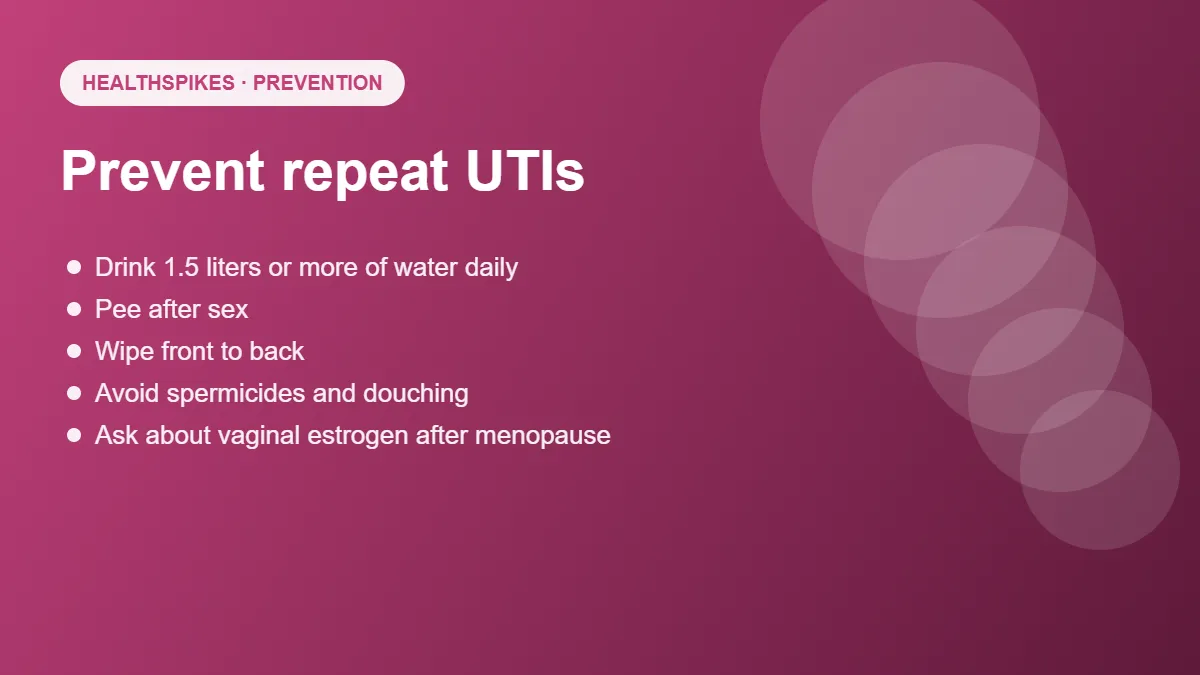
- Drink enough water every day.
- Pee after sex and avoid holding urine for long periods.
- Wipe from front to back after using the toilet.
- Avoid douches, scented washes and spermicides.
- Wear breathable cotton underwear.
- Treat constipation, which can contribute to UTIs.
- After menopause, ask your doctor about vaginal estrogen, which reduces recurrent UTIs.
- For frequent UTIs, ask about preventive options such as low-dose antibiotics or methenamine hippurate.
Home remedies for UTI during pregnancy
UTIs in pregnancy are more likely to spread to the kidneys and are linked to preterm labor, so home remedies for UTI should never replace a doctor visit when you are pregnant. Pregnant women are also routinely screened for bacteria in the urine even without symptoms. Drinking water and peeing often are safe supportive steps, but treatment with a pregnancy-safe antibiotic is usually needed.
Home remedies for UTI in older adults
In older adults, UTIs can be harder to spot. Instead of burning, the first sign may be confusion, a fall, new incontinence or loss of appetite. At the same time, bacteria in the urine without symptoms are common in older people and often do not need antibiotics. Because of this, home remedies for UTI in older relatives should be limited to fluids and comfort while a doctor assesses them. Do not rely on urine dipstick tests alone in people over 65.
Myths about home remedies for UTI
- Baking soda drinks: they do not cure UTIs and can cause dangerous salt and acid-base problems.
- Essential oils inside the body: never insert essential oils into the urethra or vagina.
- Large doses of vitamin C: there is no good evidence they treat or prevent UTIs.
- Waiting it out with a fever: fever suggests the infection may have spread and needs prompt care.
Related guides
- Overactive Bladder Remedies
- Best Probiotics for Vaginal Health
- Good Probiotics for Women
- Menopause Symptoms Relief
Frequently asked questions
Can a UTI go away on its own?
Some mild bladder infections clear without antibiotics, but symptoms usually last longer and there is a risk of kidney infection.
What is the fastest home remedy for UTI pain?
Pain relievers, a warm heating pad and drinking water can ease symptoms quickly, but they do not cure the infection.
Does cranberry juice cure a UTI?
No. Cranberry may help prevent repeat UTIs, but it does not reliably treat an active infection.
Is apple cider vinegar good for a UTI?
There is no evidence it treats UTIs, and it can irritate the bladder and stomach.
When should men worry about a UTI?
UTIs are less common in men and may signal a prostate or urinary problem, so men should always see a doctor.
Which home remedies for UTI are safe to use with antibiotics?
Drinking water, using a heating pad and taking pain relievers are generally safe alongside antibiotics. Ask your pharmacist about supplements.
Medical disclaimer: This article is for general information and is not a substitute for advice from your doctor or another qualified health professional. See our medical disclaimer and editorial policy.