If your blood test shows high LDL cholesterol, your diet is one of the first places to look. Some foods that raise cholesterol do so dramatically, while others, like eggs, have a smaller effect than many people think. The biggest dietary driver of LDL is saturated fat, followed by trans fat. Understanding which foods that raise cholesterol to limit, and what to replace them with, can lower LDL by 10 to 20 percent or more without medicine.
This guide explains how diet affects cholesterol, lists the top foods to limit, explains the egg and coconut oil debates, and shows practical swaps backed by research.
Key takeaways
- Saturated fat is the main dietary driver of high LDL cholesterol.
- Trans fats raise LDL and lower HDL; they are now largely banned in many countries but can still appear in some foods.
- Dietary cholesterol (eggs, shrimp) raises LDL less than saturated fat in most people.
- Replacing saturated fat with unsaturated fats and fiber lowers LDL the most.
- Genetics play a big role; some people need medicine even with a healthy diet.
How foods that raise cholesterol affect your body
Your liver makes most of the cholesterol in your blood. Saturated fat signals the liver to make more LDL and reduces the number of LDL receptors that clear it from the blood. Trans fat has a similar effect and also lowers protective HDL. Cholesterol in food does raise blood cholesterol, but for most people the effect is smaller because the body adjusts its own production. Some people, called hyper-responders, see a bigger rise from dietary cholesterol.
Fiber, especially soluble fiber, works the other way: it binds bile acids in the gut, forcing the liver to use cholesterol to make more bile, which lowers LDL.
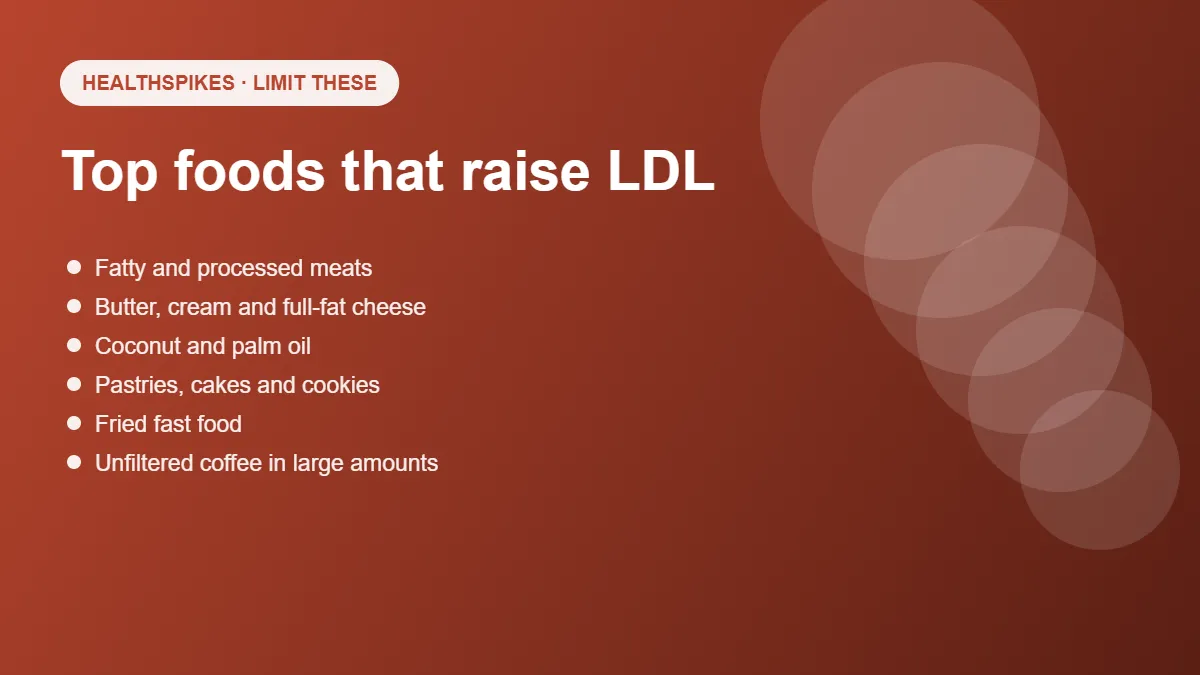
10 foods that raise cholesterol
1. Fatty and processed meats
Sausages, bacon, salami, hot dogs, fatty cuts of beef, lamb and pork are rich in saturated fat. Processed meats are also high in salt and linked to heart disease and colorectal cancer in large studies.
2. Butter and ghee
Butter is about two-thirds saturated fat. A tablespoon provides around 7 g of saturated fat, about a third of the limit for a 2,000-calorie diet.
3. Full-fat cheese
Cheese is high in saturated fat, though some studies suggest it raises LDL less than butter with the same fat content, possibly due to its calcium and structure. Portion size matters.
4. Cream, ice cream and full-fat dairy desserts
These combine saturated fat with added sugar, which can also raise triglycerides.
5. Coconut oil
Coconut oil is about 80 to 90 percent saturated fat. A 2020 review in Circulation found coconut oil raised LDL significantly more than non-tropical vegetable oils, despite its “healthy” reputation.
6. Palm oil and palm kernel oil
Used in many processed foods, palm oil is high in saturated fat. Palm kernel oil is even higher.
7. Pastries, cakes and cookies
Commercial baked goods are often made with butter, shortening or palm oil, plus refined flour and sugar.
8. Fried fast food
Fried chicken, fries and other deep-fried foods can be high in saturated fat and sometimes trans fat, depending on the oil.
9. Foods with partially hydrogenated oils
Artificial trans fats have been banned in the U.S. since 2018 and restricted in many other countries, but small amounts may still appear in some imported or older products. Check ingredient lists for “partially hydrogenated oil”.
10. Unfiltered coffee in large amounts
French press, boiled and Turkish coffee contain cafestol and kahweol, oils that raise LDL. Paper-filtered coffee removes most of them. Espresso has smaller amounts per cup.
Are eggs and shellfish foods that raise cholesterol?
Eggs are high in dietary cholesterol (about 186 mg per large egg) but low in saturated fat. Research suggests that for most healthy people, up to one egg a day does not significantly raise heart disease risk. People with diabetes or high LDL may be advised to limit yolks. Shrimp is also high in cholesterol but very low in saturated fat and has a modest effect on LDL. How these foods are cooked (fried in butter versus boiled) and what they are served with (bacon and sausage) matter more.
Saturated fat limits
| Guideline | Saturated fat limit | On a 2,000-calorie diet |
|---|---|---|
| Dietary Guidelines for Americans | Under 10% of calories | Under 22 g a day |
| American Heart Association | 5–6% of calories for people who need to lower LDL | About 11–13 g a day |
| NHS (UK) | Men 30 g, women 20 g a day |
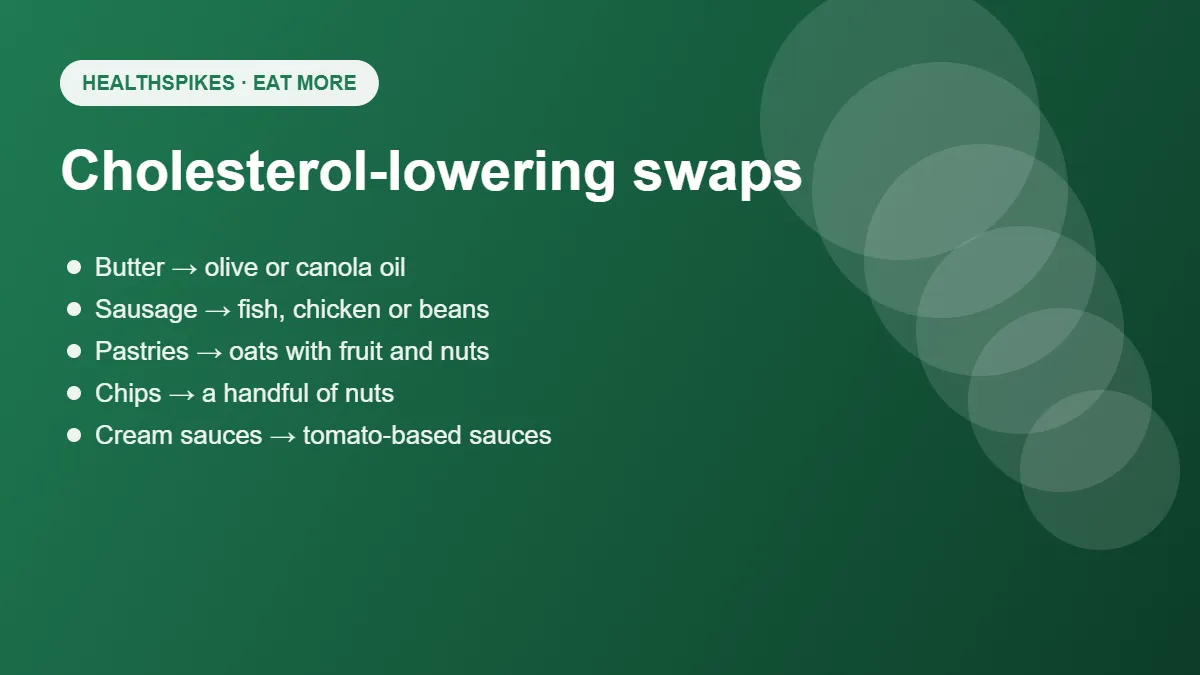
Foods that lower cholesterol
- Oats and barley: rich in beta-glucan, a soluble fiber that lowers LDL.
- Beans, lentils and chickpeas: fiber and plant protein.
- Nuts: almonds, walnuts and pistachios can lower LDL by about 5 percent when eaten daily.
- Olive oil and canola oil: replace butter and tropical oils.
- Fatty fish: salmon, sardines and mackerel lower triglycerides.
- Soy foods: tofu, edamame and soy milk.
- Fruits: apples, citrus and berries contain pectin.
- Plant sterol-fortified foods: about 2 g a day can lower LDL by 7 to 10 percent.
Combining several of these, known as the “portfolio diet”, lowered LDL by around 20 to 30 percent in studies by Dr. David Jenkins and colleagues, approaching the effect of an older statin.
Reading labels for foods that raise cholesterol
- Check saturated fat per serving; 5% Daily Value or less is low, 20% or more is high.
- Look for trans fat; 0 g on a U.S. label can still mean under 0.5 g per serving.
- Scan ingredients for butter, cream, palm oil, coconut oil, lard and shortening.
- Compare similar products and choose the one with less saturated fat.
- Watch serving sizes, which are often smaller than what people eat.
When diet is not enough
Even with a perfect diet, some people have high cholesterol because of genetics, such as familial hypercholesterolemia. If your LDL is 190 mg/dL or more, or you have heart disease, diabetes or other risks, your doctor may recommend medicine alongside diet. Learn more about healthy LDL cholesterol levels by age and discuss your target with your doctor.
Hidden foods that raise cholesterol
Some foods that raise cholesterol are not obvious. Granola and “healthy” snack bars can contain coconut or palm oil. Coffee creamers often use hydrogenated or palm oils. Ready meals, pies, pizza and creamy soups can contain more saturated fat than a steak. Plant-based meat substitutes and vegan cheeses sometimes rely on coconut oil, so plant-based does not always mean heart-healthy. Reading labels is the best way to spot these hidden sources.
A day of eating that avoids foods that raise cholesterol
- Breakfast: oatmeal made with soy milk, topped with berries and walnuts; paper-filtered coffee.
- Lunch: lentil and vegetable soup with a whole-grain roll and a side salad with olive oil dressing.
- Snack: an apple and a small handful of almonds.
- Dinner: grilled salmon or tofu with brown rice and roasted vegetables cooked in canola oil.
- Dessert: plain yogurt with fruit or a square of dark chocolate.
A day like this is low in saturated fat, high in soluble fiber and includes plant sterols naturally present in nuts, seeds and oils.
Do foods that raise cholesterol affect children?
Yes. Children who eat a lot of processed meats, fried foods and baked goods can develop higher LDL, and plaque can begin forming in childhood. The same principles apply: more fruit, vegetables, whole grains, beans and fish, and fewer foods high in saturated fat. Children with a family history of high cholesterol or early heart disease should have their cholesterol checked.
Related guides
- LDL Cholesterol Levels by Age
- Foods That Cause Inflammation
- High-Fiber Foods List
- Blood Pressure Chart by Age
- Carnivore Diet: Benefits and Risks
Frequently asked questions
What is the worst food for cholesterol?
Foods high in saturated and trans fat, such as processed meats, butter, fried fast food and pastries, raise LDL the most.
Does sugar raise cholesterol?
Added sugar mainly raises triglycerides and can lower HDL. It also contributes to weight gain, which affects LDL.
Does cheese raise cholesterol?
Full-fat cheese can raise LDL because of its saturated fat, though perhaps less than butter. Choose smaller portions or lower-fat versions.
How fast can diet lower cholesterol?
Changes in LDL can show within 4 to 6 weeks of consistent diet changes.
Are foods that raise cholesterol the same for everyone?
Responses vary with genetics. Some people see big rises from saturated fat or dietary cholesterol, others less.
Is red meat one of the foods that raise cholesterol?
Fatty red meat is, because of its saturated fat. Lean cuts in modest portions have a smaller effect.
Medical disclaimer: This article is for general information and is not a substitute for advice from your doctor or another qualified health professional. See our medical disclaimer and editorial policy.