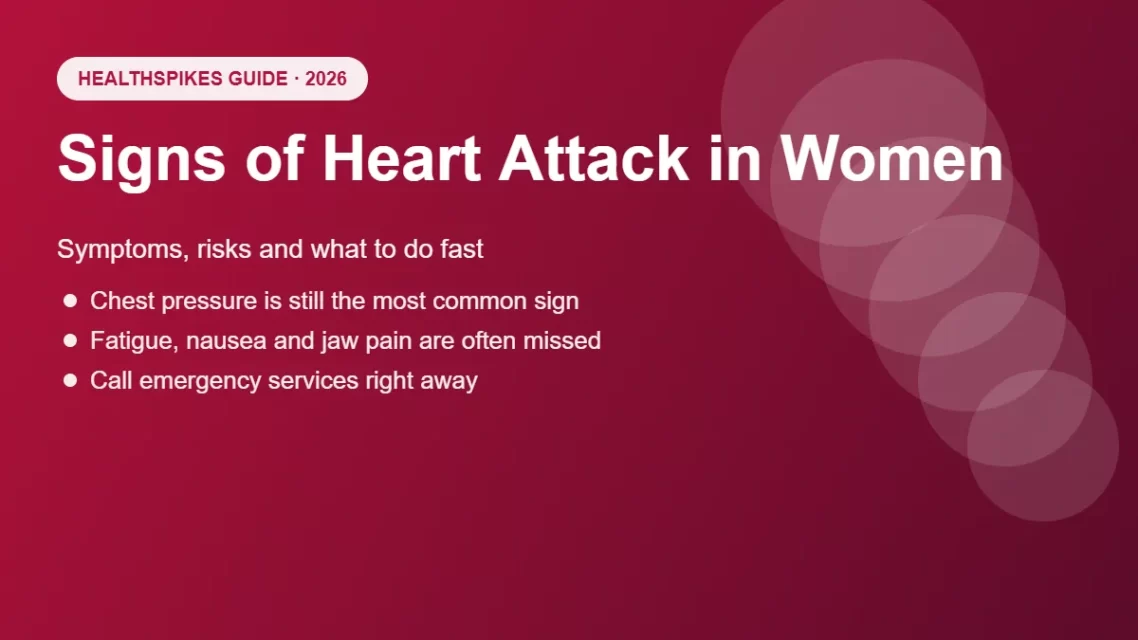
Heart disease is the leading cause of death for women in the United States, yet many women do not recognize the signs of heart attack in women when they happen. Chest pain is still the most common symptom, but women are more likely than men to have other symptoms, such as shortness of breath, nausea, unusual tiredness and pain in the jaw or back. These subtler signs often lead women to wait longer before getting help, and every minute counts.
This guide explains the classic and the less obvious warning signs, why symptoms can differ between women and men, who is most at risk, and exactly what to do if you think you or someone near you is having a heart attack.
Key takeaways
- Chest pain or pressure is the most common heart attack symptom in women, but it may feel like squeezing or fullness rather than sharp pain.
- Women are more likely to have shortness of breath, nausea, back or jaw pain and extreme fatigue.
- Some women notice unusual tiredness or sleep problems in the weeks before a heart attack.
- Call emergency services immediately; do not drive yourself to the hospital.
- High blood pressure, diabetes, smoking, early menopause and pregnancy complications raise risk.
The 12 signs of heart attack in women
Symptoms can start suddenly or build over hours. They may come and go. You do not need to have all of these to be having a heart attack.
- Chest pain, pressure or tightness: a squeezing, heavy or full feeling in the center of the chest lasting more than a few minutes, or that goes away and comes back.
- Pain in one or both arms: often the left, but it can be the right or both.
- Jaw, neck or throat pain: an ache or tightness that may be mistaken for a dental problem.
- Upper back pain: pressure or pain between the shoulder blades.
- Stomach pain or pressure: it may feel like indigestion or heartburn.
- Shortness of breath: with or without chest discomfort, sometimes while resting.
- Nausea or vomiting.
- Breaking out in a cold sweat.
- Lightheadedness or dizziness, sometimes with fainting.
- Unusual or extreme fatigue: feeling wiped out after simple tasks.
- Sleep problems: trouble sleeping in the days or weeks before.
- A sense of anxiety or impending doom.
How signs of heart attack in women differ from men
Both women and men most often report chest pain or discomfort. However, research, including the VIRGO study of younger heart attack patients, found women were more likely than men to have three or more additional symptoms, such as shortness of breath, palpitations, nausea and pain in the jaw, neck or arms. Women were also more likely to think their symptoms were caused by stress or anxiety.
There are several reasons for the differences. Women are more likely to have problems in the small blood vessels of the heart (coronary microvascular disease) and a type of heart attack called spontaneous coronary artery dissection (SCAD), which mostly affects women under 50 and can happen without the usual risk factors.
| Symptom | Women | Men |
|---|---|---|
| Chest pain or pressure | Common, may be milder | Common |
| Shortness of breath | More common | Common |
| Nausea or vomiting | More common | Less common |
| Jaw, neck or back pain | More common | Less common |
| Extreme fatigue | More common | Less common |
| Sweating | Common | More common |
Early signs of heart attack in women in the weeks before
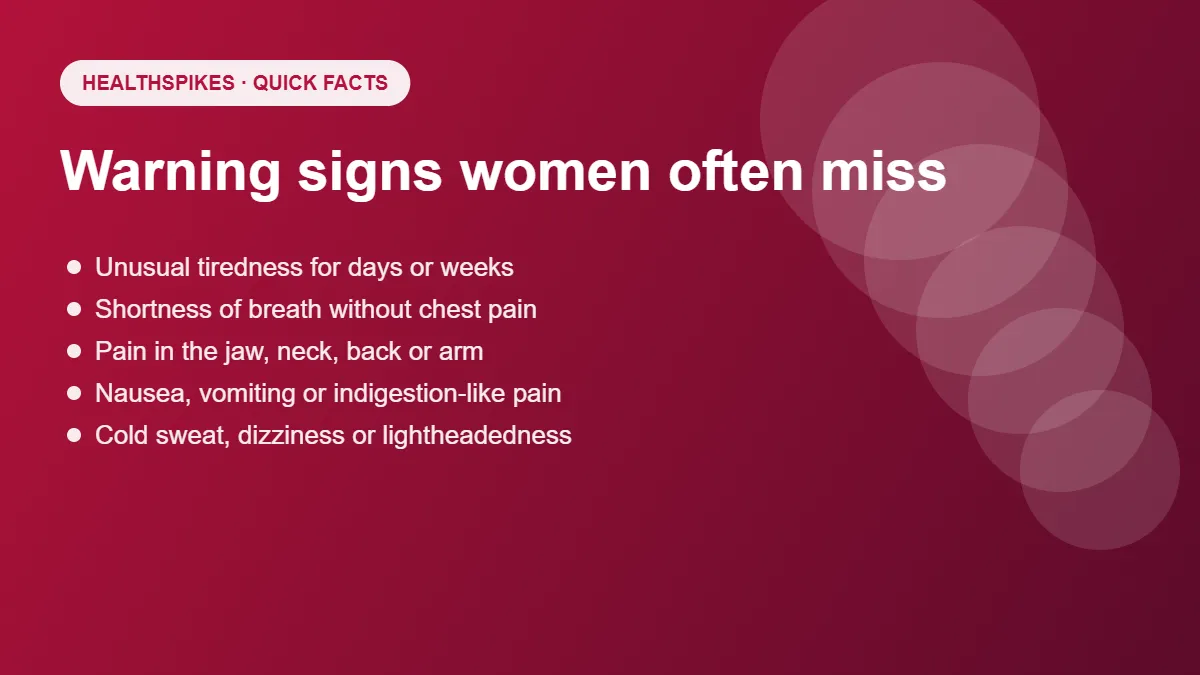
In a study published in Circulation, many women who had a heart attack reported symptoms in the month before, most commonly unusual fatigue, sleep disturbance and shortness of breath. These early signs of heart attack in women are easy to dismiss as stress or a busy life. If you notice new exhaustion, breathlessness with light activity, or chest discomfort that comes on with exertion and eases with rest, see a doctor promptly. Exertion-related chest discomfort can be angina, a warning that the heart is not getting enough blood.
Risk factors for women
Many risk factors are shared with men, but some are unique to women or affect women more strongly.
- High blood pressure, high cholesterol and type 2 diabetes (diabetes raises heart attack risk more in women than in men).
- Smoking, even a few cigarettes a day.
- Being overweight, especially around the waist.
- Physical inactivity.
- Family history of early heart disease.
- Menopause, particularly early menopause before age 45.
- Pregnancy complications such as preeclampsia, gestational diabetes and preterm delivery.
- Polycystic ovary syndrome (PCOS).
- Autoimmune diseases such as lupus and rheumatoid arthritis.
- Depression and chronic stress.
- Certain cancer treatments, including some chemotherapy and radiation to the chest.
Silent heart attacks
A silent heart attack has few, mild or no noticeable symptoms and may only be found later on an ECG or heart scan. Symptoms may feel like the flu, a pulled muscle or indigestion. People with diabetes are more likely to have silent heart attacks because nerve damage can blunt pain signals. Getting regular checkups and controlling blood pressure, cholesterol and blood sugar help lower the risk.
What to do if you notice signs of heart attack in women
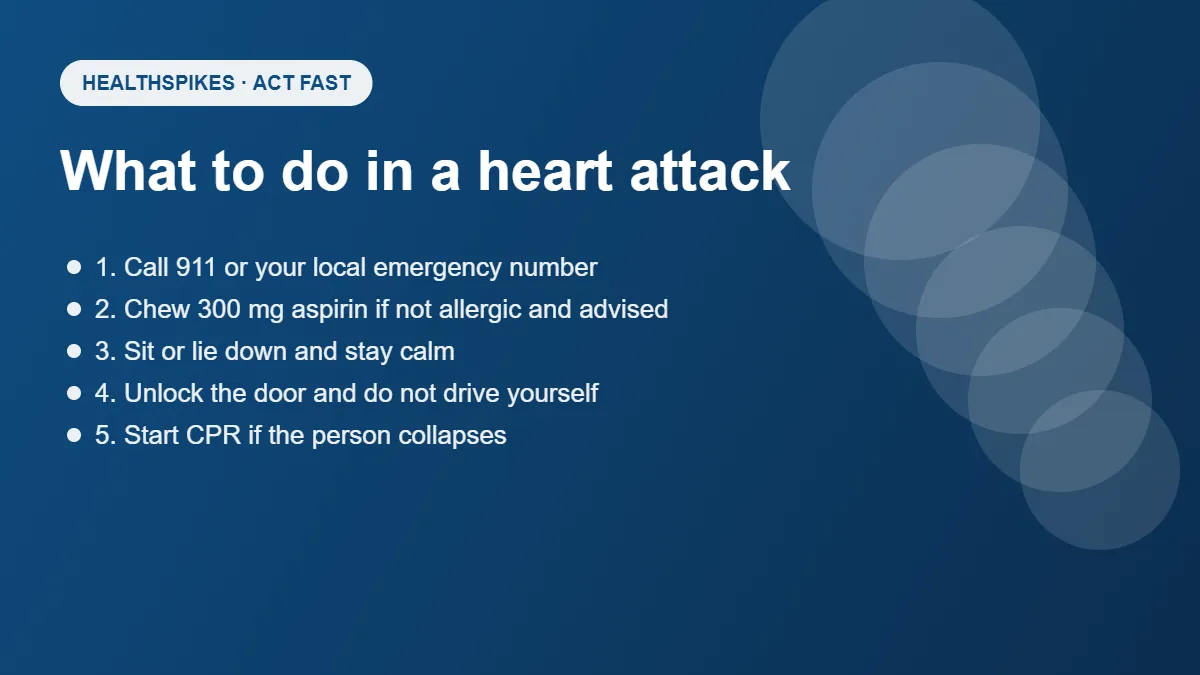
- Call 911 or your local emergency number right away. Paramedics can start treatment on the way and alert the hospital.
- Do not drive yourself, and do not wait to see if the symptoms pass.
- If emergency staff advise it and you are not allergic, chew a regular-strength aspirin (or as directed by the dispatcher).
- Rest in a comfortable position and loosen tight clothing.
- If you have been prescribed nitroglycerin, take it as directed.
- If someone becomes unresponsive and is not breathing normally, start hands-only CPR and use an AED if available.
Treatments that open blocked arteries work best when given quickly. The American Heart Association notes that women are more likely than men to delay seeking care, which can worsen outcomes.
How a heart attack is diagnosed
At the hospital, doctors will do an electrocardiogram (ECG) within minutes and take blood tests for troponin, a protein released when heart muscle is damaged. Further tests may include an echocardiogram, coronary angiography to look for blocked arteries, or a cardiac MRI. Women with heart attacks caused by microvascular disease or SCAD may have less obvious blockages, so doctors may need additional imaging.
How to lower your risk
| Step | Target |
|---|---|
| Blood pressure | Under 130/80 mmHg for most adults |
| LDL cholesterol | As advised by your doctor based on your risk |
| Physical activity | At least 150 minutes of moderate activity a week |
| Smoking | Stop completely; ask about support |
| Weight | Waist under about 80–88 cm (31.5–35 in) depending on guidelines |
| Blood sugar | HbA1c in the target range set with your doctor |
| Sleep | 7–9 hours a night |
Learn your numbers with a yearly checkup, and tell your doctor about any pregnancy complications, since they are now recognized as heart risk factors. Our blood pressure chart and guide to lowering blood pressure naturally can help.
Why signs of heart attack in women are often missed
Many women, and sometimes their doctors, still picture a heart attack as crushing chest pain in a middle-aged man. When the signs of heart attack in women show up as breathlessness, nausea or exhaustion, they are easy to blame on the flu, acid reflux, a panic attack or simply being busy. Women are also more likely to be caregivers and may put others first, delaying a call for help.
Research has also shown that women are less likely than men to receive some tests and treatments quickly after arriving at hospital. Knowing the full range of signs of heart attack in women, and describing them clearly (“I have chest pressure and I am short of breath”), can help you get the right care faster.
Heart attack, angina or panic attack?
| Feature | Heart attack | Stable angina | Panic attack |
|---|---|---|---|
| Trigger | Can happen at rest or with effort | Usually exertion or stress | Stress or no clear trigger |
| Duration | More than a few minutes, may come and go | A few minutes, eases with rest | Peaks within about 10 minutes |
| Relief | Does not ease reliably with rest | Rest or nitroglycerin | Slow breathing, time |
| What to do | Call emergency services | See a doctor soon; emergency if new or worsening | Seek care if unsure; first episodes should be checked |
You cannot reliably tell these apart at home. If there is any doubt, treat chest symptoms as an emergency.
Recovery and cardiac rehabilitation
After a heart attack, cardiac rehabilitation, a supervised program of exercise, education and support, lowers the risk of another heart attack and death. Women are referred to and complete cardiac rehab less often than men. If you have had a heart attack, ask your care team for a referral, and ask about medicines such as statins, aspirin and blood pressure drugs, which reduce the chance of another event.
Related guides
- Blood Pressure Chart by Age
- Heart Palpitations After Eating
- Supplements to Lower Blood Pressure
- Menopause Symptoms and Relief
Frequently asked questions
What are the first signs of heart attack in women?
Chest pressure is most common, but many women first notice shortness of breath, nausea, unusual fatigue, or pain in the jaw, neck, back or arm.
Can a heart attack in women feel like indigestion?
Yes. Upper stomach pain, nausea and a feeling like heartburn can be heart attack symptoms. If unsure, call emergency services.
How long do heart attack symptoms last in women?
Symptoms usually last more than a few minutes, or come and go. Do not wait to see if they pass.
Can young women have heart attacks?
Yes. SCAD, pregnancy-related conditions and risk factors like smoking and diabetes can cause heart attacks in younger women.
Is left arm pain always a heart attack?
No, but arm pain together with chest discomfort, breathlessness or sweating needs urgent care.
Do signs of heart attack in women change after menopause?
The symptoms are similar, but risk rises after menopause as estrogen falls, so it is important to know the signs at every age.
Medical disclaimer: This article is for general information and is not a substitute for advice from your doctor or another qualified health professional. See our medical disclaimer and editorial policy.