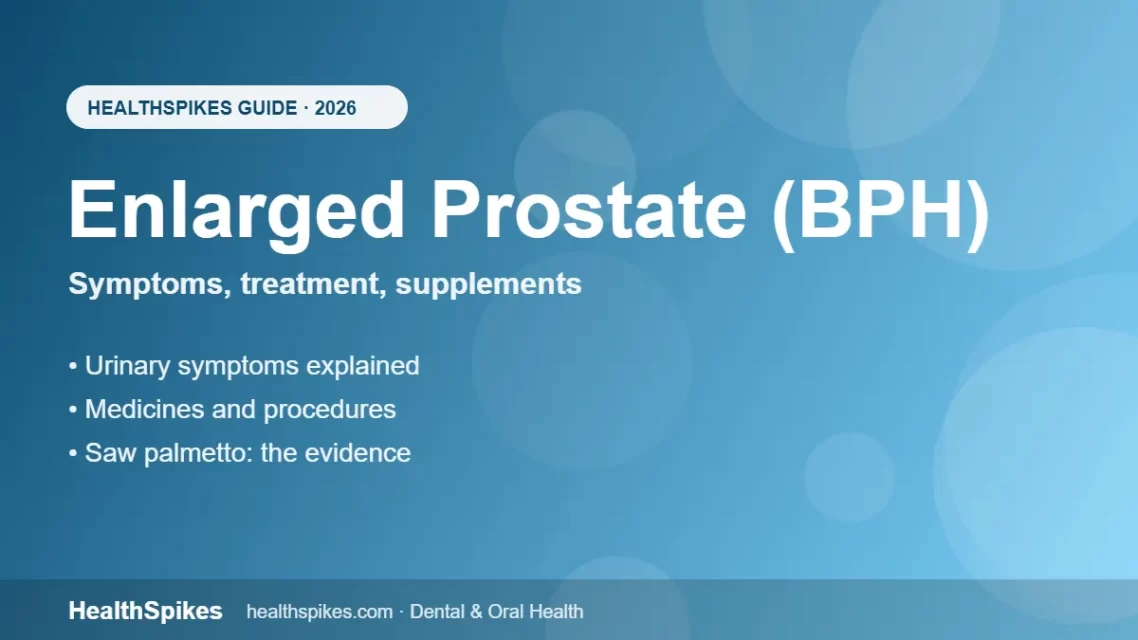
An enlarged prostate, also called benign prostatic hyperplasia (BPH), is very common in older men. The prostate grows slowly with age and can press on the urethra, causing urinary symptoms. An enlarged prostate is not cancer, but its symptoms can overlap with other conditions, so it is worth getting checked. This guide covers symptoms, diagnosis, treatment and supplements.
Key takeaways
- About half of men in their 50s and most men over 80 have some prostate enlargement.
- Common symptoms are frequent urination, a weak stream and getting up at night to pee.
- Lifestyle changes, medicines and minimally invasive procedures can all help.
- Saw palmetto and most prostate supplements did not beat placebo in large trials.
Symptoms of an enlarged prostate
- Needing to urinate often, especially at night
- A weak or interrupted stream
- Trouble starting to urinate
- Straining or dribbling at the end
- Feeling the bladder has not emptied
- A sudden, urgent need to go
How an enlarged prostate is diagnosed
- Symptom questionnaire (such as the IPSS score)
- Physical exam, including a rectal exam
- Urine test to rule out infection
- PSA blood test, after discussing pros and cons
- Sometimes ultrasound or urine flow tests
A doctor will also check for other causes such as infection, diabetes, medication effects or bladder problems.
Lifestyle tips that help
- Drink less in the two hours before bed
- Limit caffeine and alcohol, which irritate the bladder
- Empty the bladder twice (wait a moment and try again)
- Stay active and keep a healthy weight
- Avoid decongestants and antihistamines that worsen symptoms, if possible
- Treat constipation
Medical treatments
| Treatment | How it helps | Notes |
|---|---|---|
| Alpha blockers (e.g. tamsulosin) | Relax prostate muscle; quick symptom relief | May cause dizziness |
| 5-alpha reductase inhibitors (e.g. finasteride) | Shrink the prostate over months | Sexual side effects possible |
| PDE5 inhibitors (tadalafil) | Help urinary symptoms and erections | Not with nitrates |
| Minimally invasive procedures | Remove or lift prostate tissue | For moderate to severe symptoms |
| Surgery (TURP) | Most effective for severe symptoms | Longer recovery |
Do prostate supplements work?
Prostate supplements often contain saw palmetto, beta-sitosterol, pygeum, pumpkin seed, lycopene or zinc. Large, well-designed trials of saw palmetto found it was no better than placebo for urinary symptoms. Beta-sitosterol and pygeum have some smaller positive studies.
Supplements may delay proper diagnosis if symptoms are caused by something else. Talk to a doctor before relying on them.
| Ingredient | Evidence |
|---|---|
| Saw palmetto | No better than placebo in large trials |
| Beta-sitosterol | Some small studies show symptom relief |
| Pygeum | Modest evidence from older studies |
| Pumpkin seed | Limited evidence |
| Lycopene | Studied mainly for prostate cancer risk, results mixed |
When to see a doctor
- Blood in the urine or semen
- Pain or burning when urinating
- Unable to urinate at all (an emergency)
- Symptoms that disturb sleep or daily life
- A rising PSA result
The prostate symptom score
Doctors often use the International Prostate Symptom Score (IPSS) to measure how much urinary symptoms affect you. It asks about seven symptoms over the past month, including incomplete emptying, frequency, weak stream and getting up at night. Scores of 0–7 are mild, 8–19 moderate and 20–35 severe. Tracking your score helps decide on treatment and see whether it works.
Daily tips to ease urinary symptoms
- Reduce fluids in the two hours before bed
- Cut back on caffeine and alcohol, which irritate the bladder
- Try “double voiding”: wait a moment after urinating, then try again
- Avoid decongestants and antihistamines that can worsen symptoms, if possible
- Keep active and avoid constipation
- Do pelvic floor exercises
These steps can help mild symptoms. For bothersome symptoms, medicines such as alpha-blockers and 5-alpha reductase inhibitors work well, and minimally invasive procedures are available. Urinary symptoms can overlap with an overactive bladder.
Related guides
Frequently asked questions
Is an enlarged prostate cancer?
No. BPH is not cancer, though both can occur together, so check-ups matter.
Can an enlarged prostate shrink naturally?
It rarely shrinks by itself; medicines like finasteride can shrink it over months.
Does saw palmetto work for BPH?
Large trials found it no better than placebo.
What foods are bad for an enlarged prostate?
Caffeine, alcohol and spicy foods can irritate the bladder in some men.
At what age does the prostate enlarge?
It often starts around 40–50 and becomes common after 60.
This guide is for general information and is not medical advice. Talk to your doctor before starting a supplement or changing treatment.