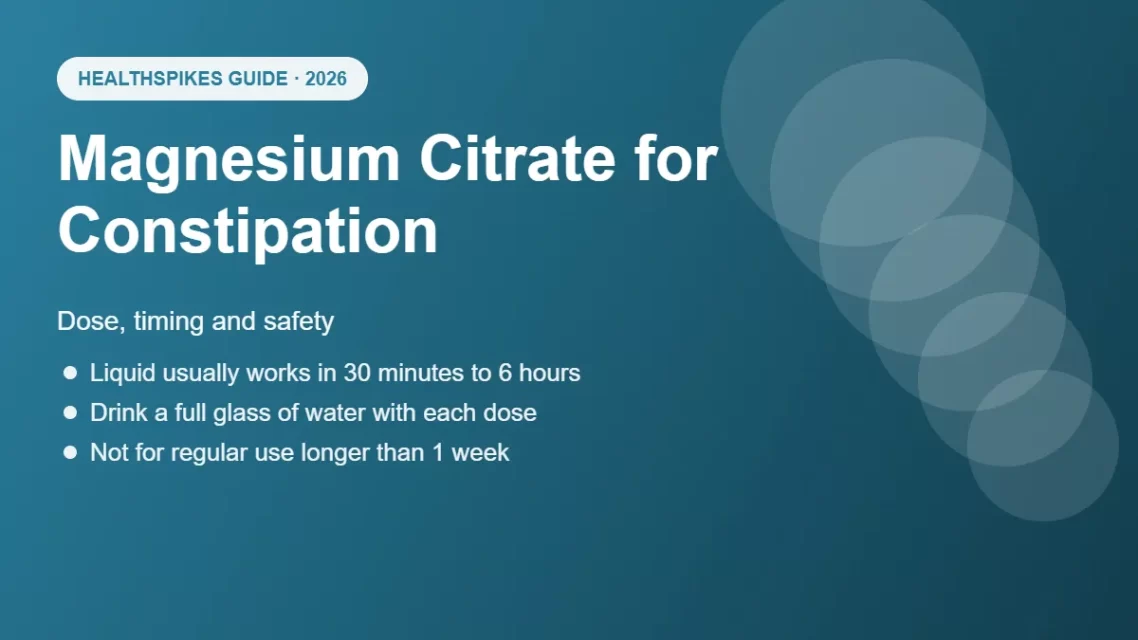
Magnesium citrate is one of the most common over-the-counter laxatives for occasional constipation. Sold as a lemon or cherry flavored liquid and as tablets, it draws water into the bowel to soften stool and trigger a bowel movement, often within a few hours. Using magnesium citrate for constipation can work quickly and predictably, but it is meant for short-term relief, not daily use, and it is not safe for everyone.
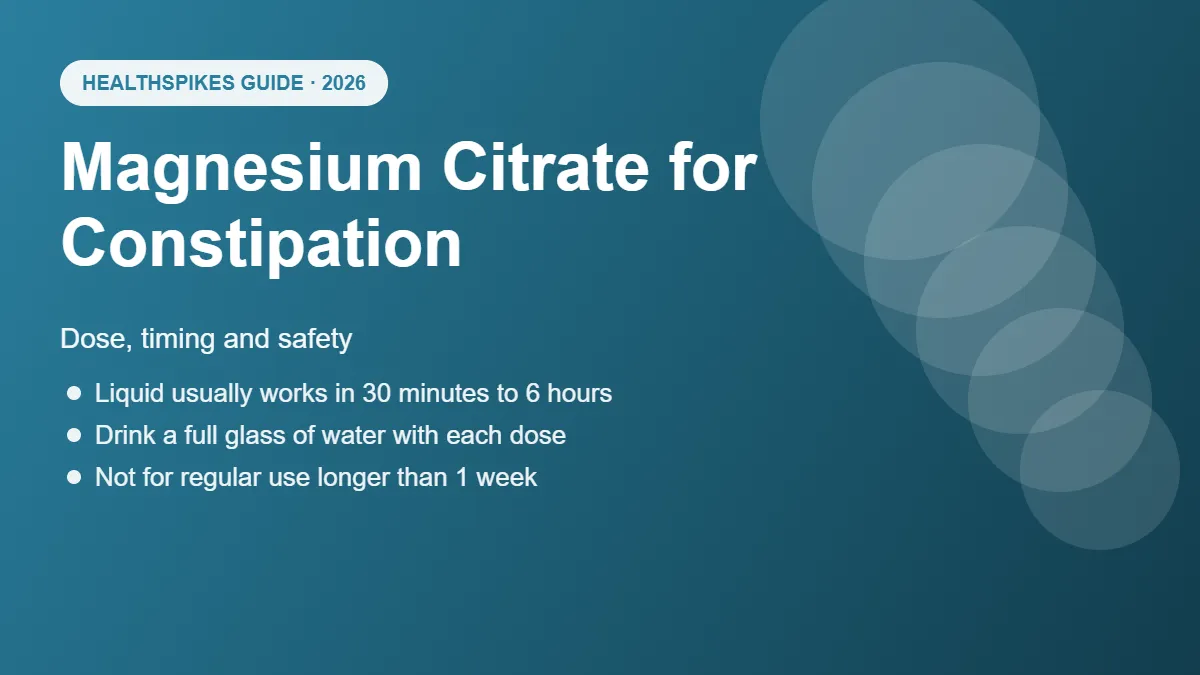
This guide explains how it works, how much to take, how fast to expect results, side effects, who should avoid it, and longer-term ways to prevent constipation.
Key takeaways
- Magnesium citrate is an osmotic laxative that pulls water into the intestines.
- The liquid usually works within 30 minutes to 6 hours.
- Follow the label dose; adults commonly take 195 to 300 ml of the oral solution once.
- Do not use it for more than 7 days without speaking to a doctor.
- People with kidney disease should avoid it unless a doctor advises otherwise.
How magnesium citrate for constipation works
Magnesium citrate is a saline osmotic laxative. The magnesium is poorly absorbed, so most of it stays in the intestines, where it holds water in the stool by osmosis. This softens and increases the volume of the stool, stretching the bowel wall and stimulating movement. Magnesium may also trigger the release of a hormone called cholecystokinin, which increases gut activity.
Because it works by drawing water into the bowel, magnesium citrate can cause watery stools and fluid loss if you take too much or do not drink enough.
Dosage of magnesium citrate for constipation
Doses below are typical for the common 1.745 g per 30 ml oral solution in the United States. Products and strengths vary by country, so always follow the label or your pharmacist’s advice.
| Age | Typical oral solution dose | Notes |
|---|---|---|
| Adults and children 12+ | 195–300 ml (about 6.5–10 oz) | Once daily as a single or divided dose |
| Children 6–11 | 90–210 ml | Ask a pharmacist or doctor first |
| Children 2–5 | 60–90 ml | Ask a doctor first |
| Under 2 | Not recommended without a doctor |
Magnesium citrate tablets and capsules sold as dietary supplements contain much less magnesium per dose and have a milder laxative effect. Follow the dose on the package, and do not exceed the supplement upper limit of 350 mg of magnesium per day unless advised by a doctor.

How fast does magnesium citrate for constipation work?
Most people have a bowel movement within 30 minutes to 6 hours after taking the liquid, so plan to stay near a bathroom. Taking it on an empty stomach may make it work faster. Drink a full 8-ounce (240 ml) glass of water with each dose and keep drinking fluids afterward to replace what you lose.
If you have no bowel movement within 6 hours, do not take a second large dose on your own. Contact a pharmacist or doctor, since lack of response can signal a more serious problem.
Tips to make it easier to take
- Chill the bottle in the fridge; it tastes better cold.
- Drink it through a straw, followed by water or clear juice.
- Take it in the morning or early evening so it does not disturb sleep.
- Avoid taking it within 2 hours of other medicines to prevent interactions.
Side effects of magnesium citrate for constipation
- Diarrhea or watery stools.
- Stomach cramps and gas.
- Nausea.
- Dehydration if you do not drink enough fluid.
- Electrolyte imbalances with repeated or excessive use, including high magnesium, low potassium or low sodium.
Stop and seek medical help if you have rectal bleeding, severe abdominal pain, dizziness, weakness or no bowel movement after use.

Who should not use magnesium citrate for constipation
- People with kidney disease, because magnesium can build up to dangerous levels.
- People on a magnesium-restricted or sodium-restricted diet (some products contain sodium).
- Anyone with abdominal pain, nausea or vomiting, which could signal appendicitis or bowel obstruction.
- Anyone with a sudden change in bowel habits lasting more than 2 weeks.
- People with heart block or certain heart conditions, unless a doctor approves.
- Pregnant or breastfeeding women, unless their doctor recommends it.
Drug interactions
Magnesium can bind to some medicines and reduce their absorption. Take tetracycline or fluoroquinolone antibiotics, bisphosphonates, levothyroxine, digoxin and some antivirals at least 2 hours before or several hours after magnesium citrate. Ask your pharmacist about spacing if you take regular medicines.
Magnesium citrate vs other laxatives
| Laxative type | Example | Onset | Best for |
|---|---|---|---|
| Bulk-forming | Psyllium, methylcellulose | 12–72 hours | Daily prevention; needs water |
| Osmotic (gentle) | Polyethylene glycol (PEG 3350) | 1–3 days | Regular or chronic constipation |
| Osmotic (saline) | Magnesium citrate, milk of magnesia | 30 minutes–6 hours | Occasional, faster relief |
| Stimulant | Senna, bisacodyl | 6–12 hours (oral) | Occasional use |
| Stool softener | Docusate | 12–72 hours | Mild hard stools; weak evidence |
For people with chronic constipation, guidelines from gastroenterology groups often favor fiber, PEG 3350 or magnesium oxide under medical guidance rather than repeated magnesium citrate.
Preventing constipation long term
- Gradually increase fiber to 25 to 35 g a day from fruit, vegetables, beans and whole grains. See our high-fiber foods list.
- Drink enough fluids, especially when increasing fiber.
- Stay active; walking helps stimulate the bowel.
- Do not ignore the urge to go, and give yourself time after breakfast.
- Try a footstool to raise your knees on the toilet.
- Review medicines that cause constipation, such as opioids, iron, some antidepressants and antacids with aluminum.
When to see a doctor
See a doctor if constipation lasts longer than 3 weeks, if you need laxatives often, or if you notice blood in the stool, unexplained weight loss, severe pain, or a change in bowel habits after age 45. These can be signs of conditions that need investigation, including thyroid problems, diabetes or colorectal disease.
Magnesium citrate for constipation vs bowel prep
You may have heard of magnesium citrate as part of colonoscopy preparation. For bowel prep, doctors sometimes prescribe a full bottle or two at specific times, combined with a clear liquid diet, to empty the colon completely. That is very different from using magnesium citrate for constipation, where the goal is one comfortable bowel movement. Only follow bowel-prep dosing when instructed by your doctor for a procedure.
Using magnesium citrate for constipation in children
Children’s doses are smaller and vary with age and weight. Many pediatricians prefer polyethylene glycol (PEG 3350) for children with ongoing constipation because it is gentle and well studied. If your child has constipation with belly pain, vomiting, blood in the stool, or no bowel movement for several days, call your doctor rather than giving a laxative on your own. Never give magnesium citrate to a child under 2 without medical advice.
Is magnesium citrate for constipation safe in pregnancy?
Constipation is common in pregnancy because of hormones, iron supplements and pressure on the bowel. Occasional use of a magnesium-based laxative is sometimes considered acceptable, but bulk-forming fiber and PEG are often tried first. Ask your midwife or doctor before using magnesium citrate for constipation while pregnant or breastfeeding, and avoid frequent or high doses that could cause dehydration.
Related guides
- High-Fiber Foods List
- What Relieves Bloating Fast
- Can You Take Too Much Magnesium?
- How to Improve Gut Health
- Magnesium Glycinate vs Bisglycinate
Frequently asked questions
How long does magnesium citrate for constipation take to work?
Usually between 30 minutes and 6 hours for the liquid form.
Can I take magnesium citrate every day for constipation?
Not without medical advice. Daily use can cause electrolyte problems and dependence on laxatives.
Should I take magnesium citrate at night?
You can, but because it can work within hours, it may wake you up. Many people prefer morning.
Is magnesium citrate safe for older adults?
Older adults are more likely to have reduced kidney function, so they should ask a doctor or pharmacist first.
Does magnesium glycinate help constipation?
Glycinate is gentler on the gut and has a weaker laxative effect, so citrate or oxide works better for constipation.
Does magnesium citrate for constipation cause dependency?
Saline laxatives are less linked to dependency than stimulant laxatives, but regular use can disturb electrolytes. Use it occasionally.
Medical disclaimer: This article is for general information and is not a substitute for advice from your doctor or another qualified health professional. See our medical disclaimer and editorial policy.