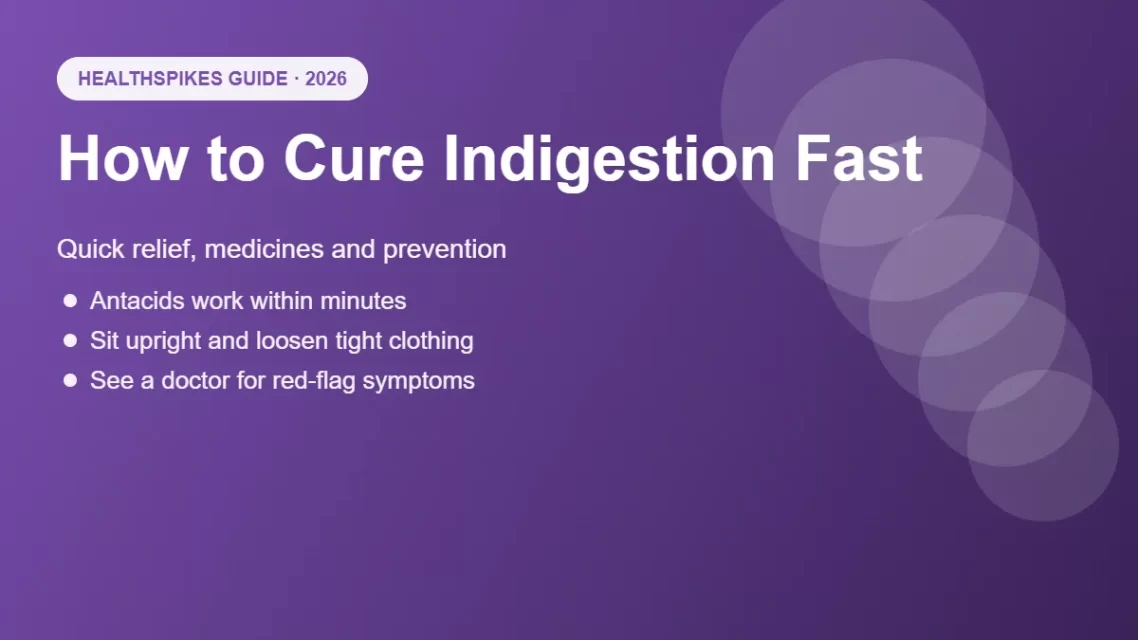
Indigestion, also called dyspepsia, is that uncomfortable feeling of fullness, burning, bloating or pain in the upper belly during or after eating. It is extremely common and usually harmless, but it can ruin an evening or keep you awake at night. If you want to know how to cure indigestion fast, the most reliable quick fixes are an antacid, staying upright and avoiding further triggers. Over the longer term, small changes to how and what you eat can prevent most episodes.
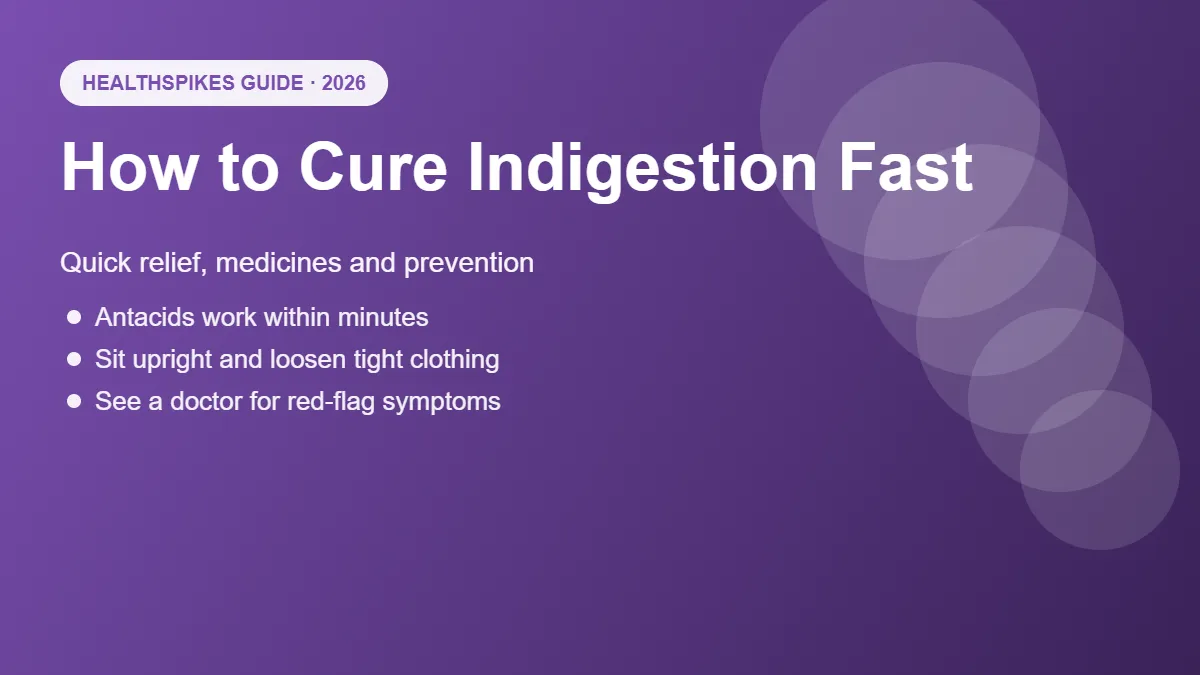
This guide covers fast relief options that work, over-the-counter medicines and how they differ, home remedies with some evidence, common causes, and the warning signs that mean you should see a doctor.
Key takeaways
- Antacids are the fastest over-the-counter option, often working within minutes.
- Staying upright and avoiding lying down for 2 to 3 hours after eating reduces acid reflux.
- Alginates, H2 blockers and PPIs are useful for more frequent or longer-lasting symptoms.
- Common triggers include large or fatty meals, alcohol, coffee, smoking, stress and NSAIDs.
- Seek medical advice for trouble swallowing, vomiting, weight loss, black stools or symptoms after age 55.
What does indigestion feel like?
Indigestion is a group of symptoms rather than a disease. You may notice burning or pain in the upper abdomen, feeling uncomfortably full soon after starting a meal, bloating, belching, nausea, or a sour taste in the mouth. Heartburn, a burning sensation behind the breastbone, often occurs with indigestion when stomach acid flows back into the esophagus.
Most people have occasional indigestion after a heavy meal. When symptoms are frequent, doctors call it functional dyspepsia if no structural cause is found, or look for conditions like gastroesophageal reflux disease (GERD), stomach ulcers or gastritis.
How to cure indigestion fast: 12 remedies
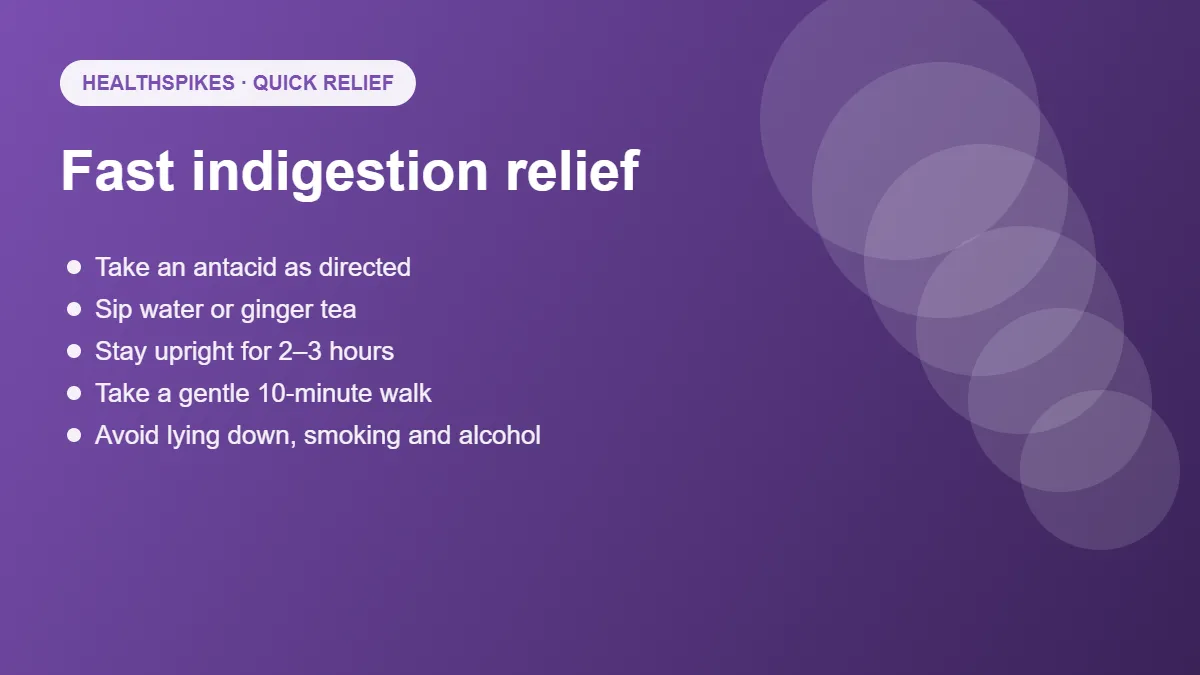
1. Take an antacid
Antacids containing calcium carbonate, magnesium hydroxide or aluminum hydroxide neutralize stomach acid and can bring relief within minutes. They are best for occasional symptoms. Follow the label dose and do not use them for more than two weeks without advice.
2. Try an alginate
Alginate products (such as those containing sodium alginate) form a foam “raft” on top of stomach contents that helps block acid from rising. They are particularly useful after meals and at bedtime and are often recommended in pregnancy.
3. Stay upright
Gravity helps keep stomach contents where they belong. Sit or stand upright and avoid lying down for two to three hours after eating.
4. Loosen tight clothing
Tight belts and waistbands push on the stomach and can force acid upward. Loosen them for instant comfort.
5. Take a short walk
A gentle 10 to 15-minute walk after eating may help digestion and reduce bloating. Avoid vigorous exercise straight after a meal.
6. Sip ginger tea
Ginger has been used for centuries for stomach complaints and has good evidence for nausea. Some people find it eases indigestion. Steep a few slices of fresh ginger in hot water for 5 to 10 minutes.
7. Try peppermint for bloating (but not reflux)
Peppermint can relax gut muscles and ease bloating and cramping. However, it also relaxes the valve at the top of the stomach and can make heartburn worse, so skip it if reflux is your main problem.
8. Raise the head of your bed
If indigestion strikes at night, raise the head of your bed by 10 to 20 cm (4 to 8 inches) with blocks or a wedge pillow. Extra pillows alone tend to bend the waist and can make things worse.
9. Sleep on your left side
Studies suggest lying on the left side reduces nighttime acid exposure compared with lying on the right side.
10. Avoid further triggers
Skip more coffee, alcohol, fizzy drinks, chocolate and fatty or spicy food until symptoms settle.
11. Chew sugar-free gum
Chewing gum after a meal increases saliva, which helps neutralize and clear acid from the esophagus. Avoid mint flavors if they worsen reflux.
12. Try an H2 blocker for longer relief
Famotidine reduces acid production and starts working in about an hour, lasting up to 12 hours. It can be taken before a meal you know will cause trouble.
Medicines: how to cure indigestion fast from the pharmacy
| Type | Examples | Works in | Lasts | Best for |
|---|---|---|---|---|
| Antacids | Calcium carbonate, magnesium hydroxide | Minutes | 30–60 minutes | Occasional, mild symptoms |
| Alginates | Sodium alginate preparations | Minutes | Up to 4 hours | After meals, at night, pregnancy |
| H2 blockers | Famotidine | About 1 hour | Up to 12 hours | Predictable triggers |
| Proton pump inhibitors | Omeprazole, esomeprazole, lansoprazole | 1–4 days for full effect | 24 hours | Frequent symptoms (2+ days a week) |
| Bismuth subsalicylate | Pepto-Bismol | 30–60 minutes | A few hours | Upset stomach with nausea or diarrhea |
Over-the-counter PPIs are designed as 14-day courses. Long-term use should be supervised by a doctor because of possible effects on nutrient absorption and infection risk.
What causes indigestion?
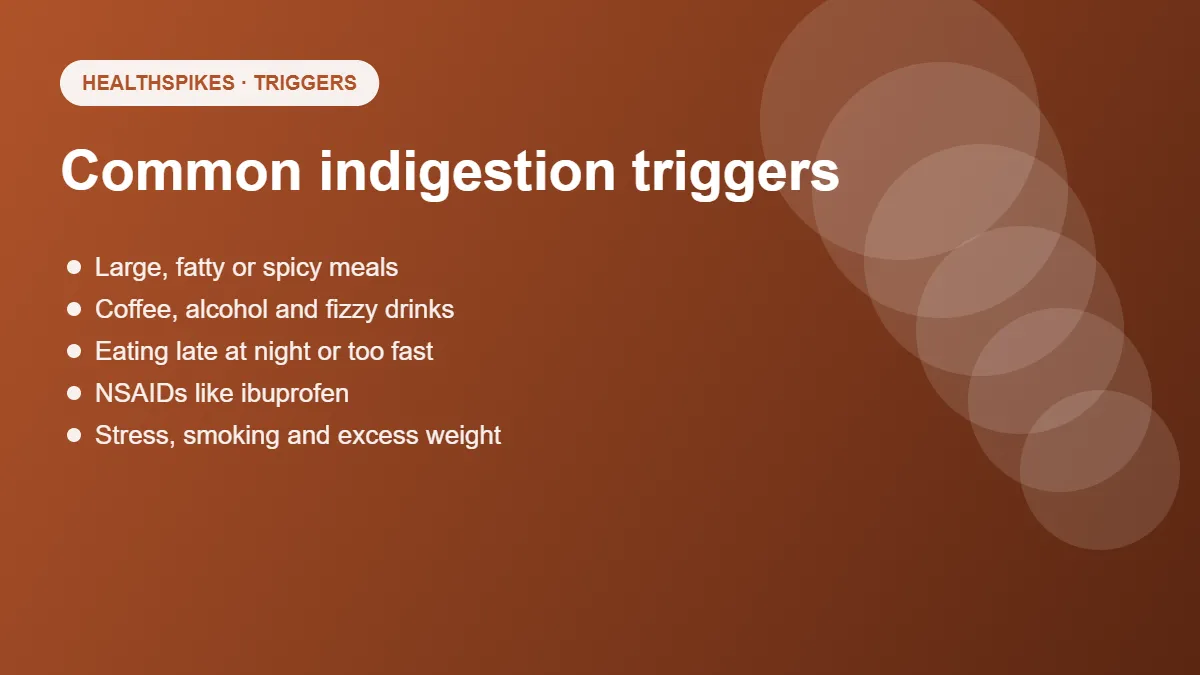
- Eating too much, too fast or late at night.
- Fatty, greasy or spicy foods.
- Alcohol, coffee, tea and carbonated drinks.
- Smoking.
- Stress and anxiety.
- Being overweight, which increases pressure on the stomach.
- Pregnancy, due to hormones and pressure from the growing baby.
- Medicines such as ibuprofen, naproxen, aspirin, some antibiotics, iron and potassium supplements.
- Conditions including GERD, peptic ulcers, gastritis, Helicobacter pylori infection, gallstones and, rarely, stomach cancer.
How to prevent indigestion (so you do not need to cure it fast)
- Eat smaller meals more often instead of three large ones.
- Eat slowly and chew well.
- Stop eating at least 3 hours before bed.
- Limit alcohol, caffeine and fizzy drinks.
- Identify and cut back on your personal trigger foods.
- Stop smoking.
- Manage stress with exercise, breathing exercises or talking therapies.
- Reach a healthy weight if you are overweight.
- Ask your doctor about alternatives if a medicine upsets your stomach.
Indigestion in pregnancy
Up to 8 in 10 pregnant women get indigestion or heartburn, especially in later pregnancy. Eating small, frequent meals, avoiding late eating and sleeping with the head raised help. Antacids and alginates are generally considered safe in pregnancy, but check with your midwife, pharmacist or doctor. Avoid bismuth subsalicylate in pregnancy because it contains a salicylate related to aspirin.
When to see a doctor
Occasional indigestion is normal. See a doctor if you need remedies more than twice a week, if symptoms last longer than two weeks despite treatment, or if you notice any of these red flags:
- Difficulty or pain when swallowing.
- Repeated vomiting, or vomiting blood or material that looks like coffee grounds.
- Black, tarry stools.
- Unexplained weight loss.
- Iron-deficiency anemia.
- A lump in your upper abdomen.
- New, persistent indigestion if you are 55 or older.
Call emergency services if chest pain spreads to your arm, jaw or back, or comes with shortness of breath or sweating. These can be signs of a heart attack, which can feel like indigestion. Read about the signs of heart attack in women, which are often mistaken for indigestion.
How to cure indigestion fast at night
Nighttime indigestion is especially common because lying flat lets acid move more easily into the esophagus. If you are wondering how to cure indigestion fast when it wakes you up, sit up, take an antacid or alginate, sip a little water and wait 20 to 30 minutes before lying back down on your left side with your upper body raised. Then look at what you ate and when: a heavy late dinner, alcohol or a big dessert are common culprits.
How to cure indigestion fast without medicine
If you prefer to avoid tablets, start with the simplest steps: stop eating, sit upright, loosen your waistband and go for a gentle walk. Sipping warm water or ginger tea and chewing sugar-free gum can also help. These approaches are safe for most people and are often enough for mild symptoms. If they do not help within an hour or two, an antacid is a reasonable next step.
Is it indigestion or something else?
| Symptom pattern | Possible cause |
|---|---|
| Burning behind the breastbone, worse lying down | Acid reflux / GERD |
| Gnawing pain that improves or worsens with food | Peptic ulcer |
| Pain under the right ribs after fatty meals | Gallstones |
| Bloating, cramps and changes in bowel habit | Irritable bowel syndrome |
| Chest pressure with breathlessness or sweating | Heart problem: call emergency services |
Knowing how to cure indigestion fast is useful, but persistent symptoms deserve a diagnosis. Your doctor may test for Helicobacter pylori, a common stomach infection that can cause ulcers and is treatable with antibiotics.
Related guides
- What Relieves Bloating Fast
- What to Take for Nausea
- How to Improve Gut Health
- Foods That Cause Inflammation
- Heart Palpitations After Eating
Frequently asked questions
What is the quickest way to cure indigestion?
An antacid usually gives the fastest relief, often within minutes. Staying upright and loosening tight clothing also help.
Does milk help indigestion?
Milk may soothe briefly, but its fat and protein can trigger more acid later. It is not a reliable remedy.
Does baking soda help indigestion?
Sodium bicarbonate neutralizes acid, but it is high in sodium and can cause problems if overused. Use proper antacids instead.
Can water help indigestion?
Sipping water can help wash acid down, but large amounts with meals may increase fullness.
How long does indigestion last?
Mild episodes usually settle within a few hours. Frequent or persistent symptoms need a doctor’s review.
What drink is best for how to cure indigestion fast?
Water or ginger tea are good choices. Avoid coffee, alcohol and fizzy drinks until symptoms settle.
Medical disclaimer: This article is for general information and is not a substitute for advice from your doctor or another qualified health professional. See our medical disclaimer and editorial policy.