LDL cholesterol, often called “bad” cholesterol, carries cholesterol through the blood and can build up in artery walls, forming plaques that narrow arteries and lead to heart attacks and strokes. Knowing healthy LDL cholesterol levels by age helps you understand your blood test and decide when to act. The targets for children differ from those for adults, levels naturally drift upward with age, and for women they often jump after menopause.
This guide explains normal ranges in mg/dL and mmol/L, how LDL changes from childhood to older age, how often to get tested, what your number means alongside other risk factors, and the most effective ways to lower it.
Key takeaways
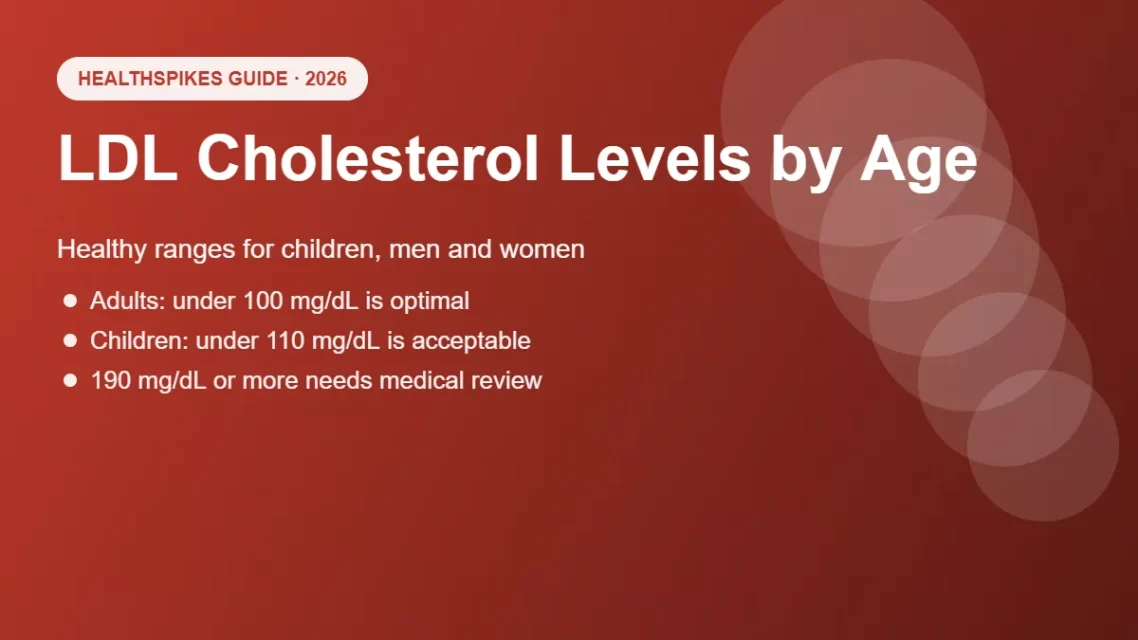
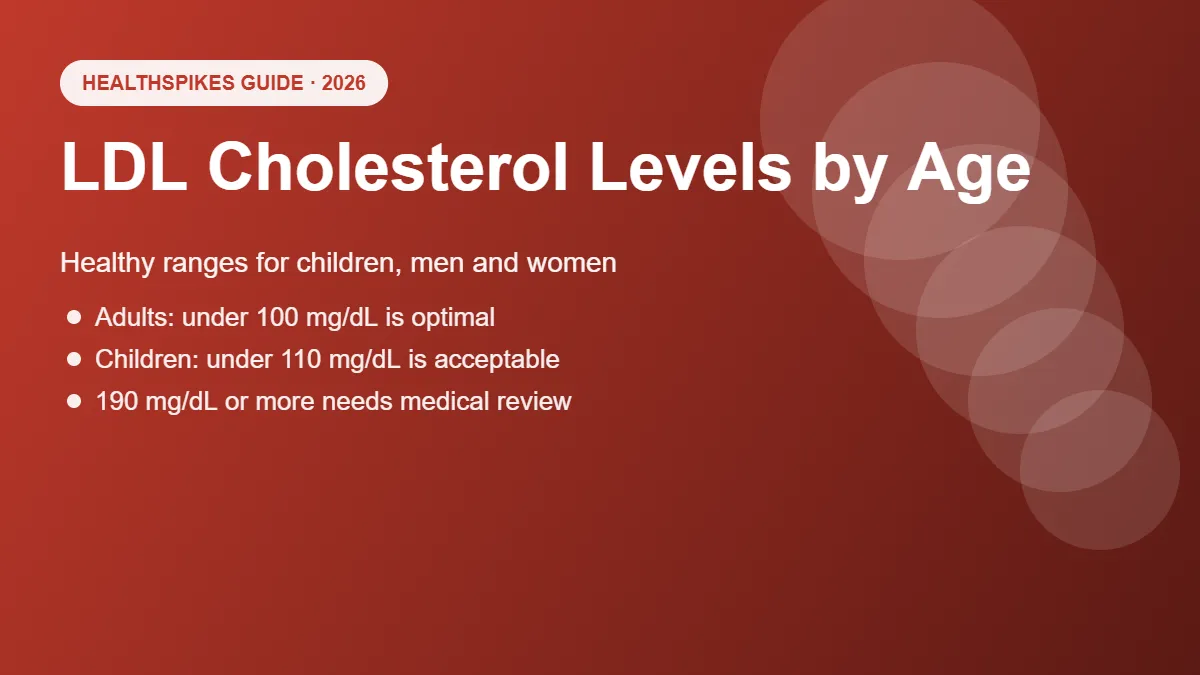
- For most adults, an LDL under 100 mg/dL (2.6 mmol/L) is considered optimal.
- For children and teens, under 110 mg/dL is acceptable and 130 mg/dL or more is high.
- LDL tends to rise with age, and women often see a jump of 10 to 20 percent around menopause.
- An LDL of 190 mg/dL or higher at any age needs medical evaluation and often treatment.
- Your personal target depends on your overall heart risk, not just your age.
LDL cholesterol levels by age: children and teens
Cholesterol screening in childhood helps find inherited conditions such as familial hypercholesterolemia (FH), which affects roughly 1 in 250 people and causes very high LDL from birth. The American Academy of Pediatrics and NHLBI recommend checking all children once between ages 9 and 11 and again between 17 and 21, and earlier if there is a strong family history of early heart disease or high cholesterol.
| Category (ages 2–19) | LDL (mg/dL) | LDL (mmol/L) |
|---|---|---|
| Acceptable | Under 110 | Under 2.8 |
| Borderline | 110–129 | 2.8–3.3 |
| High | 130 or more | 3.4 or more |
Children with LDL of 160 mg/dL or more, especially with a family history, may have FH and should be referred to a specialist. Treatment usually starts with diet and activity, and statins may be considered from about age 8 to 10 in FH.
LDL cholesterol levels by age: adults 20 and older
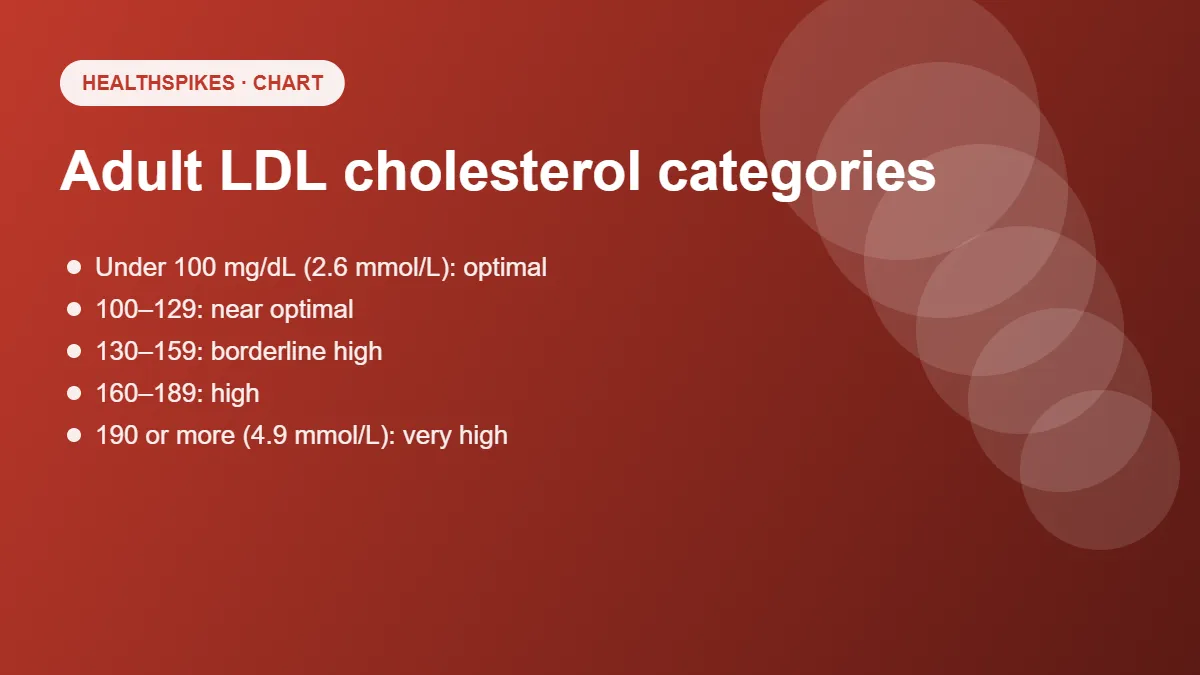
For adults, the National Cholesterol Education Program categories are still widely used on lab reports.
| Category | LDL (mg/dL) | LDL (mmol/L) |
|---|---|---|
| Optimal | Under 100 | Under 2.6 |
| Near optimal | 100–129 | 2.6–3.3 |
| Borderline high | 130–159 | 3.4–4.1 |
| High | 160–189 | 4.1–4.9 |
| Very high | 190 or more | 4.9 or more |
These categories apply to adults of all ages. There is no separate “normal” LDL for a 60-year-old versus a 30-year-old; rather, risk rises with age, so the same LDL number matters more as you get older.
How LDL changes with age in men and women
In men, LDL tends to rise steadily from early adulthood until around age 50 to 60 and then levels off. In women, LDL is usually lower than in men during the reproductive years, partly thanks to estrogen. During the menopause transition, LDL often rises by about 10 to 20 percent, and after age 55 many women have higher LDL than men of the same age. This is one reason heart disease risk in women climbs after menopause.
Weight gain, less physical activity, and changes in diet over the years also push LDL up. Some medicines, including certain steroids, some HIV medicines and some acne treatments, can raise LDL, as can hypothyroidism and kidney disease.
Other numbers on your cholesterol test
| Test | Desirable level |
|---|---|
| Total cholesterol | Under 200 mg/dL (5.2 mmol/L) |
| HDL (“good”) cholesterol | 40 mg/dL or more in men; 50 or more in women; 60+ is protective |
| Triglycerides | Under 150 mg/dL (1.7 mmol/L) |
| Non-HDL cholesterol | Under 130 mg/dL (3.4 mmol/L) |
| Lipoprotein(a) | Under about 50 mg/dL (125 nmol/L); test once in adulthood |
Non-HDL cholesterol (total minus HDL) captures all the “bad” particles and is a useful extra marker, especially when triglycerides are high.
Your target depends on your risk
Doctors look at LDL alongside age, blood pressure, smoking, diabetes, family history and other factors to estimate your 10-year risk of heart attack or stroke. The lower your LDL, the lower your risk, and people at the highest risk benefit from the lowest targets.
- Low risk adults: LDL under 100 to 130 mg/dL is generally reasonable.
- Diabetes or moderate to high risk: many guidelines aim for under 100 mg/dL, and lower for higher risk.
- Existing heart disease or stroke: U.S. guidelines suggest considering extra treatment if LDL remains 70 mg/dL or higher on statins; European guidelines aim for under 55 mg/dL (1.4 mmol/L) for very high risk.
- LDL 190 mg/dL or higher: high-intensity statin therapy is usually recommended regardless of other risk factors.
How to lower high LDL cholesterol
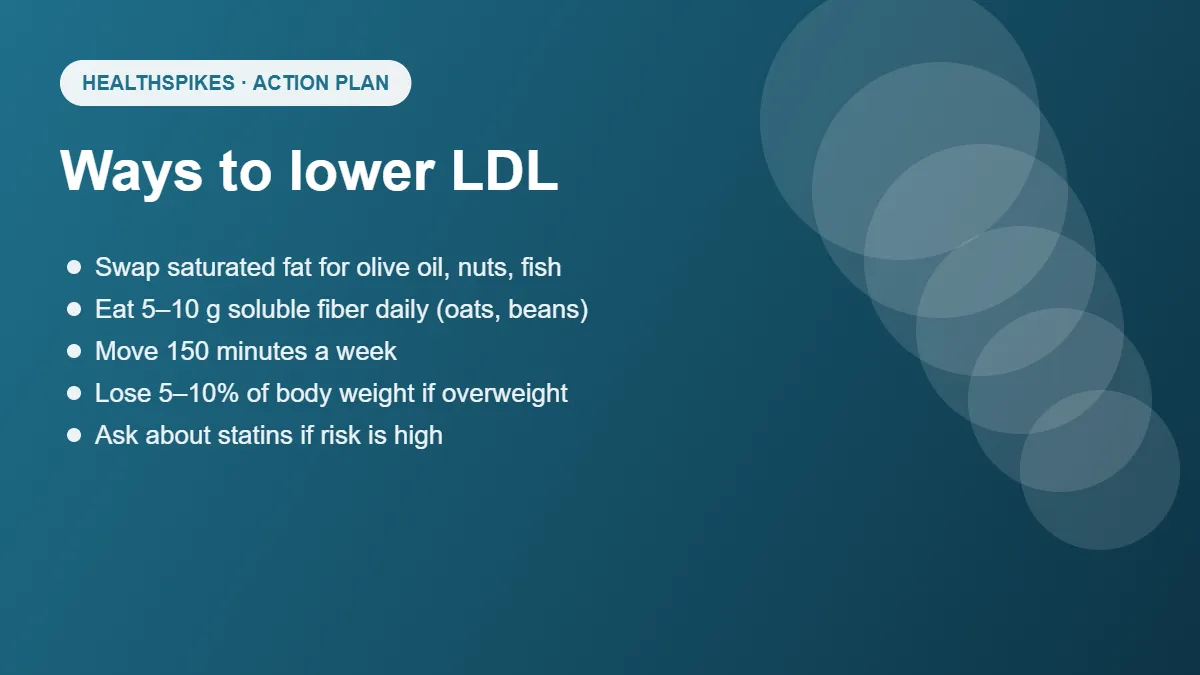
Lifestyle changes can lower LDL by about 10 to 30 percent, depending on your starting point and how many changes you make.
- Replace saturated fats (fatty meats, butter, cheese, coconut and palm oil) with unsaturated fats from olive oil, nuts, seeds, avocado and fish.
- Eat more soluble fiber: oats, barley, beans, lentils, apples, citrus and psyllium. Five to ten grams a day can lower LDL by about 5 percent.
- Add plant sterols or stanols (about 2 g a day from fortified foods), which can lower LDL by around 7 to 10 percent.
- Include soy foods and nuts regularly.
- Exercise at least 150 minutes a week.
- Lose weight if you are overweight.
- Quit smoking, which also raises HDL.
If lifestyle changes are not enough, medicines such as statins, ezetimibe, bempedoic acid and PCSK9 inhibitors can lower LDL by 20 to 60 percent or more. See our guide to lowering blood pressure naturally for heart-healthy habits that overlap.
How often should you check your cholesterol?
| Who | How often |
|---|---|
| Children | Once at 9–11 and again at 17–21; earlier with family history |
| Adults 20+ at low risk | Every 4–6 years |
| Men 45–65 and women 55–65 | Every 1–2 years (NIH guidance) |
| Over 65 | Yearly |
| On cholesterol medicine | 6–12 weeks after starting, then every 3–12 months |
Fasting is no longer always required for a cholesterol test, but your doctor may ask you to fast if triglycerides were high before.
Average vs healthy LDL cholesterol levels by age
It is important not to confuse average LDL cholesterol levels by age with healthy ones. National survey data show that average LDL rises from around 90 to 100 mg/dL in young adults to around 120 to 130 mg/dL in middle age. Those averages are not targets: many people in middle age already have early plaque in their arteries. The goal is to stay in the optimal range for as long as possible, because the total “LDL exposure” over a lifetime drives how much plaque builds up.
Researchers sometimes describe this as cholesterol-years, similar to pack-years for smoking. Keeping LDL low from your 20s and 30s onward appears to give the greatest protection, which is why healthy LDL cholesterol levels by age matter for young adults too.
LDL cholesterol levels by age in older adults
After 75, decisions about cholesterol treatment become more individual. The benefits of statins for people who already have heart disease continue into older age. For people over 75 without heart disease, guidelines suggest a shared decision based on overall health, life expectancy, other medicines and preferences. A coronary artery calcium (CAC) scan can help: a score of zero suggests lower near-term risk, while a high score supports treatment. Do not stop a prescribed statin without talking to your doctor, as stopping can increase risk.
When high LDL runs in the family
If your LDL is 190 mg/dL or higher, or a parent or sibling had a heart attack before age 55 (men) or 65 (women), ask about familial hypercholesterolemia. FH is underdiagnosed and highly treatable. When one person is diagnosed, testing close relatives, including children, is recommended, since their healthy LDL cholesterol levels by age may already be exceeded.
Related guides
- Blood Pressure Chart by Age
- Signs of Heart Attack in Women
- Foods That Cause Inflammation
- High-Fiber Foods List
- Supplements to Lower Blood Pressure
Frequently asked questions
What is a normal LDL for a 50-year-old?
The same as other adults: under 100 mg/dL is optimal. Because risk rises with age, keeping LDL low matters more at 50 than at 30.
Is LDL of 130 bad?
It is borderline high. Whether it needs treatment depends on your other risk factors.
Can LDL be too low?
Very low LDL from medicines appears safe in trials. Very low LDL without treatment can sometimes point to other conditions, so mention it to your doctor.
Do eggs raise LDL?
For most people, eggs have a modest effect. Saturated fat has a bigger impact on LDL than dietary cholesterol.
Why are LDL cholesterol levels by age higher in women after menopause?
Falling estrogen changes how the liver handles cholesterol, leading to higher LDL.
Do LDL cholesterol levels by age differ in mmol/L?
The cut-offs are the same, only the units differ. Divide mg/dL by 38.67 to get mmol/L, so 100 mg/dL is about 2.6 mmol/L.
Medical disclaimer: This article is for general information and is not a substitute for advice from your doctor or another qualified health professional. See our medical disclaimer and editorial policy.