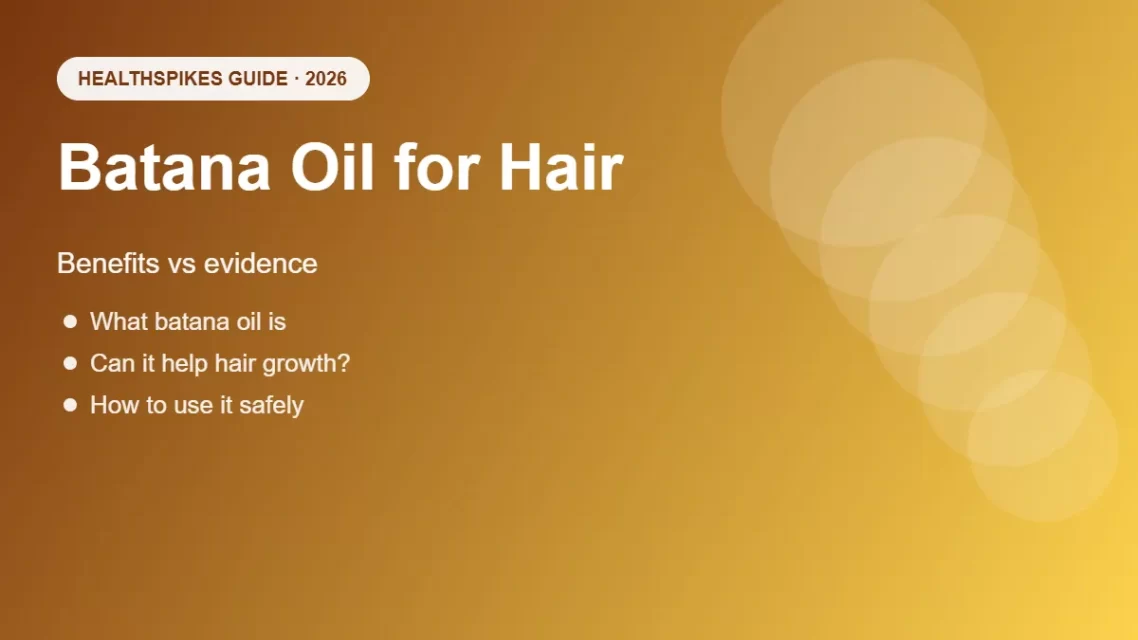
Batana oil is a thick, dark oil made from the nuts of the American oil palm (Elaeis oleifera). It has long been used by the Miskito people of Honduras, sometimes called “the people of beautiful hair”, and it has become popular online as a remedy for hair loss. But does batana oil actually help hair grow?
There are no clinical trials testing it for hair growth. Its fatty acids and vitamin E can condition and soften hair, which may reduce breakage and make hair look thicker, but there is no proof it regrows hair.
Key takeaways
- It is rich in oleic and linoleic fatty acids and vitamin E.
- It can moisturise hair and scalp and reduce breakage.
- No clinical studies show batana oil regrows hair.
- Patch test first; it is heavy and can clog pores or irritate some scalps.
- Proven hair loss treatments include minoxidil and, for men, finasteride.
Possible benefits of batana oil
- Moisture: fatty acids help seal the hair cuticle and reduce dryness
- Less breakage: stronger, softer strands break less, which can make hair look fuller
- Shine: smooths the surface of hair, helping with frizzy hair
- Scalp care: may soothe dry, flaky scalp
- Natural darkening: some users report a slight darkening effect on light hair
Does batana oil help hair growth?
Many social media claims say this oil reverses hair loss. There is no published research to support this. Hair loss has many causes, including genetics, hormones, thyroid problems, iron deficiency and stress. Oils cannot change these underlying causes, though healthier hair breaks less and may appear thicker over time. See our guide to hair loss causes and treatments for options with evidence.
How to use batana oil for hair
- Warm a small amount between your hands; it is solid at cool temperatures
- Massage into the scalp and lengths
- Leave on for 20–30 minutes, or overnight with a cap
- Wash out with shampoo, twice if needed
- Use 1–3 times a week
Side effects and precautions
- Patch test on your inner arm 24 hours before first use
- May cause itching or irritation
- Can make oily scalps oilier and worsen dandruff or folliculitis
- Heavy texture can be hard to wash out
- Check the label for a pure product; some are blends
Batana oil vs other oils
| Oil | Evidence for hair |
|---|---|
| Batana oil | No clinical studies; anecdotal use |
| Rosemary oil | One small trial compared it with minoxidil |
| Castor oil | Moisturising; no strong growth evidence |
| Coconut oil | Reduces protein loss from hair |
| Pumpkin seed oil | Small trial in men with hair loss |
Proven treatments for hair loss
- Minoxidil (topical or low-dose oral, prescribed)
- Finasteride for male pattern hair loss
- Treating iron, thyroid or vitamin D problems
- Platelet-rich plasma (PRP) and low-level laser, with modest evidence
- A dermatologist assessment for sudden or patchy loss
Where batana oil comes from
Batana oil is made from the nuts of the American oil palm (Elaeis oleifera), which grows in Central and South America. It is traditionally produced by the Miskito people of La Mosquitia in Honduras, who call it “ojon”. The nuts are boiled, then the oil is extracted by hand, which gives it a thick, paste-like texture and a smoky, earthy smell. It is rich in oleic and linoleic acids, along with tocopherols (vitamin E) and carotenoids.
Why it went viral
Batana oil became popular on social media, with videos claiming it regrows hair dramatically. Some products tied to celebrity endorsements added to the hype. However, there are no published clinical trials testing batana oil for hair growth in humans. Its reputation comes from traditional use and personal stories. That does not mean it is useless: as a rich oil, it may soften hair, reduce breakage and add shine, which can make hair look fuller over time.
What a fair trial at home looks like
- Take clear photos of your hairline and part in the same light before you start.
- Apply a small amount to the scalp and lengths 2 to 3 times a week.
- Leave on for 1 to 2 hours, or overnight with a cap, then wash out.
- Use it for at least 3 months, the minimum time to see changes in hair growth.
- Compare photos rather than relying on memory.
Buying tips
- Look for 100 percent pure batana oil from a named source, ideally Honduran.
- Expect a dark brown color and smoky smell; very pale or fragrance-free products may be blended.
- Check for third-party testing if possible.
- Beware of very cheap products and exaggerated claims of “miracle” regrowth.
Related guides
Frequently asked questions
Does batana oil really grow hair?
There is no scientific evidence that batana oil regrows hair.
How often should I use batana oil?
1–3 times a week as a pre-wash treatment.
Can I leave batana oil in overnight?
Yes, if your scalp tolerates it; wash thoroughly in the morning.
Is batana oil good for curly hair?
It can moisturise and reduce frizz in curly hair.
Does batana oil darken hair?
Some users report slight darkening, especially on light hair.
Can batana oil cause hair loss?
There are no reports of it causing hair loss, but heavy oils may worsen dandruff or folliculitis in some people.
Can I mix batana oil with rosemary oil?
Yes. Adding a few drops of rosemary oil, which has some evidence for hair growth, is a common blend.
Medical disclaimer: This article is for general information and is not a substitute for advice from your doctor or another qualified health professional. See our medical disclaimer and editorial policy.